
How transformative tech could play a role in helping people who struggle with hearing in public spaces - Andy Armitage
With the World Health Organisation predicting that 2.5bn are projected to have some hearing loss by 2050, with 700m requiring hearing rehabilitation, it is optimistic to hear the news about developments in technology to provide better services for people with hearing difficulty.
As many people struggle with their hearing more in busy venues and public spaces, the latest news that Auracast is being developed in these areas will benefit many.
Auracast is part of the latest generation of Bluetooth connectivity. It enables venues such as airports, theatres, or cafés to broadcast sound directly to compatible hearing aids, cochlear implants, and even ordinary wireless headphones.
So similar to an induction loop system, but Auracast is more versatile, more reliable, and works with the everyday devices many of us already use. Instead of depending on a neck loop or a patchy signal, sound quality is crisp and clear.
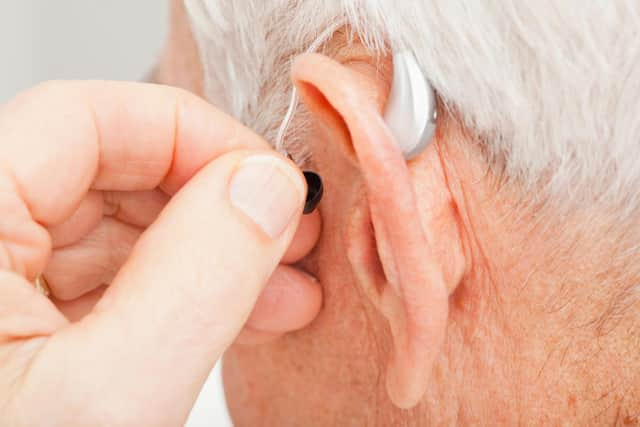

Whilst hearing aids are excellent at helping us communicate one-to-one, public spaces are a different story, and busy stations, noisy gyms, or echoey church halls can all make speech difficult to follow, even with the best technology. Providing Auracast in these areas will ensure that announcements, entertainment and important information are accessible to everyone.
As with all new technology, there’s a catch: not every hearing aid is Auracast-ready. The system relies on the very latest Bluetooth chipsets, which are currently only available in certain new devices. If your hearing aids are a few years old, they may not be compatible.
However, the rollout in the UK will be gradual. Airports and theatres are expected to lead the way, with other public spaces following suit, but patients who are equipped will be able to take advantage straight away.
At The Yorkshire Hearing Clinic, we’re already preparing patients for this exciting future. The question we’re asking is simple: “Are your hearing aids Auracast-ready?”
For some, the answer will be yes, meaning they can look forward to taking advantage as soon as venues adopt the technology. For others, it may be an opportunity to consider upgrading, particularly if their current devices are approaching the end of their lifespan.
That’s not to say that non-Auracast hearing aids aren’t excellent. Today’s technology already offers Bluetooth streaming for music, calls and TV, along with sophisticated noise reduction and speech-in-noise features, but Auracast represents a step into the future and patients who choose compatible devices now will be ready when it arrives.
If you’re unsure whether your hearing aids are Auracast-ready, the best step is to ask your audiologist. A short consultation will confirm compatibility and allow you to weigh up whether a future-proof upgrade makes sense. Even if you’re not ready for new hearing aids just yet, knowing what’s coming ensures you won’t be caught off guard.
It is also a good time if you are over 50 to get your hearing checked. Whereas most people get their eyes tested, and always go to the dentist, seeing an audiologist is often at the bottom of the list, when your hearing is just as important. Knowing the technology that exists now, and how sophisticated hearing aids have become, is also a positive step forward, as many devices look no different to wearing Air pods, but could significantly improve someone’s ability to socialise.
Technology rarely stands still and hearing aids are no exception.
Andrew Armitage is a clinical director at The Yorkshire Hearing Clinic.