
If the Walshaw Moor wind development gets the go ahead it would be one of the worst acts of environmental vandalism in the history of Yorkshire - Andrew Vine
It must be nearly 50 years since I first walked across Walshaw Moor as part of a school trip to Haworth to learn about the Bronte sisters. My sense of seeing what they had seen in the first half of the 19th century on their explorations of the moors above the village parsonage was very strong, and I’ve never forgotten it.

Every walk on the moor since then – and there have been many over the years – has taken me back to that first sighting, because that is what Yorkshire’s great vistas do.
They have a timeless, eternal quality, an air of comforting permanence. To walk a landscape such as Walshaw Moor is to feel you are following in the footsteps of earlier generations, marvelling at the wildness and grandeur just as they did, and being uplifted by it, as they were.
The visitors to Haworth who follow the Bronte trails every year feel that. And in 50 years’ time, children on their first trips to learn about Charlotte, Emily and Anne deserve the chance to feel it too.
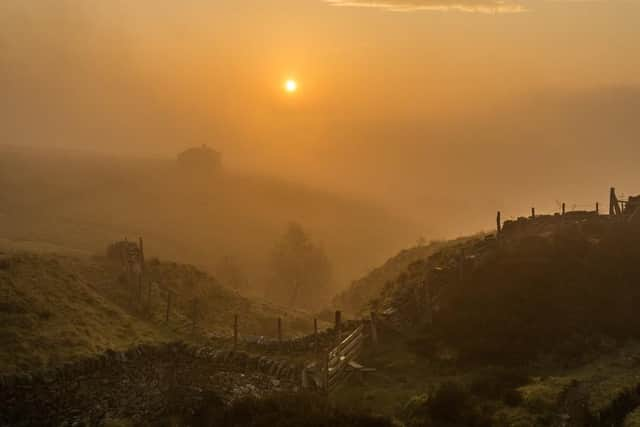

But the prospects of that hang in the balance. It is possible – maybe even likely – that instead of the open moorland the Brontes and every other visitor since them walked, there will be a vast industrial site of wind turbines. No more grandeur, no more wildness. Only a landscape desecrated.
If this is allowed to happen, it would be one of the worst acts of environmental vandalism in the history of Yorkshire, a blot on our county and a stain on the record of the government which permitted it.
The prospect of Walshaw Moor being blighted by 34 giant wind turbines, each taller than Blackpool Tower, is currently out for a public consultation until early June.
Last week, both Labour and Conservative MPs urged the government to block the plans for what would be one of the country’s biggest windfarms.
Objections from those living around the moor, including residents of Haworth and Hebden Bridge, are a measure of how bitterly opposed this part of Yorkshire is to the destruction of a unique and precious place which is a haven for wildlife.
MPs reflecting constituents’ concerns are putting forward a strong environmental case for denying permission for the Saudi-backed plan because the windfarm would potentially destroy peatland that acts as an essential store for carbon, which is necessary to combat climate change.
They are right to emphasise this, as it makes no sense to develop sustainable power sources if they sabotage another element of the drive to make Britain carbon-neutral.
Powerful though it is, the carbon argument is only one reason that this windfarm should not be built.
Equally important is the need to protect majestic landscapes like this from being concreted over, This isn’t a matter of sentimentality, but about the very fabric of Yorkshire and valuing our open spaces.
Walshaw Moor and other uplands should not be sacrificed to developments which destroy the countryside that is part of this county’s heritage and character. Once ruined, it can never be restored.
Nearly two years ago at the general election, nobody voted for schemes like the one threatening a beautiful and fragile part of West Yorkshire.
In Labour’s vague, anodyne and virtually policy-free manifesto, there wasn’t a line about huge areas of the countryside being sacrificed to wind and solar farms.
If there had been, the party’s majority would have been much reduced or non-existent because urban voters as well as those from rural areas are deeply uncomfortable about landscapes they love being lost forever.
They support the drive for green energy, but generating it cannot be at any price to the environment.
Since taking office, the government has allowed a disgraceful free-for-all in which developers with speculative plans can swoop into an area without warning, put forward projects that destroy open spaces, and be reasonably confident of being allowed to go ahead because there is a presumption in their favour.
The concerns of residents are being swept aside by arrogance and dogma about green energy.
Last year, the emeritus professor of ecology at the University of Oxford, David Rogers, condemned what is happening as a “wild west”, characterised by a lack of strategic planning of where developments should be allowed.
Walshaw Moor is one of two glaring examples of this, the other being the Cambrian mountains in Wales, which are also threatened with the blight of a massive windfarm.
The result is a country that once prided itself on being a champion and protector of its natural heritage now harms it more grievously than anywhere else in western Europe. This is a shameful reflection on Britain, and must change.