
I'm a Labour MP - blaming Brexit for Yorkshire's problems is wrong: Jon Trickett
The suggestion that Brexit is responsible for Yorkshire's economic decline, and that rejoining the European Union would somehow put things right, is a convenient political explanation.
But it does not stand up to examination. Yorkshire's economic problems are deep-rooted, long-standing and considerably pre-date Britain's departure from the EU.
Yorkshire voted to leave the EU by a large majority. Only three areas voted to Remain: Leeds, Harrogate and York. It is striking that these three areas were amongst the more prosperous areas within the county. On the other hand, some of the most economically challenged Yorkshire areas voted by large majorities to leave.
The real story of much of Yorkshire’s economy is one of decades of industrial decline, chronic underinvestment, centralised decision-making and successive governments failing to address the economic needs of the North. Brexit did not create these problems, and reversing Brexit will not magically resolve them.
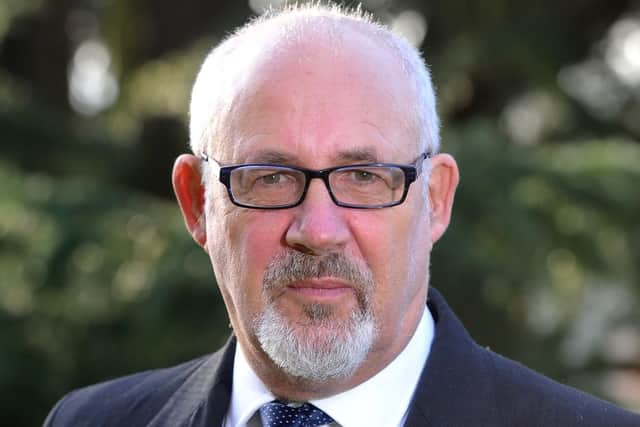

The economic figures for Yorkshire demonstrate just how serious the situation has become, but they also reveal enormous differences between its constituent areas.
South Yorkshire is particularly badly affected. In 2023, its GDP per head was just £28,187, compared with the UK average of £39,403. It was one of the lowest-performing combined authority areas in the country. The figures for individual towns and cities are even more revealing. In 2023, GVA per head was £20,335 in Barnsley, £20,671 in Rotherham and £22,889 in Doncaster. Sheffield, at £30,171, performed better, but was still well below the national average.
These are not the economic statistics of a region that has suddenly encountered difficulties because of Brexit. They reflect a much longer history of industrial decline and economic neglect.
The picture elsewhere in Yorkshire is mixed, but hardly encouraging. West Yorkshire's GDP per head was £35,502, still below the national average, while York and North Yorkshire performed considerably better. Hull and East Yorkshire also remain well behind the country's more prosperous areas. Yorkshire is not one uniform economy, and the problems facing South Yorkshire are particularly acute.
Perhaps the most telling evidence comes from the period when Britain was still a member of the European Union. Eurostat figures for 2018 measured regional prosperity against the EU average. South Yorkshire stood at just 71 per cent of that average. West Yorkshire was at 87 per cent, East Yorkshire and Northern Lincolnshire at 79 per cent, and North Yorkshire at 92 per cent.
In other words, South Yorkshire was already among the poorest-performing parts of the country while Britain was fully inside the EU. Its economic position had not been transformed by membership, nor had the promised benefits of European integration brought the region anywhere near the prosperity enjoyed by wealthier parts of Europe.
Indeed, the comparison over the decade to 2018 is particularly stark. South Yorkshire fell from 86 per cent to around 72 per cent of the EU average, while the North East fell from 89 per cent to 76 per cent. These regions were falling further behind during the very years when Britain was supposedly benefiting from EU membership.
So why should anyone seriously believe that rejoining the EU would reverse decades of decline? Membership was not a cure for the structural weaknesses in Yorkshire's economy when we were in the Union. There is little reason to believe that membership again would suddenly provide the answers.
Yorkshire's problem is not simply about access to European markets. It is about the absence of sustained investment, the loss of skilled industrial employment, inadequate infrastructure, poor productivity and an economic system that has repeatedly concentrated opportunity and wealth in London and the South East.
What Yorkshire needs is a serious economic strategy: investment in manufacturing and modern industry, transport infrastructure, skills, research and development, and well-paid employment. It needs decisions about its economic future to be made closer to the communities affected, rather than dictated from Westminster.
Blaming Brexit for everything may suit those who want to reopen the arguments of the referendum. But it does nothing to explain why South Yorkshire was already so far behind while we were members of the EU, or why successive governments failed to close the gap.
Yorkshire's economic decline did not begin with Brexit. And rejoining the EU is not a substitute for the investment, ambition and political commitment that the region has been denied for decades. So, if those in Britain's governing class wish to launch a new effort to rejoin the EU, we will insist that Yorkshire’s voice is heard loud and clear in London and Brussels and I know precisely where I stand.
Jon Trickett is the Labour MP for Normanton and Hemsworth