
Investment in heritage is helping build confidence in Yorkshire’s communities - Eilish McGuinness
Across Yorkshire and the Humber, long-term investment in heritage is playing a steady but important role in how places build confidence, strengthen identity and plan for the future.
Thanks to National Lottery players, the Heritage Fund has awarded £97.4m to 161 projects across Yorkshire. This investment supports historic buildings, landscape conservation, skills programmes and community storytelling, but above all, it supports people.
It reflects a consistent principle in our work: lasting change happens when places are shaped with communities, not for them.
That approach can be seen clearly in North East Lincolnshire too. Since 2019, the area has received more than £10 million in National Lottery funding, supporting over 30 projects across Grimsby, Cleethorpes and surrounding communities.

In Grimsby, sustained heritage investment enabled young people to codesign the transformation of the Grade IIlisted West Haven Maltings and Migar House into the Horizon Youth Zone, shaping everything from its name and dockinspired branding to heritage interpretation and skillsfocused creative spaces - from music and performance to making and sport - rooted in the town’s maritime past.
Along Cleethorpes’ historic seafront, the Townscape Heritage Programme has paired building restoration with opportunities to learn traditional conservation skills, engage with local history and support property owners to safeguard the resort’s heritage for future generations.
North East Lincolnshire was later named one of our first Heritage Places – a programme designed to provide long-term support in locations where heritage has the potential to make the greatest difference, based on need, opportunity and local ambition.
This secured long-term support over a ten-year period, with investment focused as much on building local skills and supporting organisations to grow as on restoring individual buildings. Decisions are shaped by local expertise, supported by our devolved teams and area committees, and grounded in listening closely to communities.
This enables heritage to play a meaningful role in wider regeneration in a place with a strong maritime and industrial history, but historically low levels of heritage investment.
It is within this context that Grimsby’s recent announcement of its intention to bid for UK Town of Culture should be understood. Grimsby is just one of the places bidding for the title, alongside places such as Caerleon, the Isle of Bute, Kendal, Littlehampton, Melton Mowbray, Redruth and many other towns across the UK.
The ambition it represents has been shaped by years of heritage-led investment and partnership working. Competitions like these can provide focus and momentum, but they are most effective when confidence, capability and local leadership are already in place.
A similar long-term perspective can be seen in Hull, where heritage investment is contributing to wider place-based regeneration following the city’s year as UK City of Culture in 2017. The Hull Maritime programme builds on the legacy of its time as UK City of Culture, using the city’s maritime heritage to reconnect people with their waterfront, collections and historic spaces.
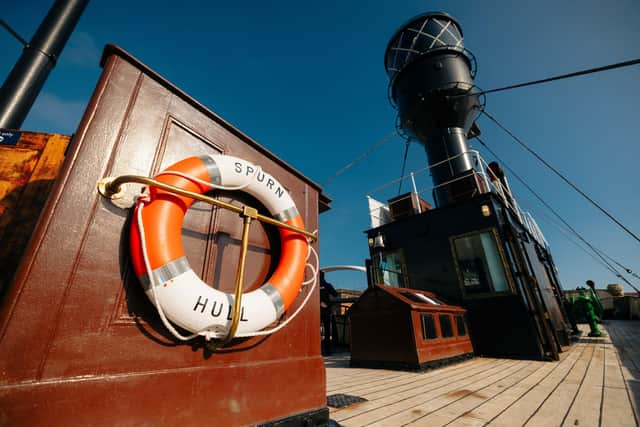
The reopening of the Spurn Lightship this spring, following restoration work, and a key ‘anchor’ in the maritime heritage development, marks an important milestone within that broader programme.
It is one example of how heritage investment can be the foundation of a city’s identity, while creating opportunities for learning, skills development and participation. As with all large, complex projects, the full impact will be judged over time, through the benefits that it delivers for local communities and the city as a whole.
That long view matters. As new cultural competitions emerge, from City of Culture to Town of Culture, there is understandable interest in what these designations can achieve. They can be powerful catalysts, encouraging places to be seen with fresh eyes, for communities and visitors alike. But lasting impact depends less on the title itself and more on the work around it: bringing communities into focus, strengthening local partnerships, attracting long‑term investment and backing local leadership. In many cases, the act of applying is valuable in its own right - helping align ambition, build confidence and sharpen a sense of direction.
Across Yorkshire and the Humber, this way of working is supporting heritage-led regeneration that is grounded, inclusive and sustainable. Culture initiatives draw attention, but heritage provides the foundations.
If regeneration is to be meaningful, it must be built on long-term assets, strong local partnerships and funding that puts communities at the centre.
Eilish McGuinness is Chief Executive of The National Lottery Heritage Fund