
Is it Christian to oppose assisted dying? - David Behrens
Sometimes from the depths of darkness comes light, and seldom have I seen such enlightenment as in the testament of Louise Shackleton, the Yorkshire widow who took her dying husband to Dignitas and then spent nearly a year under police investigation.

Mrs Shackleton understands what the House of Lords, and in particular its Bench of Bishops, does not: that the debate on assisted dying has nothing to do with saving someone from an unhappy death; it’s about sparing them an unhappy life. It’s an act of kindness, not godlessness.
This is what she said this week, as the Lords heard evidence on the proposed Bill to bring Britain into line with much of Europe, Australia and parts of the US in legalising assisted dying for terminally ill patients: “It’s not about whether someone should have the right to die, but whether the state or anyone else has the right to compel you to live a life that’s full of suffering, pain and agony.”
Her argument cuts to the heart of the debate. While bishops agonise over relinquishing divine authority and pressuring vulnerable patients to end their lives, Mrs Shackleton has recognised that in practice it’s the state that is doing the coercing, by insisting that life is always preferable to death even when there is physical evidence to the contrary.
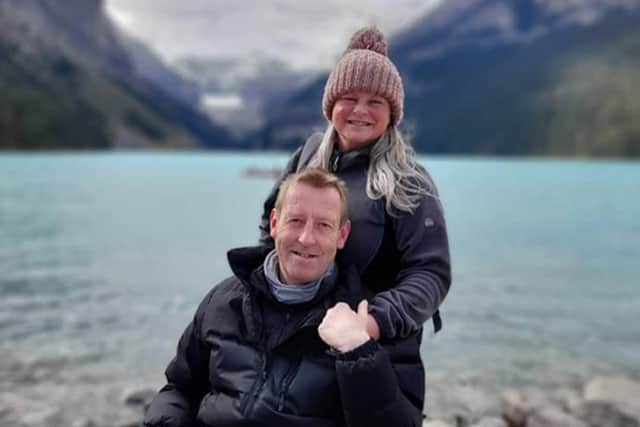

In her case, the state did all it could to subjugate her until it gave up her case as a lost cause. Her husband Antony was still, at 59, a relatively young man when he died at the Dignitas clinic in Switzerland last December. He had motor neurone disease, a degenerative condition that attacks the nerves controlling voluntary muscles. It is life-shortening and currently incurable. I saw its effects at close hand four years ago in a family member. Life left him slowly and cruelly.
The Shackletons chose to hasten the inevitable by going to Zurich because they could afford to. Most people in their position would not be able to. That makes assisted dying distastefully selective.
Mrs Shackleton put it this way: “The wealthy have a choice. This choice of whether to end suffering needs to be afforded to all the people and not just to the elite.”
So the question for the Lords is whether it is truly Christian to deny that choice to suffering families and insist they place their loved ones in the hands of some greater Lord – or whether it’s an insult to Christianity.
The police, as they so often are these days, were in an invidious position: having to investigate whether Mrs Shackleton had committed an offence by assisting a suicide, even though she was outside the jurisdiction of English law. After many months, the North Yorkshire force and Crown Prosecution Service decided it would not be in the public interest to prosecute her.
She had to wait for that decision before she could even open the goodbye letter Antony had left her, lest she become complicit. Is denying a widow’s right to grieve really what a Christian society now expects of us?
And in any case, is that what we still are? This week saw the clearest evidence yet of the extent to which communities have deserted their churches. According to a charity that helps them stay open, the future of one in three places of worship, across various denominations, is now seriously in doubt. Some 2,000 might be abandoned for prayer within the next five years.
What is to become of them? Food banks? Bingo halls? Society will adapt them to its needs or it will bulldoze them, for they stand as handsome monuments to the past, not guiding lights for the future. If their declining influence were to be reflected in the House of Lords there would be a penitent stool where the Bench of Bishops once was.
Meanwhile, the argument by some peers that improved palliative care is an antidote to assisted dying was torpedoed on Thursday by the charity Marie Curie, which told the Health Secretary that with more than five million people expected to need end-of-life support in the next decade, the system was at risk of being overwhelmed.
Financial pressures were forcing hospices to cut staff and services, not increase them, it said, yet there remained no national strategy for easing the suffering of those for whom the bell has tolled.
The Assisted Dying Bill is that strategy, or at least part of it. It is born of compassion and it works for the benefit of vulnerable patients, not against them.
If it is flawed it is because of its present limitations: a necessary diminution to ease its way through parliament. That doesn’t mean it is the thin end of the wedge, as its critics fear, but a step on that road to enlightenment. Because with religion now so clearly a choice, shouldn’t the way we die also be?