
Labour heading in right direction on housebuilding after being handed major headaches by the Tories: Rico Wojtulewicz
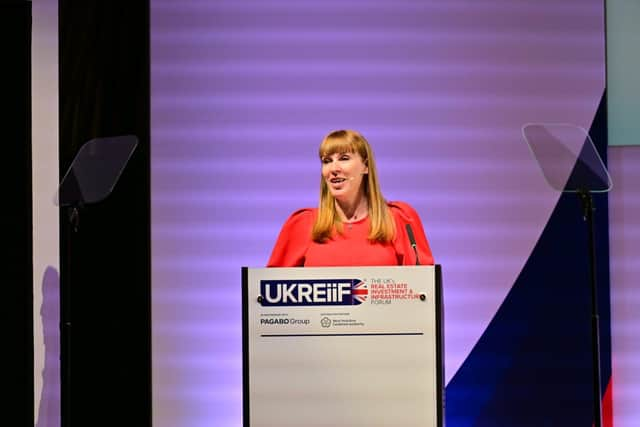
Addressing attendees of the UK Real Estate Investment & Infrastructure Forum in Leeds recently, Angela Rayner urged local partners to “back, build, invest, and succeed” in support of the Government’s ambitious 1.5 million new homes target.
Although the 1.5 million target is unlikely to be achieved, the Labour Government has inherited a significant challenge from the last government, whose final year in office created supply barriers and forward planning issues.
For example:
- Resourcing and operational challenges at the Building Safety Regulator (BSR), delaying up to 800 high rise projects.
- The Levelling Up and Regeneration Bill needed to be unpicked and Local Planning Authorities (LPAs), particularly those who used LURB to reduce their housing targets, will need to reassess their allocations, or write new local plans.
- Biodiversity Net Gain (BNG) created many legal and knowledge challenges, while making some housing developments altogether unviable.
- Fourteen years of policies which grew big builder market share and harmed small and medium-sized housebuilders has left the Government exposed when large site developments slow or end.
- The cost of building has spiralled out of control with 13 taxes and regulatory costs in the last five years.

Labour’s reforms have certainly made a difference. Bringing back housing targets, a grey belt definition, greenbelt reviews plus revision of Planning Policy Guidance all increase opportunities and certainty for builders. Their New Towns plan, which is likely to begin as urban extensions and supporting existing large (500+ homes) planning applications, will unlock tens of thousands of homes.
The Government has also recognised future challenges including implementing the Future Homes Standard without major grid reforms, reducing spurious legal challenges and the need to reduce the number of individual environmental schemes. Securing commitment from the Mayor of London to more than double new housing supply is a major success, and further devolution will be a supply enabler too.
However, concerns remain that in the first ten months, vital opportunities to revolutionise a broken planning system have been missed. Reforms to date, whilst welcomed, have so far just been tweaks.
There are also the considerable issues of National Insurance rises, which will reduce directly employed labour. Inheritance tax changes that will see smaller companies sold or absorbed into larger ones, and the Building Safety Levy, which is an arbitrary tax on innocent parties and a growth inhibitor.
The ’Long Term Housing Strategy’ will tell industry how much attention has been given to how planning and delivery work in practice, how land use can reduce opposition to development, and if the cost of building will come down in favour of a rules-based system. These steps are vital to ensure we can build 300,000 homes a year.
Most importantly, SMEs must not be overlooked. They train 73 per cent of construction apprentices, invest locally and build our social and non-market homes.
The industry will want to know whether SMEs will finally be appreciated as a key player to solving the housing crisis.
The Labour government has begun with positive and long-overdue reforms. But the housebuilding industry is on its knees and so every reform which doesn’t hit the mark or forgets to consider the impact on 99 per cent of housebuilders, increases the sector’s despair.
Rico Wojtulewicz is Head of Policy and Market Insight at the National Federation of Builders