
Labour is failing to link policies together into a coherent jigsaw - David Blunkett
To say that the last two months in the political arena felt strange is the understatement of this year. August was dominated by Reform UK, and the unexpected opportunity for producers of flags to make a fortune.
In the mainstream media in September, Nigel Farage managed to get more publicity for his party not just at their conference but during the Liberal Democrats conference in Bournemouth. In fact, the BBC seem to have had some sort of Damascene conversion from being metropolitan woke to falling over themselves to cover almost every word the leadership of Reform UK utters.
As for the Conservatives, announcements at their conference this week places them so close to Reform that voters might legitimately think they should vote for the real thing rather than a pale Tory alternative.
But what has bemused me most is the narrative coming from my party, and the failure to link policies together into a coherent jigsaw which tells a story for the public to understand.

We live in an era of ‘in your face’ politics, exemplified by Donald Trump. Shaking the tree demonstrates energy and drive - traits which attract both attention and support, but half-hearted announcements do not.
Two examples of this struck me in September. Both are really important policies I have been advocating for since the election last year and, in my view, seminal to both the well-being of our country and the government's revival in the polls.
The first is digital ID. It's clearly a policy whose time has come. Everyone (except me) is using smartphones for all kinds of things and digital identity verification for age, entitlement to a whole range of benefits and services, and for banking are already commonplace. DVLA is moving to it; the NHS is updating its systems and there is something called the ‘Gov.UK wallet’ which will bring together access to key information and services.
In other words, it's happening around us and if we are going to build in safeguards and make it really work for us, then we should put all of this together, and with a suitable alternative for those who are not ‘digitally literate’.
The French told me, over 20 years ago, that a lack of proper verification of identity was, in their view, a major pull factor for those attempting to cross the Channel and come here without proper authorisation. We dealt with it, in those days, by agreement, but when the business model changed and the criminals started to use small boats, the issue has, once again, become toxic.
Nothing is a silver bullet, but in my view it is obvious that sending a signal that you won't be able to disappear into the sub-economy (with all the dangers that poses); or work here unless you have an authenticated identity, will help. After all, employers are currently expected to make checks, but it would be extremely difficult to ask someone to present identification because of the colour of their skin or their accent when you're not doing the same for others.
That is why any programme must be universal, well thought-through and, above all, a benefit to individuals in their daily lives. Presenting such a policy as being only about ‘the right to work’ was a massively missed opportunity. Leaving aside the rather obvious fact that the preparation and announcement of the policy was poorly executed, it's no wonder the government found themselves on the back foot. It will form a classic lesson in how not to present a major change in policy.
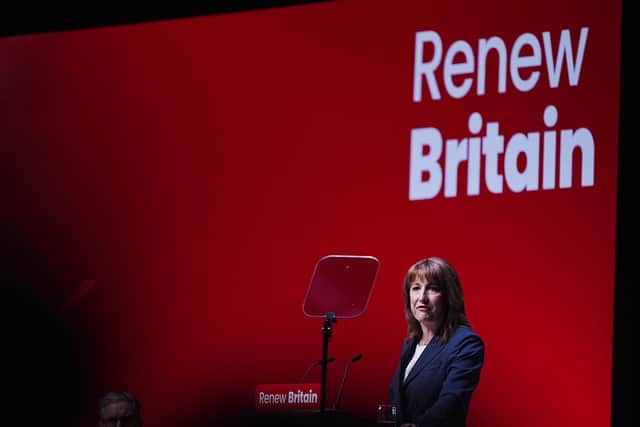
The second was the announcement by Rachel Reeves, Chancellor of the Exchequer, at the Labour party conference that any young person who remains unemployed for more than 18 months would automatically be offered a job, without the right to simply refuse it.
I'm in favour of this. I have been battling away again to get the government to make one of their key policy commitments tackling the 948,000 young people aged 16 to 24 who are not in education, employment or training. The critical nature of this for our country is self-evident, as it is for the individuals themselves and their future, and therefore the future of their community.
Back in 1997, we were very clear. Whilst there was a ‘deadweight’ cost to putting large sums of money into getting people into work when they had been unemployed for just a few weeks, leave it too long and the person themselves becomes unemployable. So, in my view, a maximum of six months, not 18 months, should be the objective. It would cost money, but in the medium term, it would save money. There has been quite a lot of research on this and it is evident that some upfront resources would pay dividends in economic, social, cultural, and political terms, over and over again.
Quite simply, the ambition is too little, the delivery is too slow and a level of audacity comparable to that of the right-wing insurgents is non-existent. I'm afraid the same old, same old way of doing things won't crack it.
David Blunkett is a Labour party politician, and served as the MP for Sheffield Brightside and Hillsborough.