
Lack of business experience on the Government frontbench is telling - Andrew Vine
I’d be interested to know how Cabinet ministers would react if a member of the public walked in from the street and started telling them how to run their departments.

Outrage and incredulity would be among the likely responses if somebody with absolutely no knowledge of how government works attempted to lay the law down, and issued orders about setting budgets and deciding spending priorities.
It is a scenario unthinkable to the professional politicians governing the country, a ridiculous notion that anybody ignorant about the everyday realities of getting things done should dictate what happens.
Yet this is exactly the scenario faced by owners of businesses both large and small – politicians who know nothing about running a company taking decisions that jeopardise the futures of their firms and the people they employ.
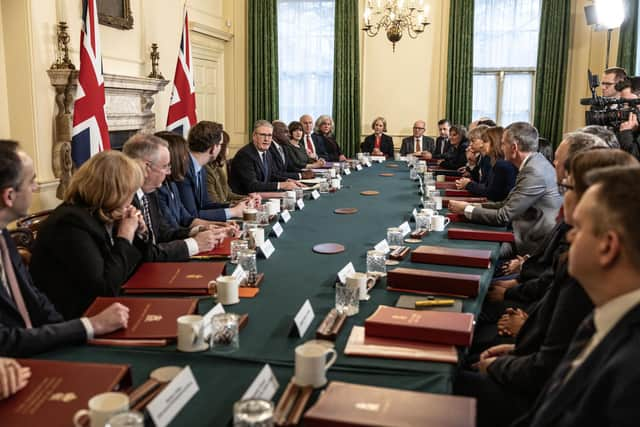

The lack of commercial acumen on the part of the government has become glaringly obvious and worryingly harmful.
It is to be seen in the U-turns on taxing farmers into bankruptcy and the retreat on business rates that would have forced the closure of thousands of pubs, badly-conceived measures only reversed when a crisis in both industries was staring ministers in the face.
It can also be seen in the continuing threat to hospitality businesses such as hotels, restaurants and cafes, and in the 89,000 jobs already lost in that sector, with more likely to follow.
The absence of understanding of what makes businesses tick was underlined late last year when leading retailers including M&S, Tesco and Sainsburys wrote to the government warning that prices would rise and stores might shut because of increased costs imposed on them by hikes in the minimum wage and employers’ national insurance.
The same increases have been cited by trade bodies across multiple sectors for a reluctance by their members to invest in new projects or take on additional staff.
The government is the least business-friendly since the 1970s. It has either forgotten, or never learned, the lessons of the last Labour administration, when Tony Blair and Gordon Brown formed productive relationships with the private sector that created jobs and economic growth, benefiting both the country and businesses in general.
The contrast with those years could hardly be starker. Then, ministers listened and learned from industries of which they admittedly had little knowledge. Now, their successors display an unwillingness to listen, aggravated by an arrogant and high-handed attitude that they know best.
When farmers told them changes to inheritance tax would drive many out of business, they were ignored. So were pub landlords and owners who said rates rises of up to 76 per cent made remaining open impossible.
It was only when both groups warned disaster was imminent that their messages got through and the government realised it had blundered.
But though both U-turns were welcome, they still tell a sorry tale of the lack of understanding in government about business.
Last week, before the Chancellor climbed down on rates to stave off mass pub closures, the Business Secretary, Peter Kyle, went on a round of interviews to say the government hadn’t been in possession of all the facts about the issue.
That was an astonishing admission. How is it even possible for a government, supported by tens of thousands of civil servants, not to have every single relevant fact at its fingertips?
And how can it be credible to announce a policy without being briefed about its possible implications, for good or ill, or thinking them through?
I know business people in Yorkshire who are convinced that the government’s poor record on dealing with the private sector is rooted in a deep-seated mistrust of the commercial world within Labour, an old-fashioned left-wing animosity that sees bosses as greedy fat cats, grinding workers’ faces into the dirt.
There undoubtedly are people who harbour such views within Labour, but the more plausible reason for the blunders which so exasperate the business community is a lack of commercial experience.
Few of the government’s senior team have ever had to make a balance sheet add up, cope with rising costs like rates or fuel, or answer to shareholders.
They are overwhelmingly career politicians, travelling a road from university to researcher to councillor and then MP. Put bluntly, they have never had a job in the real world where businesses have to make a profit or go under, taking employees with them.
And if even more businesses are to avoid that fate, the government must start listening to them before announcing policies born of ignorance.