
Lego’s use of smart technology will take away from children’s play - Ismail Mulla
The final rampart has fallen to the never ending artillery of smart technology. Everywhere we go tech seems to be lurking whether we like it or not.

Don’t want to use online banking? Tough, all the high street branches are shut. Want to get the best deal on your latest white goods purchase? You’ll have to go online sir. Got a complaint about a shoddy service? How about we make your experience even shoddier through a useless AI bot?
We’re not even allowed down time without having to engage with some form of tech. Television, books and films are all online these days. But the one hold out to this never ending menace was the world of toys, namely Lego.
Whenever a young un’ visits, it’s a great excuse for me to dust down the old Lego set and just switch off. I’m not ashamed to admit that even in the absence of young family members visiting, I have lived out my childhood with my trusty old Lego set.
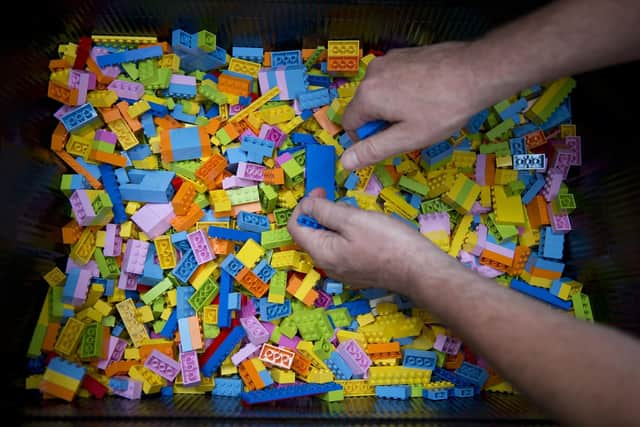

There’s something really cathartic about unleashing your imagination and clicking bricks into place. No distractions from technology. Just old fashioned fun.
Not only does it give the old and young the opportunity to play but also develops motor skills in children. It is certainly better than thrusting a tablet or smartphone in the faces of young people.
So my shoulders sagged when Lego unveiled tech-filled versions of its small building blocks. The Danish toymaker's Smart Play system introduces new electronic components to the classic plastic blocks like sound, light and reaction to movement.
Lego says its new tech-enabled products, launching in March with a new Star Wars set, are its "most revolutionary innovation" in nearly 50 years.
I am in agreement with Josh Golin, executive director of children's wellbeing group Fairplay, who believes ‘Smart Bricks’ could "undermine what was once great about Legos" - harnessing children's own imagination during play.
This is just another example of technology overreach. Why not just let the kids play?
Andrew Manches, professor of children and technology at the University of Edinburgh, told the BBC that the beauty of Lego lay in "the freedom to create, re-create, and adapt simple blocks into endless stories powered by children's imagination".
I’ve forgotten the number of times a young relative has impressed me with their creation using Lego bricks. Each one of them has a unique approach to building the structure of their choice.
Lego was a foundational block of play time during my childhood. I suspect that that’s not necessarily the case these days for many children. It’s really disappointing that we can’t get away from technology.
If children aren’t stuck to computer games then they’re stuck in the precious world of social media. We can’t even tell them to go out and play on the grass anymore because all the playing fields have been sold off.
You see it first-hand in public where toddlers are sat in a pram or supermarket shopping trolley glued intently to phones, the world simply passing them by.
Little wonder that a lot of young people struggle with simple social skills like answering the phone.
I’ve not encountered these new Smart Bricks yet, which Lego says can sense motion, position and distance. But going by that description I’m not sure I really want to introduce young relatives to Lego Smart Bricks.
If Lego wants to ensure young people continue to enjoy its products then perhaps it should look into how it can make them more affordable. Anyone wanting a Lego set may well need a mortgage at the rate things are going.
By allowing smart technology to encroach more and more into our lives we leave ourselves more vulnerable to bad actors.
A lot of people have concerns about the security and privacy of new smart toys for children, especially those that utilise AI.
In 2026, we would all do well to take stock of the direction that we’re headed in. Technology hasn’t necessarily made us smarter. It certainly hasn’t brought us more time. And nor is it saving us money.
In addition to encouraging children to play with toys that don’t involve fancy AI or any other technology, it might also be putting a book into their hands with one in eight children aged five to eight not owning a book at home. The Government’s attempts to improve reading skills in pupils through a “national year of reading” in 2026 are laudable but I’m sceptical as to whether it’ll make a big difference.