
Lessons need to be learned from the Langdale Moor wildfire last year - Carl Les
Whenever we are faced with a major incident, I am always indebted to the professionalism and hard work of those on the frontline dealing with the emergency. We are so fortunate in North Yorkshire to have such strong working relationships with our partners from the emergency services to health organisations, the Ministry of Defence, and community and voluntary organisations.
This is not by chance, but by long-term collaboration and hard work. But what happened last summer was something we have never seen before and placed significant pressures on our emergency response. The largest wildfire ever witnessed in North Yorkshire had a profound impact on the environment and communities across the area.
With any major incident, it is vital to take a step back and see if there are any lessons that can be learned.
The response to the blaze on Fylingdales Moor involved working with partners outside of the immediate circle of the North Yorkshire Local Resilience Forum (NYLRF), which is our partnership that responds to emergency situations. These others included the North York Moors National Park, Forestry England, the National Farmers’ Union and many more individuals.
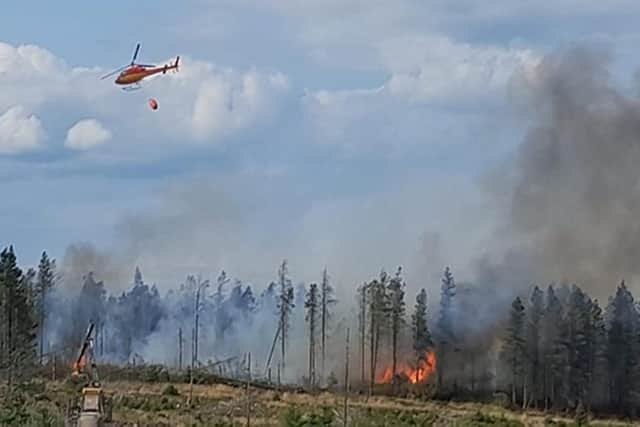

The response to the wildfire has given all agencies and partners involved stronger shared understanding and greater opportunities to work together in the future. A great deal of work has been going on since to look at what happened and how we can deal with emergencies even more effectively in the future. At its height, the fire covered 20 square kilometres.
A review of the way agencies worked together was published last week and sets out a vision designed to support an even stronger emergency response in the future. The report from the NYLRF is the result of detailed evidence gathering and feedback. Its recommendations are designed to strengthen how agencies prepare for and respond to future major incidents, particularly in the face of the threats from global warming. It outlines how training will be enhanced, particularly for those leading the response, to help with decision-making at a time of immense pressure.
Work will also be undertaken to ensure there is closer working relationships with organisations beyond the core emergency services – including landowners, managers, environmental bodies and infrastructure partners – to reflect the complex nature of large-scale incidents such as wildfires. To make sure we are as prepared as we can be, joint exercises are being carried out between our agencies to ensure vital equipment and specialist resources – such as drones, aircraft and heavy machinery – can be deployed quickly and effectively.
The sad but undeniable truth is that somewhere in the country there will be a repeat of the Fylingdales Moor wildfire.
While the cause of this major incident is believed to be cooking using a naked flame, perhaps a campfire, or disposable bbq, the extremely dry conditions that were evident on the Moors last summer contributed to the scale and impact of the fire. With increasingly hot, dry conditions linked to climate change, the report highlights the need to strengthen long-term resilience to wildfires.
This includes improving how lessons learned and local intelligence feed into risk planning, as well as contributing to national discussions about a more consistent UK-wide approach to responding to wildfires.
The NYLRF and this Council have committed to continue to press the Government to introduce a funding framework for extreme weather events, akin to the one which exists specifically for flooding incidents. Had this been a flooding incident, farmers, landowners and businesses impacted by the blaze would have had a route to compensation.
It was hugely disappointing to learn that the Government will not be making compensation available for those impacted by the wildfire. But to help support the businesses which were caught up at the epicentre of the wildfire, we have stepped in to assist with providing financial support.
We are working with the Two Ridings Community Foundation to provide a one-off and targeted offer to local businesses directly affected by the wildfire. Grants of up to £2,500 are being made available to businesses that qualify, with the prospect of an additional hardship support payment of up to £12,000. We are committed to supporting our communities, but I cannot stress enough that this funding has been made available due to unprecedented circumstances surrounding the Fylingdales Moor blaze.
As a council, we will not be able to repeatedly step in to provide financial support in the future at a time when our budgets are under intense funding pressures and demand for our own services is ever-increasing.
The effects of the Fylingdales Moor wildfire are still very much evident nearly 12 months on for both the scorched landscapes as well as the communities affected. The response to this wildfire is vital to helping to shape our emergency response in the future not just here in North Yorkshire, but also nationally.
In the face of such a devastating incident, we need to make sure we have taken on board any lessons learned from such a catastrophic event so we are as prepared as much as we possibly can be for the next major emergency.
Coun Carl Les is the Leader of North Yorkshire Council.