
Letting Andy Burnham stand for Gorton and Denton seat could not have been worse for Prime Minister Keir Starmer than what he faces now - Jayne Dowle
Whatever happens with Prime Minister Sir Keir Starmer this week, the National Executive cabal who outlawed Andy Burnham running for the Gorton and Denton by-election must surely be rueing their haste and questionable justifications. Let’s put aside domestic concerns for a moment. Whoever is Prime Minister of the UK needs to represent our interests confidently abroad. Should the ever-more beleaguered Starmer leave office, not one of the possible contenders for Labour leadership would have the same confidence on the demanding world stage.

Imagine Angela Rayner and Trump. I’ll leave it there.
Two weeks ago I argued that the shunning of Burnham by Labour’s high command could well turn out to be a spectacular own-goal. And with every day that passes in these frenetic times, this becomes apparent.
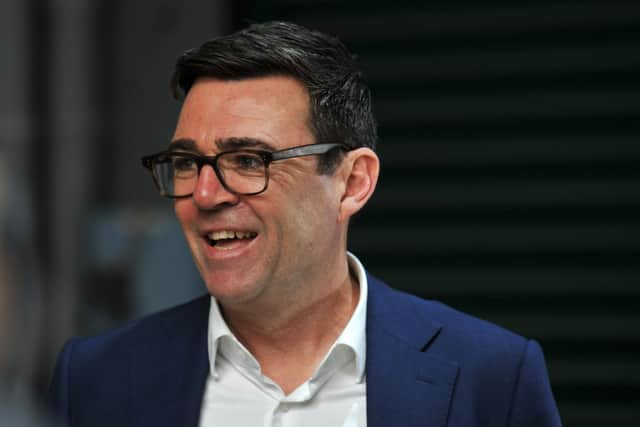
Using his position on Labour’s National Executive Committee (NEC), Starmer personally voted against Burnham being allowed onto the parliamentary candidate shortlist, arguing that his role as Greater Manchester metro mayor was more important.

Instead, in Gorton and Denton Labour is fielding Angeliki Stogia, a local councillor who finds herself embroiled in a vicious three-horse race between her own party, Reform UK and The Green Party. It’s reported that things got so nasty on the campaign trail last week she ended up retreating to a local café on the verge of tears.
Of course, if Burnham had been allowed to go ahead and stand, there is no guarantee that his campaign would have been plain sailing, or that Reform UK wouldn’t have put up a strong candidate in academic-turned GB News ‘celeb’ Matt Goodwin, or that the Greens wouldn’t have plumped for high-profile plumber and local councillor, Hannah Spencer.
With Burnham in the running, both parties would likely have pulled out the big guns in an attempt to stop him in his tracks. But he’s well-known, seemingly generally well-liked, his track record for running Greater Manchester goes before him. Put simply, he would have had a far stronger chance of clear victory.
Now, with the by-election looming on February 26, Labour faces the strong possibility of a bloody nose that will further dent Starmer’s credibility.
Meanwhile, more than half of Labour members disagree with the NEC decision to block Andy Burnham from seeking candidate selection, according to exclusive polling for LabourList published earlier this week (MON).
When asked whether they agreed or disagreed, 53 per cent of Labour members in the poll, conducted by Survation, stated they opposed the ruling, with 40 per cent supporting the NEC’s stance.
More than two-thirds (69 per cent) of members who think the Prime Minister is doing a good job in office backed the block on Burnham’s candidacy, while more than three-quarters (78 per cent) who think Starmer is doing badly were opposed to the decision.
A more confident party leader and PM would perhaps have lifted the so-called ‘Burnham Rule’ forbidding serving Labour metro mayors from standing for parliamentary seats, given Burnham the opportunity to stand and dealt with his arrival in Parliament if and when it came.
It would have been a gamble, but it could have paid off, especially as events have so rapidly overtaken Starmer.
The furore over former US ambassador Sir Peter Mandelson’s relationship with convicted paedophile Jeffery Epstein, the resignations of key Downing Street staffers Morgan McSweeney and Tim Allan, the furious speech from Scottish Labour leader Anas Sarwar calling for the PM to resign have all piled on the pressure and inevitably, led to much speculation of who might take over should Starmer go.
The frontrunners include former deputy Prime Minister Rayner, who – it’s reported – is rapidly trying to sort out her tax affairs with the HMRC in readiness, and Health Secretary Wes Streeting, urging people to “give Keir a chance” whilst possibly plotting his downfall, depending on who’s telling the truth in these murky times.
Would Burnham have stood a chance anyway, given that – if he’d won the by-election – he’d have been a backbencher with no immediate sway in Cabinet, and plenty of enemies who would have regarded him as an opportunistic usurper? Who knows, but one big thing in his favour would have been that he was not directly involved in any Westminster in-fighting.
Burnham had stressed to Starmer that his attempt to return to parliament would “support the work of the government, not undermine it”. Even if that was a bluff, if the Prime Minister had been magnanimous rather than anxious, it would have shown his shoulders were broad enough to take on whatever came next. Surely it couldn’t have been worse than what he is facing.