
Local leaders cannot overlook the climate crisis in deliberations over re-opening Doncaster Sheffield Airport - Chris Broome
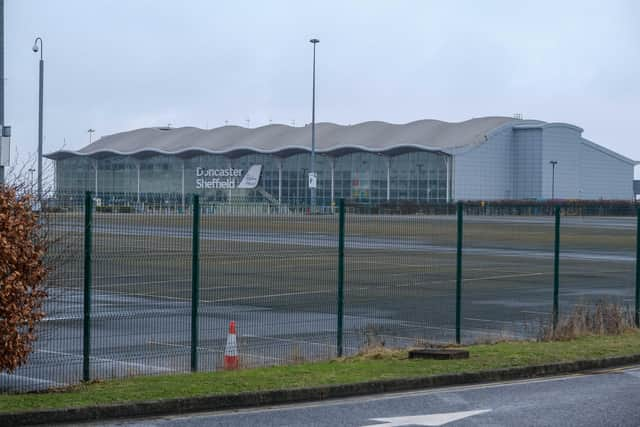
Discussions over the re-opening of Doncaster Sheffield Airport have been dominated by its commercial prospects and especially the risks to the ever-growing sums of public money being committed. The regional authority (SYMCA) and City of Doncaster Council are continuing with financial assurance work.
Flying is a particularly difficult activity to reduce emissions from. Research and development is ongoing to develop a variety of partial solutions. The case being made for the wider ‘South Yorkshire Airport City’ project is that it includes attracting businesses and talent to develop them. More lightweight materials are one but these can only be introduced as airline fleets are replaced, which happens over a timescale of decades.
So over the next 20 years or so, the most impactful solution is seen as introducing higher quantities of lower emission sustainable aviation fuels (SAF). The Government has set very stretching targets that 2 per cent of all aviation fuels should be SAF this year and 10 per cent by 2030. But almost all SAF is currently produced from used vegetable oil.
There are nowhere near enough such oils available in wealthy European countries to satisfy demand for both road and aviation fuels. The bulk are imported from the global south. Only waste oils should be used but the relevant regulations are poorly drafted and enforced. This results in oils which can be put to other good uses, such as animal feeds for local farmers, being passed off as ‘waste’ and sold at higher prices for processing into fuels.

Efforts are ongoing to develop more advanced SAFs, produced from other plastic and organic wastes or renewably produced hydrogen and captured carbon. But these are all limited resources and converting them to SAF requires very energy-intense processes.
The much higher costs over conventional fuels for those types of SAF which can be made commercially viable will have to be passed on to customers. In the meantime, taxes on flights do not reflect the pollution and climate impacts they cause.
By 2040, the national Climate Change Committee (CCC) estimates that aviation’s share of the UK’s CO2 emissions could grow to around 28 per cent of the whole economy’s. This is based on the Government following its advice to do more to curtail demand for flights - which it isn’t.
The aviation sector will also need to fund its ‘share’ of atmospheric carbon removal to enable steadily reducing emissions targets - reaching net- zero by 2050- to be met.
Technologies to remove CO2 from the atmosphere are even more speculative than those for SAF. ‘Direct Air Capture’ plants exist but it is unclear whether their energy needs can ever be reduced enough to make them useful.
Bioenergy with carbon capture and storage (BECCS) is anticipated to play the largest role. Yorkshire’s Drax Power Station could in theory become the biggest provider, were enough genuinely sustainable forestry and sawmill wastes available to fuel it, in a situation having parallels with the use of waste oils for SAF.
With other economic sectors set to be still struggling to decarbonise fast enough and the climate crisis intensifying, the acceptance of flying remaining such a major cause of it seems unlikely to last. Our local leaders would be well advised not to overlook the implications for the climate crisis and likely future actions to address it, in their deliberations over re-opening Doncaster’s Airport.
Chris Broome is a campaigner with South Yorkshire Climate Alliance.