
Lords resistance to assisted dying bill is rooted in English elitism - David Behrens
Assuming Keir Starmer sees the month out, who will he upset next? After farmers, pensioners and most of his own party, the next target on Labour’s hit list, if it remembers what it promised in the manifesto, is the House of Lords. Someone had better wake them up and warn them.

Even when there was still a dowager countess in Downton Abbey, the upper chamber was an anachronism. Today, as it goes through what future generations may see as its death throes, it is not just a dinosaur but a political albatross.
Labour is committed to removing the 92 remaining hereditary peers and replacing the House with a smaller, elected second chamber. But there seems little prospect of accomplishing any of that before Their Lordships scupper the one piece of legislation almost everyone else seems to want.
Among those of us who don’t turn up for work in an ermine cape, around eight in 10 believe that assisted dying should be legalised and they have held firm in that belief despite all the hand-wringing that has gone on in Westminster. That’s according to a poll this week by the National Centre for Social Research.
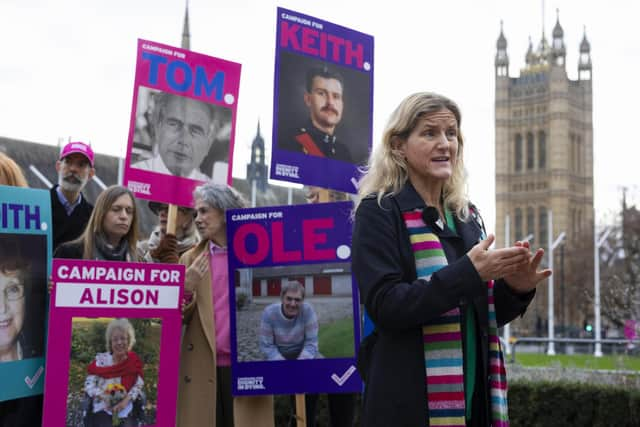

The figure is broadly the same as it was 30 years ago when the question was first asked, with researchers concluding that none of the ensuing debate had shifted a body of opinion that made up its mind for change a long time ago. That makes it one of the very few pressing issues on which there is a near consensus.
But you wouldn’t have thought so from the passage of the Assisted Dying Bill through the House of Lords. Its opponents there have placed so many procedural obstacles in its way that its sponsors now believe it is almost impossible for it to be signed off before the administrative deadline in three months’ time.
This, need I remind you, is despite it having passed through the House of Commons, whose members we elected to be there.
The Lords said to have been obstructing it include four former Conservative ministers – Michael Gove, Thérèse Coffey, Mark Harper and the diplomat David Frost – so if you ever suspected top-tier Tories of being out of touch, this ought to put it beyond doubt.
They would say, of course, that they are doing their job; that the proposed law is flawed and requires more scrutiny. But if that is so, then surely their job is to improve the wording and put the Bill on the statute books as the elected members of the lower chamber intended.
And why even are these peers so flush with righteous resistance? The standard line from objectors is the risk of families putting pressure on vulnerable relatives to end their lives against their will – and it’s important that there are checks and balances to prevent that happening.
But it does not alter the principle that handing end-of-life control to patients with terminal conditions is an act of human kindness, not godlessness. Dying with dignity or being made to endure debility: why is that even a choice?
Nor does assisted dying interfere with the natural order of life and death, any more than, say, a heart bypass. If you accept that invasive surgery is justified to save a life, where is the logic in not intervening when life has been reduced to a blip on a hospital screen? To do so is not to deny divine providence. And we can’t be expected to behave like Christian Scientists in one situation and not the other.
No, I think the resistance in the Lords is more deeply rooted in English elitism: in the aversion to giving people any more control over their lives than is strictly necessary.
It’s a condescension you can trace back as far as you like, and religion has nearly always been the cause. During the English Reformation you could be sent to prison for eating meat during Lent, unless you handed over money to the church for an ‘exemption’. Until the Victorian era you weren’t allowed to vote if you didn’t own property. And in our own time we were told we would go to hell in a handcart if we allowed the shops to open on Sundays.
In all cases, enfranchisement was granted slowly and reluctantly by those in gowns and cassocks, and so it is proving with assisted dying. A year ago, the Tynwald of the Isle of Man voted to allow it – the first parliament in the British Isles to do so – but Westminster’s rubber stamp is required and officials there have yet to recommend it for royal assent. In England the decision will go down to the wire.
But the tide will not hold forever. A decade from now, choosing when to die will probably be as ingrained in our social fabric as doing the shopping on a Sunday. The bigger question is, will the Lords still be around to see it?