
Mapping out a bright future for North Yorkshire with new council plan: Carl Les
The days of printed maps appear to be over. Even the more resilient and the less serious hikers appear to rely more on Garmin GPS trackers (the serious) and mobile phone apps (the less serious) than the redoubtable Ordnance Survey Landranger Map series, 1:50000 scale, two cm to one km – 11/4 inches to one mile.
In my early days it was still one inch to a mile. It`s a small difference, I suppose, unless you are an ardent Brexiteer.
Even road maps are disappearing to be replaced by built in satnav systems, or mobile phones clipped to the windscreen by suckers. No longer in petrol stations do you see piles of road atlases near the till.
In our shop and filling station on the A1 we sold hundreds of them each year, especially those price-flashed from £9.99 reduced to £1.99, cheap enough to change each year either to get the updated version with roads and bypasses up to the minute, or to be replaced having been thumbed to death, or chucked across the cabin in frustration once too often.

The great advantage of the satnav is its accuracy now, after years of development and essential refinement for commonsense, and its absolute focus on where you want to go, and how to get there. The great advantage of the printed map is that it puts the journey into context, from where the start lies, through a range of midpoints and surroundings, to where the destination actually is, and where it is near.
Satnavs don’t tell you that your route takes you near the sea, or lake, over a major river, or through a tricky mountain terrain. It doesn’t show you that the gap between settlements on a minor road is substantial enough that you might want to break your journey, or even make sure you have a good tank of fuel. That advantage of the printed map is that at a glance you can see the context.
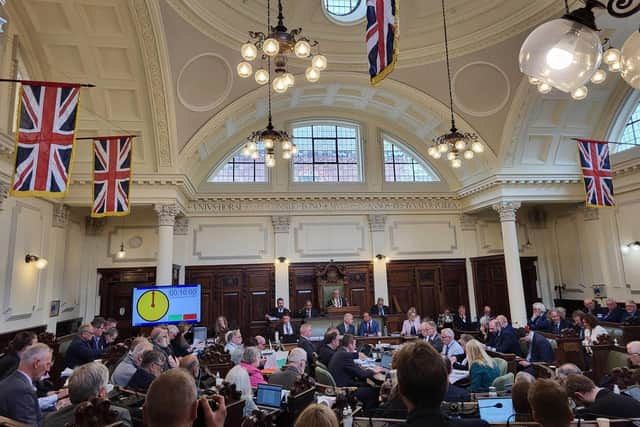
Last week we agreed our council plan. There were a few reservations, but by and large it was approved by the majority of members. In the days when I presented it to the council, I always likened it to a map, and Councillor Heather Philips, following on from me, did the same. If you are going on a journey, you have a better chance of arriving at your destination if you have a map.
And the map puts the journey into context, the distances the council will have to go, the time it will take, the difficult areas we will have to navigate, the other considerations we will have to take into account in the context of the journey.
In truth it is not a single journey. The 10,000-plus employees of North Yorkshire Council deliver literally millions of transactions every year to our residents who may be individual clients but are all our customers with wants and needs that we must strive to satisfy. Their work can range from the very large, like building the Kex Gill bypass, the largest road scheme we have ever undertaken and over the worst terrain we have in the county, to the very general, emptying your bins every week or mending footpaths used by hundreds if not thousands of people, to the very individual, social care delivered in somebody’s own home.
There are thousands of other services on our service spectrum.
It is a high-level strategic document, looking forward into the next four years, and helping our staff in particular to understand the context the Council sits within, what our priorities are and how they fit in.
In my experience nobody comes to work to do a poor job, and it is good to understand where individual effort adds to the whole. Even using all the 850 words I`m allowed each week, I couldn’t possibly do justice to all the elements of the plan. However it is possible to focus on what the key ambitions of the council are. There are five.
Supporting places to thrive, and empowering the communities where we all live, work, visit and do business.
Helping those places to become more sustainable, especially as we come to terms with climate change as well as social change and the political turmoil in the future world around us.
Ensuring that all our residents are as safe as possible, and living healthy lives.
Helping people to maximise their potential, both individually and within communities. Councils don`t create wealth per se, but we should enable wealth creators to flourish.
We should be a strong, stable and financially sound c ouncil, ambitious to always do better, not being afraid to innovate, and always being customer-led.
Underneath this plan individual directorates produce their own departmental service plans that go into much more specialised detail, that only those engaged in that service need to understand. However each individual staff member has their customers to serve, externally and internally and is a customer themselves of others.
We need to be customer-led, and always search out any improvement we can find, for today’s excellent is tomorrow’s acceptable.
Carl Les is leader of North Yorkshire Council