
Mayoral candidates must put region's renewables before party - Henri Murison
Over the last week, the debate nationally has focused on the fracturing of the cross-party consensus on the need to tackle climate change.

It was the previous Conservative-led government, first in coalition then alone, that had hosted the COP in Glasgow and enshrined the national 2050 net zero target into law. However, Kemi Badenoch as the Leader of the Opposition has distanced herself from those achievements; seemingly in response to the Reform attacks on her on that same record.
Here in Yorkshire however, as voters across Hull & East Yorkshire prepare to elect their first Metro Mayor, the picture is different. At the recent BBC debate, all the candidates bar one raised their hands to support the request from some of the the most important businesses and investors in the Humber Estuary, as well as myself, to back Net Zero.
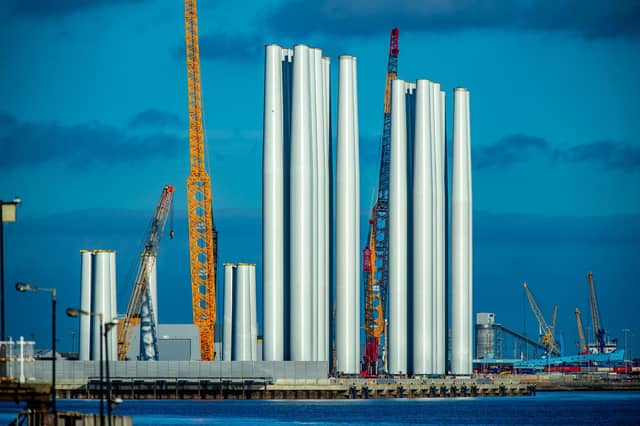
Not simply to meet the UK’s share of global emissions reduction targets but to secure jobs already being created in the Humber, such as at Siemens blade factory in Hull. That investment was backed at time by a then Liberal Democrat energy secretary and Conservative chancellor, and depends on us being a global leader in this transition.
Luke Campbell, the Reform UK candidate, couldn’t give a straight answer. When asked directly by the BBC’s Tim Iredale whether he supported the case made in the letter he had received from me, he only offered a half-raised hand.

For someone who claims to dislike politicians, despite seeking political office, his fence sitting was the kind of performance that would make a seasoned America congressman - balancing competing special interests between fundraisers - proud.
Rather than following her party leader, the Conservative candidate Anne Handley did raise her hand. In doing so she put “place first, rather than party first”, not a phrase she has used herself, but one coined by Andy Burnham, Greater Manchester’s first Metro Mayor, who has always taken that approach and intends to continue doing so.
Reform UK’s national line is to scrap net zero, impose new taxes on the renewables sector, and roll back investment in clean energy infrastructure. That message may resonate in Westminster’s culture wars, but repeating that line in a region like the Humber — the country’s leading region in offshore wind and in greatest need of industrial decarbonisation — is to ignore economic reality.
Similarly, across the Estuary in Scunthorpe, the Carbon Capture and Storage infrastructure which would give a long-term future for blast furnaces has been derided by Richard Tice, Farage’s Deputy and a Lincolnshire MP, since last year’s General Election.
The place-before-party-style of leadership that Burnham embodies is far more familiar in the United States, where states benefit from several centuries history of greater autonomy over their economic direction. Time and time again we see the Governors taking bold, independent decisions — even when they diverge from their party's national stance —consistently rewarded with high levels of public support.
Take former Republican Governor of Maryland, Larry Hogan, who defied his party’s leadership under President Trump, which was openly hostile to clean energy and net zero ambitions. Hogan instead chose to champion offshore wind and clean energy, not because it aligned with his party’s platform, but because it was right for Maryland. He left office in January 2023 with an extraordinary 77 per cent approval rating.
The pragmatism and place-based leadership he showed was exactly the type of leadership devolution in the UK was meant to foster, but is a bar that some of our politician have struggled to meet. As we look to the future of the Energy Estuary, what matters most is that those seeking to lead are prepared to put the region first. That means engaging seriously with business, embracing the transition to net zero as a pathway to jobs and investment, and being willing to challenge national party lines when they don’t serve local needs.
Henri Murison is the chief executive of the Northern Powerhouse Partnership.