
Mob scenes in Belfast this week had a depressing familiarity about them but Kemi Badenoch struck the right note - David Behrens
There was a depressing familiarity to the mob scenes on Tuesday. Once again, the pit bulls had been set loose by agitators behaving like huntsmen calling the hounds. They wore hoodies, not velvet hunt caps, but they cast themselves in the same mould, as custodians of the cherished English values of William Blake.

It wasn’t England this time; it was Northern Ireland, which is a tinderbox in the first place, but the pattern was the same. Outrage had been provoked amongst those whose default response is violence.
The excuse this week was the stabbing attack by a Sudanese asylum seeker on the streets of Belfast. The week before it had been the conviction of a Sikh man who murdered a student in Southampton and then tricked the police into believing he was the victim of racism. Two years ago it was the son of Rwandan refugees who killed three young girls in Southport and injured eight more.
But to those who took to the streets, who left cars and buildings burning in their wake, the details were incidental. The red flags had lit up the whites of their eyes. Asylum seekers, two-tier policing, foreigners generally: these were desecrations of Blake’s green and pleasant land that they had been programmed to hate.
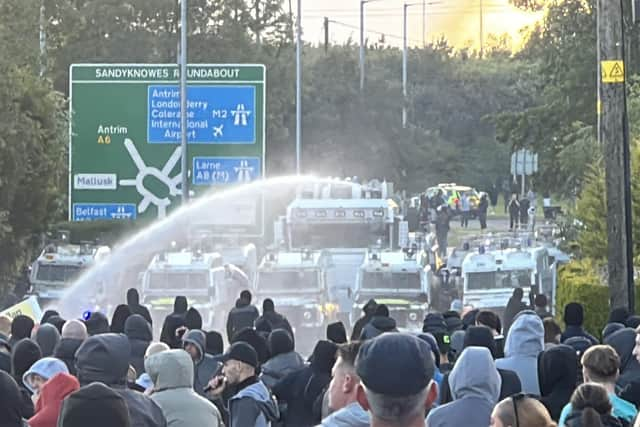

One thing separates the mob from the rest of us and it’s not tolerance or having ever heard of William Blake; it’s simple, common decency. We can agree that our immigration controls are chaotic and that a fear of being accused of racism has destabilised our public services, without being driven to violence by ringmasters who pretend to be politicians and whose rhetoric reduces us to the level of those they condemn.
That’s why the voice that cut through the indignation this week was the one that urged reform rather than riots. Kemi Badenoch has been conspicuously silent for most of the last two years as she put her own house in order after 14 years of reverse-gear government. It was her party that implemented most of the policies against which people are now rioting.
But on Tuesday, just before Belfast erupted, she emerged as a standard-bearer for the sensible centre of politics, a voice of reason, not retribution. We needed to rebuild trust in failing institutions, not undermine them, she said; we had to fix a broken system, not smash it to pieces because we were angry.
Specifically, she wanted to abolish the onus placed upon teachers, nurses and police officers to adapt their day-to-day demeanour to the age, sexuality, religion and race of whoever they happen to be teaching, resuscitating or arresting. It is a requirement that makes difficult jobs even harder and which, says Ms Badenoch, has stopped officers preventing avoidable tragedies. The Nottingham stabbings, the Southport attack and the Manchester Arena bombing could all have been averted if authorities had not been afraid of being called racist, she said.
To that list she might have added the child grooming scandals across Yorkshire and the Midlands, the most egregious of all examples of misplaced non-prejudice.
Labour says abolishing the ‘duty of equality’ would be regressive because it would remove safeguards that stop women on maternity leave being sacked or older workers suffering discrimination, but that is a matter of detail, not of principle.
The problem is that legislation shouldn’t be necessary at all. It effectively makes ‘not being nice’ a crime. It means that if a school or hospital hurts your feelings you can have them prosecuted, even if they meant no harm. So you can see why they’re constantly treading on eggshells.
It’s this inequity that Nigel Farage and others have weaponised. But whereas he wants opposition to manifest itself as “pure cold rage”, which is his euphemism for rioting, Kemi Badenoch is being pragmatic. Rage, she said, is not a strategy.
In finally confronting the issue she is playing catch-up with voters. The latest polling this week found that a third of us believe police do treat ethnic minorities more favourably than white people. But tellingly, two-thirds say the rioters do not speak for them. “While most support peaceful protest, they have little tolerance for disorder or disruption,” said the pollster Luke Tryl.
Among Reform voters the figures are different. Some 57 per cent sided with the mob who claimed to be ‘avenging’ the Southampton murder.
Whose side are YOU on? Do you want more violence or do you want the violence to stop?
That is the choice facing voters in Makerfield next Thursday: rally like dumb animals to the clarion of the self-styled hunt master Farage or rise above the rhetoric and demand real reform through the parties of the sensible centre. It’s a binary decision: we can’t have it both ways.