
My simple warning to Andy Burnham about rejoining EU as PM faces crunch week: David Blunkett
Older readers will remember, way back, the first ever television satire, That Was The Week That Was. Acerbic, and mostly funny, it caricatured the politics of the moment – including the then-Conservative Prime Minister, Harold Macmillan.
One phrase from the programme, which summed up the then-PM was: “He didn’t say ‘yes’ and he didn’t say ‘no’. He didn’t say ‘stop’ and he didn’t say ‘go’. I’m reminded of this because next week could be “That Was The Week”.
The reason is simple. There are two very major events taking place. One about our domestic agenda - touching on the thorny issue of welfare; and the second, our relationship with Europe – which has bedevilled our politics since the Second World War.
Both are clearly vital for Britain’s future but are Marmite issues and (to mix metaphors) where governments can get their fingers well and truly burnt.
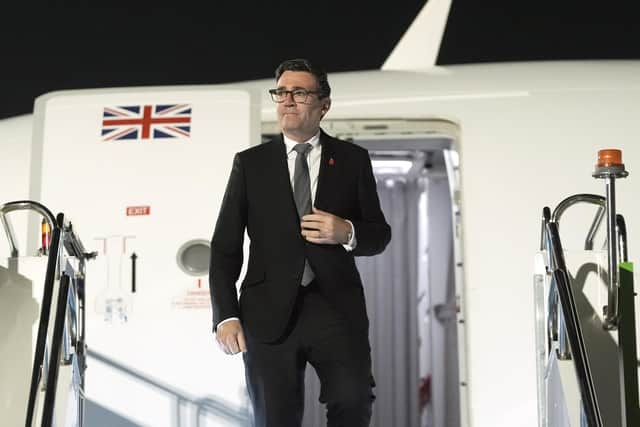

My friend and former colleague from my Cabinet days, Alan Milburn, will be publishing his long-awaited second report on what we should aim to achieve for the 951,000 16- 24-year-olds who are not in education, employment or training.
Get this right and it is possible to start turning round the oil tanker of the exponential rise in welfare benefits, which exploded during Covid and has continued ever since. It is self-evident that if young people move onto benefits, they are in real danger of staying on them for life.
In fact, the figure is almost half of those who begin on health-related or disability benefits when they were young remain dependent, in one form or another, forever.
This is a frightening and totally unacceptable situation, but it is much easier to pronounce on what should be done than it is to actually do it.
Alan came up with an interim report in the summer which outlined the scale of the problem, so there is no doubt in anyone’s mind that “something must be done";. To tell the truth, it can be.
Back in 1997, when the problem was admittedly vastly easier than today, the commitment was to put 250,000 young people into a job, a training place or a voluntary experience. That was managed, in two years, with the help of a windfall levy on the inflated profits of the privatised utilities. No such windfall levy came out of the October budget, but something is going to have to give, because without additional resource to that which has already been allocated, the cycle cannot be broken.
In simple terms, we must take drastic action now in order to reap the financial as well as social reward down the line. When young people have a job or a positive future in front of them, the benefits bill will fall, and the income to the Exchequer will rise.
Initially, the target has to be the escalating rise in spending on idleness before it is possible to then pull it back to pre-pandemic levels. I was fortunate, as Education and Employment Secretary to work with the then-Chancellor, Gordon Brown, and the Employment Minister in my team, Andrew Smith, to take those drastic steps and, as the National Audit Office and Public Accounts Committee subsequently affirmed, to get business and public service, government and individuals to work together for the common good.
Which brings me to our relationship with Europe and the EU-UK summit, which will take place next Friday. Long postponed because of the transfer from Sir Keir Starmer to Andy Burnham as Prime Minister, the opportunity exists to have a reset which is short of joining either the single market or the customs union, but trying to make more sense of our economic and business relations with the 27 member countries - and giving a boost to our economy in the process.
Credible estimates indicate that over the last decade Britain has foregone around 4 per cent points in GDP with all the loss of income this entails. Income that could be used, not only for improved public services, but to tackle that economic inactivity which is exemplified by the young people not in a job.
Even the modest steps already flagged in advance of next week’s gathering indicate an increase in potential growth of 0.4 per cent. It doesn’t sound a lot but with the Office for Budget Responsibility predicting a drop in growth (not helped by the interest rate hike 10 days ago), anything that helps to counterweight the impact of the US-Israeli fiasco in attacking Iran is bound to be a benefit.
Whilst enthusiasts for rejoining the European Union undoubtedly exaggerate opinion polls, there is clearly a desire by the majority of the electorate to make sense of the aftermath of the referendum 10 years ago and the subsequent withdrawal - seven years ago this coming January.
But my bones tell me to give my friend, the Prime Minister, a simple warning.
Moving closer to Europe and having a conversation about our future engagement is one thing, moving to the idea of rejoining (if that were even possible) is entirely another.
As we saw from the very clear message sent to President Trump in the mid-term elections in the US, domestic issues, and particularly those things closest to the hearts of men and women who are not immersed politics, has to take precedence over important but distant, grandiose dreams.
That is why Andy Burnham is right to put the cost of living – despite all the financial challenges – as his top priority.
Lord David Blunkett is a Labour peer and former Home Secretary and Yorkshire MP