
Ockenden report raises questions about the standard of maternity care across all our hospitals - Jayne Dowle
Parents will do anything to protect their children and I’m already planning to be with my own daughter when the time comes for her to have her own baby. It’s a few years in the future, but I have seen and heard such horror stories about childbirth and its aftermath that I won’t be leaving my own child, adult though she is, alone in the hands of NHS maternity care.

I’ve already told her it’s obviously fine for her husband or partner to be there too, but I will be her advocate in hospital. Now I have read the Ockenden report into terrifying failings in maternity care in Nottingham, I am even more determined.
No-one will ignore her when her waters break. No-one will be sending her home to take a hot bath or scrub floors to attempt to turn her baby if it’s in breech position (upside down) - as I was told to do at eight and half months pregnant with her - no-one will get away with bullying or belittling her.
I will challenge at every step, just like I did when I miscarried a baby at 12 weeks. The (female) obstetrician insisted she was sending me home, bleeding heavily, in pain and with a high temperature, ‘for nature to take its course’.

My daughter was only three, her brother was six; they were already traumatised by their mother being admitted to hospital in an emergency. No way was I going home in that state, to frighten them even more, when a simple operation would deal with the situation. Nor was I prepared to put my own health at risk.
I argued with the obstetrician for half an hour, until finally she gave in and ordered a D&C (dilation and curettage). By the end of the fraught conversation the young student medic who accompanied her was crying. I often wonder if she went away and vowed that when she qualified, she would never try to intimidate a woman already in distress.
I’ve had enough experience of the ‘caring profession’ in recent years to know that whilst our National Health Service has many, many honourable, compassionate and skilled nurses, doctors and support staff, it is also riddled with a culture of dismissiveness, arrogance and buck-passing.
Nowhere is this more poignant than on the maternity ward. What is meant to be a time of joy and wonder is too often a harrowing, horrific experience that leaves women wounded, shell-shocked, even dead, and their precious babies treated like collateral damage.
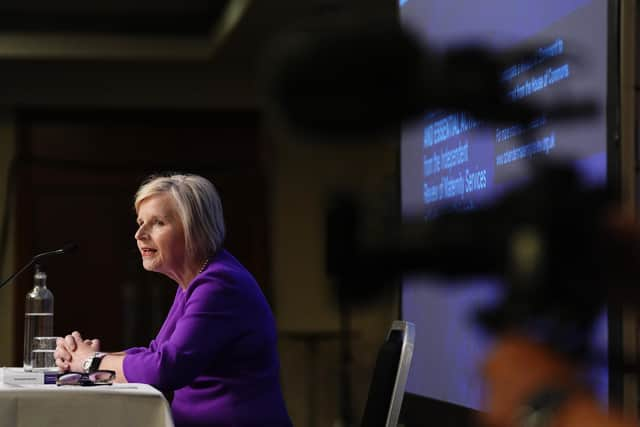
That’s why the Ockenden Review into maternity provision in Nottingham, published last week, is so important. The findings, revealed by chairwoman, senior midwife and community activist Donna Ockenden, are shocking.
Ockenden concluded that more than 500 mothers and babies died or suffered serious harm as a result of grave failings in Nottingham’s maternity provision. She found a system marked by cruelty and bullying by staff towards women giving birth and their families, rooted in a toxic culture of denial, victim-blaming and gaslighting.
Women said that they felt dismissed, disempowered or blamed when they expressed anxiety or reported critical matters such as reduced foetal movements. Whilst parents came forward to share their experiences, it is telling that NHS managers and leaders did not; of 66 senior managers in accountable positions, only 35 engaged with the review. Only four of 14 senior regional NHS leaders agreed to answer questions.
The review has been the largest exercise of its kind in NHS history, involving more than 2,500 affected families between 2012 and last year, who had long campaigned for an investigation. Ockenden found that during this period, there were 162 potentially avoidable deaths, including six mothers and 93 stillborn babies, at Nottingham University Hospitals NHS Trust. Shockingly, there was, on average, one avoidable death or instance of serious harm every week for a decade.
Nottingham is a stand-out for all the wrong reasons. Clearly, the culture there had become absolutely pernicious; labouring women were denied pain relief, in some cases, dead babies were disposed of as clinical waste, in others, remains were left for so long that they decomposed in the mortuary.
However, the Ockenden report raises questions about the standard of maternity care across all our hospitals. Women in the UK are three times more likely to die around the time of birth than women in Norway, according to important research published in the British Medical Journal in 2022. Of the eight countries studied, including France, Italy and the Netherlands, only Slovakia reported a higher maternal death rate.