
Old textile mills stand as a testament to where West Yorkshire came from - William Gaunt
Mills are such a huge part of the West Yorkshire landscape but sometimes we take these important heritage buildings for granted. They form the everyday backdrop to our lives acting as a permanent reminder of our past.
Our old textile mills stand as a testament to where West Yorkshire came from and their social and cultural impact helped shape Britain and beyond.
The technological developments in the 19th century textile industry drove the industrial revolution that swept the Western world. The wealth the mills created financed the civic grandeur of West Yorkshire’s towns and cities.
In Leeds, the subsequent social turmoil provoked the rollout of universal education, led by Richard Oastler, the “Factory King”, whilst the Bradford mill workers drove the foundation of the Labour movement, pushing for a more equitable society here and worldwide.
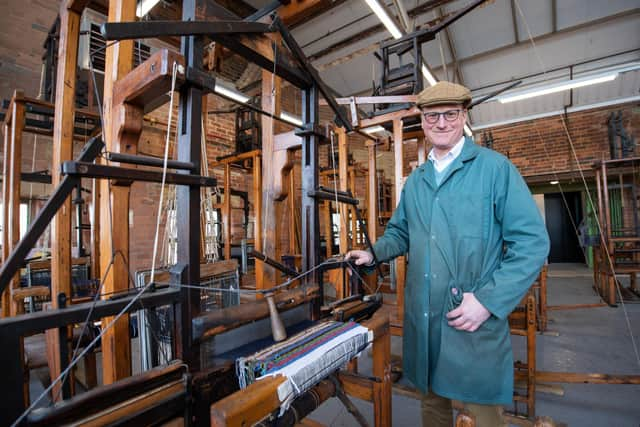

The hunger for labour attracted migrant workers from Ireland, eastern Europe and South Asia. They travelled across the then Empire seeking a better life for themselves and their families. It was not an easy road to travel but that wonderful diversity is now an intrinsic part of Yorkshire’s rich heritage.
But how relevant are our mills in the present day and what about their future? Bradford’s selection as UK City of Culture 2025 demonstrates perfectly how the mills remain at the centre of our cultural life and heritage. Throughout the year, mills around the district have been used as venues and, in some cases, literally canvases for art works and performances.
International artists through to local community groups have been exciting, provoking and challenging us with new work placed in old weaving sheds, spinning rooms and even projected onto mill chimneys. These imposing buildings that employed our forebears now invite us in to share our stories and memories. Artists have collaborated with people across the city to discuss and think about who we are and what we want to change to make the world a better place.
The recent sound and light show - STRIKE! - projected onto the 200-foot-high chimney of Manningham Mills that dominates the Bradford city skyline, brought to life the 1890 strike by female workers. Not seen as ‘breadwinners’, strikes by women have been downplayed in the traditional historical narrative. The newly created accompanying protest banners demand us to consider a woman’s role in the home today. “We don’t just make samosas & pakoras” being a particular banner highlight. “Perfectly exemplifying the spirit of women in Bradford today,” said Shanaz Gulzar, creative director, Bradford UK City of Culture 2025.
However, the perceived permanence of our grand mills can be deceiving, their continued existence very fragile. Some beautiful examples were saved soon after their closure; Salts Mill and Dean Clough stand square and proud ready for another 200 years of use.
But there are many that are in an obviously parlous state, abandoned and derelict, at the mercy of the harsh Northern weather and acts of vandalism and arson. Research commissioned by Historic England in 2021 revealed that 237 Yorkshire textile mills lay empty or underused.
We need to show the same vision as our forebears to ensure that these important heritage mill buildings can be enjoyed by generations to come.
William Gaunt is joint managing director at Sunny Bank Mills, Farsley, West Yorkshire.