
Our new approach to teaching the Holocaust at one Yorkshire school is changing perspectives: Alan Dorr and Emma McNulty
One of the most striking things you come to realise about teaching the Holocaust is how many pupils arrive with ideas and impressions already formed. Some had learned about the atrocities through films or social media, others had picked up fragments of information from books or TV.
Many were confident in what they thought they knew – but much of it was shaped by simplifications, misunderstandings or in some cases, conspiracy belief. One common misconception is that the British government did not know what was happening to the Jewish populations of Europe.
Without careful teaching, and space for critical thinking, misconceptions can take root and quietly harden.
We both teach at Immanuel College, a Christian faith school in Bradford, where many of our pupils face economic disadvantage. We believe every pupil deserves the highest quality of education – and that includes how we teach the Holocaust.
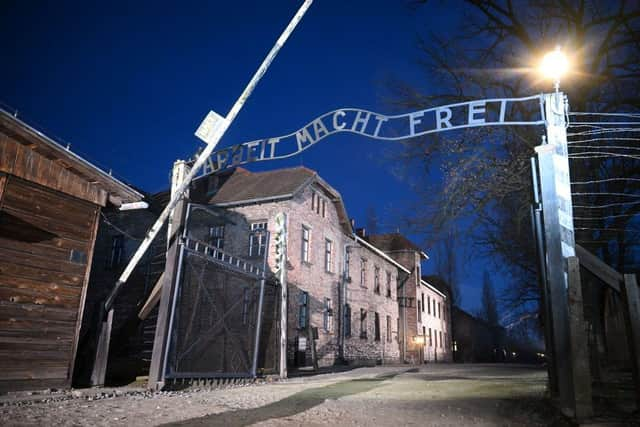

That’s one of the reasons our school applied to join the UCL Centre for Holocaust Education’s (CFHE) Beacon Schools programme in 2023. Previous continuous professional development (CPD) offered by CFHE which prompted us to begin reshaping our curriculum. But the Beacon programme offered something more ambitious – a year-and-a-half-long journey of support, challenge, and deep reflection.
From the very first residential in London, we knew this wasn’t going to be a box-ticking exercise. It was the best CPD we’ve ever had – not just because of the academic expertise, which was outstanding, but because of the care and attention given to us as teachers. It was humbling. And it left us with a clear imperative: to ensure our students experienced that same depth of understanding and human connection.
When done poorly, Holocaust education in schools can overemphasise graphic or distressing imagery, perhaps in an attempt to elicit a response through shock. But as we’ve learned, this approach can backfire. In a world saturated by graphic content on social media, young people can become desensitised – or worse, disconnected. They see bodies, not people. Horror, not humanity.
The Beacon Schools programme helped us reframe our approach. We now begin with personal stories – Jewish lives before the war, full of nuance and richness. We explore individual narratives and then place them in the wider historical context.
One of the most powerful examples we use to help pupils move from the “micro” to the “macro” is the story of the Greenman family. Leon Greenman’s testimony of the journey he, his wife Esther and their three-year-old son Barney took from Westerbork to Auschwitz-Birkenau is especially affecting. Small details – like Leon and Esther taking turns to hold Barney for 36 hours in a sealed Dutch railway carriage, or their innocent agreement that the other should remarry if one died – bring home the human cost in a way facts alone cannot. Pupils are often struck by the tragic irony that Barney, as a Jewish child, was in fact the one in greatest danger. Set against the wider context of how persecution varied across Europe, stories like these give students the humanity without which Holocaust education cannot be truly understood.
We also begin each unit by tackling the myths head-on. Using UCL research, we give pupils a quiz on the most common misconceptions. Many are convinced, for instance, that perpetrators were forced to kill – when in reality, most had a choice. Others believe Britain played a purely heroic role or that resistance was futile. These falsehoods are sticky, reinforced by social media, poor-quality films, and in some cases, conspiracy theories. That’s why we create a safe, well-supported environment for discussion, learning, and challenge.
Our curriculum has also expanded to include neglected areas – from the role of Britain to post-war experiences of Jewish people. We’ve introduced historical fiction, like After the War by Tom Palmer, to help students see beyond liberation and understand the ongoing trauma faced by survivors. We’ve drawn on lessons from CFHE, like the brilliant “Being Human” session, to help pupils reflect on moral responsibility and the choices people made.
This work has had a ripple effect across our school. We’ve run CPD for colleagues in other departments, developed cross-curricular links with RE and art, and shared FAQs to help staff handle difficult conversations. We now work closely with the Anne Frank Trust, and our student ambassadors are helping to lead Holocaust education and awareness across the school.
The Beacon Schools programme has taught us that reducing people to numbers risks erasing their humanity. By centring voice, agency and complexity, we create space for deeper understanding. We’re still learning – and that’s why we’re working towards the Quality Mark, a rigorous recognition of sustained, high-quality Holocaust education awarded to only a small number of schools.
If you’re a school leader or history teacher wondering if the Beacon Schools programme is worth the time – it is. The support, the resources, the community of practice – it’s changed everything for us. And, most importantly, it’s changing everything for our pupils.
Alan Dorr and Emma McNulty are history teachers at Immanuel College in Bradford