
Parents need to stop taking children out of school for holidays during term time - Jayne Dowle
In one area of Yorkshire alone, more than 3,000 fines have been issued to parents for taking their children out of school during term time. This was in Calderdale, between 2024 and 2025 and it’s absolutely outrageous, suggesting a sustained and systematic practice rather than the odd few days off here and there.

No wonder it’s so difficult for teachers and schools to maintain order and for pupils to behave well and make progress. Parents need to stop being so irresponsible, stop hiding behind excuses and get their children into school.
Whilst the lure of cheap term-time holidays abroad is often held as the main reason why children are taken out of school – with parents happy to take the hit of £80 per child to save thousands on flights and accommodation - there are other reasons too which are far more corrosive and worrying.
Some parents cite their own or their children’s poor mental health and anxiety as justification for staying at home; this is not helped by the current crisis in special educational needs provision.
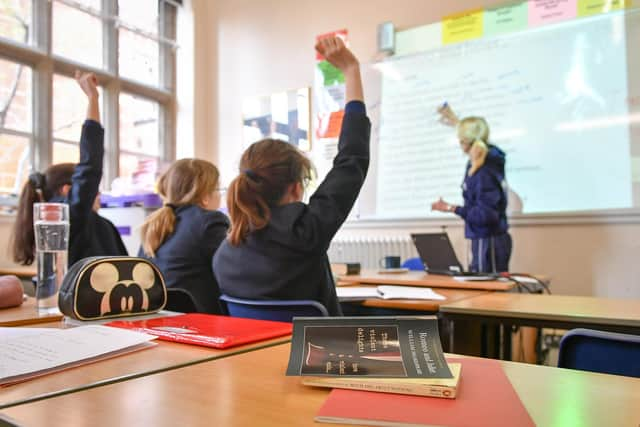

Or they foster the culture of regular ‘duvet days’ when the whole family doesn’t leave the house, often on Fridays or Mondays anecdotal evidence suggests. In 2025, the Department of Education said that more than a fifth of all pupils were persistently absent, missing at least a day of school each fortnight.
Or parents are attempting homeschooling, but without going through the proper channels to register this option. Or, worse, they are keeping their children off school because of neglect. Who knows what is happening behind some of these absences? As well as learning, schools are also able to keep check on children potentially at risk of harm. But if teachers don’t see these children, how can they do this?
Official figures show that Calderdale Council education welfare officers issued 3,292 fixed penalty notices to parents and guardians for children’s unauthorised absence from school during this 12-month period. Of these, 3,080 were for holidays and 212 for children’s poor attendance.
So much for the previous Conservative government’s policy of raising fines for unauthorised school absence in 2024, from a minimum of £60 to £80 per parent in a bid to crack down and return school attendance to pre-pandemic levels. This move was confirmed to continue by Labour’s Education Secretary, Bridget Phillipson, last year.
In Calderdale and no doubt in other areas across the region and the country, it isn’t working.
Some local councils are more stringent on issuing fines than others, but what is clear is that this is a national pattern and a worrying hangover of the Covid pandemic.
Across England in the year to January 2025, almost half a million (443,000) fines were issued to parents taking their children out of school during term time to go on holiday. This represented a 53 per cent increase since before the pandemic. A fine is generally considered if a child misses five days of school for unauthorised absence.
In 2018-19, the last full year before the pandemic closed schools to most children, just 288,000 penalty notices were issued by local authorities.
Underlining this more than doubling of school absence is the breakdown of the unwritten contract between parents and schools. Paul Whiteman, general secretary of the National Association of Head Teachers, hints at this when he argues – “fines have long proven to be too blunt a tool and largely ineffective.”
The big problem is that if parents don’t respect the authority of the school for that most basic of demands – attendance – it’s obvious that when it comes to other issues, such as their child behaving badly in the classroom, or bullying other children, there is no common understanding to work from.
Children who are persistently absent obviously suffer what’s known as ‘learning loss’ and may struggle to catch up, not just immediately, but for the rest of their education.
Also, valuable teaching time is taken up getting children back on track with their learning, meaning staff are constantly diverted, with no choice but to neglect other pupils.
I’ll admit, when my son and daughter were at primary school I took them out of school twice for holidays, with the agreement of their headteacher. In both cases it was because their late father, who had a terminal condition, had been in hospital and his doctors advised us to go there and then.
I remember feeling guilty the whole time, and the children did too. Although they enjoyed the thrill of travelling, they talked about what they would have been doing in school every day and missed their friends.
It wasn’t about saving money on holidays, and I did volunteer to pay any fines incurred – none were levied. But that was at least 15 years ago and the world has changed.