
Partnerships are key to helping people live well in North Yorkshire - Louise Wallace
Ever since I started my career in the NHS back in 2000, there has been one word that has driven forward the work in public health. The term ‘partnerships’ has been embedded in the concept of how local authorities and the NHS operate together for the past quarter of a century, and how we can work closely together to bring about the maximum health benefits for our communities.
That concept is now more important than ever with the opportunities we have been presented with following the launch of North Yorkshire Council. Whether it is using our libraries as hubs to promote health and wellbeing or providing health checks to tackle heart disease among the county’s workforce, that is what is currently being achieved.
But we do face very specific challenges in North Yorkshire. There is a perception that the county is affluent, but health inequalities still exist in rural communities – they just look different from urban areas.
The gap in life expectancy and healthy years of life in North Yorkshire is comparable with major cities such as Leeds and Sheffield, but it is often embedded in deeply rural communities.
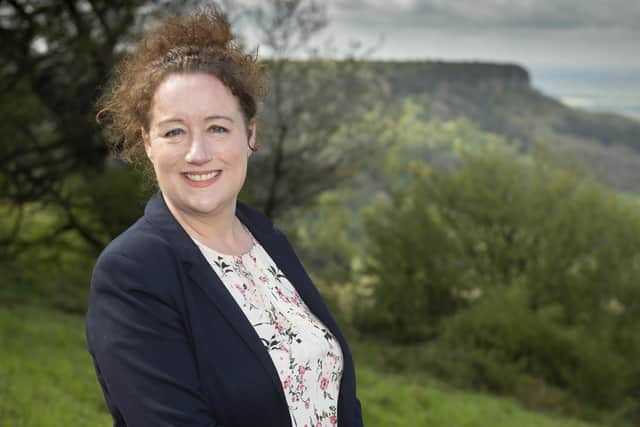

Since the authority was established and replaced the county’s previous eight local authorities on April 1, 2023, we have been working towards an even closer working relationship with partners from the NHS to community groups and the voluntary sector as well as North Yorkshire Police and North Yorkshire Fire and Rescue Service.
Having one council to cover the vast area of England’s largest county has also given us the chance to provide an even more coordinated approach for our services, including housing, planning, education and environmental health.
The power of partnerships was particularly evident during the acute phase of the Covid-19 pandemic when all agencies and communities had to work together to support each other during a very difficult time.
The phrase ‘Team North Yorkshire’ was often used to sum up the collective effort to mitigate against the worst consequences of the pandemic. The Team North Yorkshire spirit is at the centre of North Yorkshire Council’s ethos. An example of this has been how we are providing heart health checks for our staff and other employees around the county.
We secured funding from the Department of Health and Social Care to pilot workplace-based cardiovascular disease (CVD) checks. These checks assess a person’s 10-year risk of having a heart attack or a stroke and provide advice on seeking support.
Of the 904 checks that have been delivered, including 664 for our own workforce, 123 people, or 13.8 per cent, had a one in 10 chance of developing CVD during the next decade. This means that the risk is significant enough to warrant preventive action such as lifestyle changes or medication.
Early feedback from participants has been promising. For example, one employer reported that staff referred to their GP for high blood pressure are now receiving treatment - interventions that may not have occurred without the check.
We are now planning to continue to work with local businesses, the voluntary sector and regional organisations to reach those most at risk, embedding health checks into routine practice for employees.
In 2024/25, North Yorkshire received a public health grant of £25.7m. As the county’s director of public health, it is my responsibility, supported by the public health team, to invest this funding to ensure value for money and to be able to demonstrate return on investment and outcomes.
This year’s Index of Multiple Deprivation stated that there are 23 areas in North Yorkshire that fall within the 20 per cent most deprived in England, and 10 of those within the 10 per cent most deprived.
While Scarborough remains the most deprived area overall, other areas also experience high levels of deprivation including parts of Harrogate, Selby and Colburn.
Life expectancy in North Yorkshire is higher than the national average, with men due to live on average until 80.2 years and women until 83.8 years.
However, healthy life expectancy, which represents the number of years lived in good health, remains notably lower than total life expectancy in North Yorkshire – 63.8 years for men and 64.6 years for women. This means many residents spend over 16 years in poor health, particularly in later life.
One of the inventive ways in which we are improving public health is through our libraries. The library service is working creatively and collaboratively to support health and wellbeing, in partnership with the public health team and a wide range of local organisations.
We are committed to ensuring every child gets the best start in life and that North Yorkshire is a great place to live well and age well with the public’s health at the forefront of that agenda.
Louise Wallace is North Yorkshire Council’s director of public health.