
People want to see things get done, that is the only way to lift the gloom - David Blunkett
Two years ago, I warned against ‘miserable-ists’, who were looking on the dark side of everything; the doom and gloom without the ‘better tomorrow’. Then it was the government. Now it’s swathes of the electorate who are feeling cheesed off.

But there is, undoubtedly, a deep malaise. It can be lifted. In fact, when the sun shone over the May spring bank holiday, suddenly people were sunnier themselves – happier to say good morning and sounding bright and cheerful. Even the birds in the woods sounded happy. Temporarily, at least, the sullen resentment and feeling of victimhood was lifted.
Going back many years to my geography lessons, I learned that whilst those living in sunnier climes may have major problems of their own, a happier outlook made life easier to bear.
Much later in life, I came across theories of ‘herd mentality’, which has now been reinforced by social media with existing feelings and perceptions being validated by others perceiving the same reality.
So, if Andy Burnham were to win the Makerfield by-election for Labour on June 18, it could, psychologically, make all the difference – not only to how beleaguered Labour Party members and MPs feel, but to the notion that the Labour Party could rebuild and, as a consequence, see off Reform UK.
Yet, as we have discovered over recent years, the tide can go out just as quickly as it comes in, and what is needed is a real improvement in daily life, the delivery of essential services and simply just how things are run.
This is not all to do with government. The person down the road, your uncle or aunt, or even your brother or sister may well be responsible for how public services operate, the service you get at the local garage or how you are dealt with in the interminable wait on the phone to get through to the most profitable private services such as banks and insurance companies.
The ‘can’t be bothered’ syndrome may reflect a national mood, but, in the end, it is down to individuals. It often takes as long to do something badly as it does to do it well.
Nevertheless, this doesn't let the government off the hook. We don't vote for the local health service manager, or the beleaguered and underpaid social care worker who doesn't turn up; the police officer who has just about had enough with how they're being managed; or the teacher who should be in a different job. What people expect from elected representatives is action.
The present government wound down expectations in the lead up to the 2024 election, which was understandable given the economic climate and massive debt incurred in coping with Covid. But the fact that Keir Starmer and his government have had some incredible bad luck – including the aftermath of the election of Donald Trump and the US-Israeli attack on Iran – the desire for change demonstrated by ‘anyone but the Tories’ in that general election needed a very different response.
Just as the economy was turning a corner with reduced inflation, improved growth and the prospect of further reductions in interest rates, the world was turned upside down.
The attack by the US and Israel in Iran changed everything, at least for the time being, with energy prices up, and government borrowing more expensive.
However, whilst reasonable men and women understand this and would give the benefit of the doubt, it is those things over which ministers and civil servants do have some control which make a difference to how people react. Take a very small example of what has been wrong over the last two years. Nothing new, but it is the government in office which must shift the inertia and low expectations. In other words, to put dynamism back in the system.
Take, for instance, the written statement issued by the Department of Housing, Communities and Local Government just before spring bank holiday. This was setting out government intentions in the months ahead. Parts of it read like this:
“… we will devolve decisions on Transport and Works Act Orders to Mayors, with a consultation to be launched in the autumn to consider the scope of powers to be devolved.”
I hope to stress that I'm not a ‘Johnny come lately’ here. I was in government from 1997 to 2005 and if the civil service had said to me in May 1997 – or in the years after – ‘we are proposing to consult in the autumn and perhaps do something next year’, I would have told them where to get off. Why not consult now, and act in the autumn?
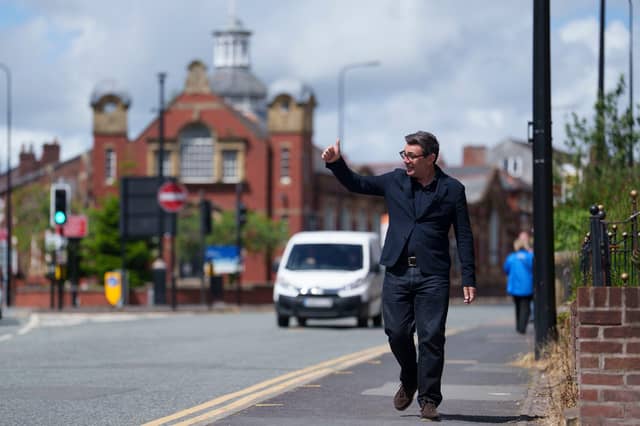
The one thing you can say about Andy Burnham and his experience as the elected Mayor of the large swathe of the North West of England, known as Greater Manchester, is this: he knows how to deliver. The message of the moment is ‘just get things done’, because if you don't, someone else will do it for you.
David Blunkett is a Labour Party politician, and served as the MP for Sheffield Brightside and Hillsborough.