
Politicians are not exempt from the Nolan Principles, so Mr Farage what about that £5m? - Matt Bromley
Us Yorkshire folk have a saying - where there's muck there's brass. But the opposite is also true: where there's brass there's muck. In other words, money corrupts. And the latest controversy surrounding Nigel Farage illustrates why.
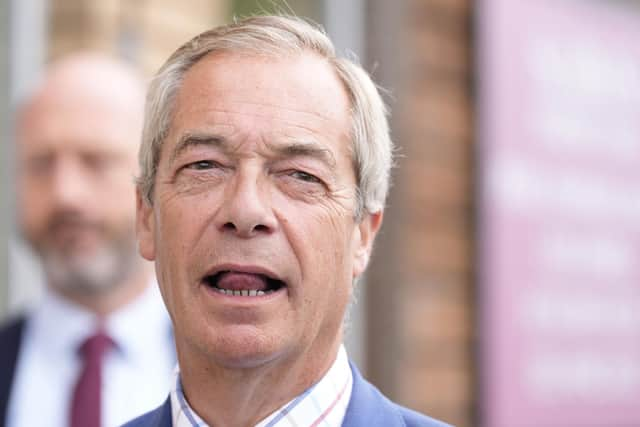
The Reform UK leader received a £5m gift from crypto-billionaire Christopher Harborne shortly before becoming an MP. Farage has repeatedly refused to answer questions about the money, insisting it’s a private matter not a political one. Yet when such significant donations coincide with major political decisions, public scrutiny is not merely helpful but essential for the continued health of our democracy.
Of course, concerns about money influencing politics are as old as the hills and not confined to any one political party. The ‘cash for questions’ scandal unmasked a number of MPs who had accepted payments in return for asking parliamentary questions. The ‘cash for honours’ controversy linked party donations with peerages. Ministers and MPs on all sides have long exploited contacts for commercial gain. Indeed, the revolving door between Westminster, lobbying firms, and corporate boardrooms spins faster than my washing machine.
Whilst political donations have to be declared, understanding who ultimately funds campaigns, pressure groups, and political movements can require forensic accounting. Wealthy donors can channel money through companies, foundations, and networks that are perfectly legal yet difficult to track. The lobbying industry is similarly opaque. Major corporations spend millions seeking to shape legislation, regulation, and government procurement. VIP lanes for PPE contracts, anyone? Ministers may insist they’re simply listening to stakeholders, but the stakeholders with the loudest voices are usually those with the deepest pockets.

Perhaps even more insidious is the growing influence of supposedly independent think tanks. Many produce valuable research and contribute positively to public debate. But others – strangely clustered around Tufton Street in Westminster – function as ideological vehicles funded by wealthy individuals or corporations seeking to shape policy without appearing overtly political.
Think tanks can exert considerable influence – including on Liz Truss’s disastrous mini-budget – while operating with far less transparency than political parties.
None of this means every donor is corrupt, every politician compromised, or every think tank dishonest. But democratic systems depend not merely on honesty but public confidence. When voters believe that access, influence, and policy are determined by wealth rather than merit, trust begins to rust. Participation declines. Extremism finds fertile ground. The answer is not to ban political donations altogether; rather, it’s to insist upon greater transparency, stricter disclosure rules, and more rigorous scrutiny.
The Nolan Principles – ethical standards governing public sector workers – are selflessness, integrity, objectivity, accountability, openness, honesty, and leadership. If teachers and nurses are expected to obey, why do some politicians think they’re exempt? Let’s bring back integrity and make sure politicians are held to account for acting ethically. So, Mr Farage: about that £5m…
Matt Bromley is CEO of bee and chair of the Building Equity in Education campaign. He is the author of numerous books on education. Find out more at http://bee-online.uk