
Rachel Reeves is discovering that you don’t mess with the National Trust - David Behrens
You don’t want to mess with the National Trust. It’s like poking an animal with a stick: it can turn nasty when roused. Rachel Reeves discovered this last weekend when it suddenly reared up and bit her for having claimed that wildlife was blocking economic growth.

It had kicked off over her belief that bats, newts and other protected species now had more clout than humans because they’d been coddled in protective red tape by an inflexible planning system.
It’s a bit of an old chestnut; she has been banging on about it ever since she came out in support of a third runway at Heathrow. She promised its developers there would be no repeat of the HS2 fiasco that saw £100m blown on a ‘shed’ for 18 species of bat, despite there being no evidence that high-speed trains would get in their way.
Actually, bats were the least of HS2’s problems. The project was ill-conceived from the start and money was poured down the drain by officials who wouldn’t admit they were wrong. That wasn’t the bats’ fault.
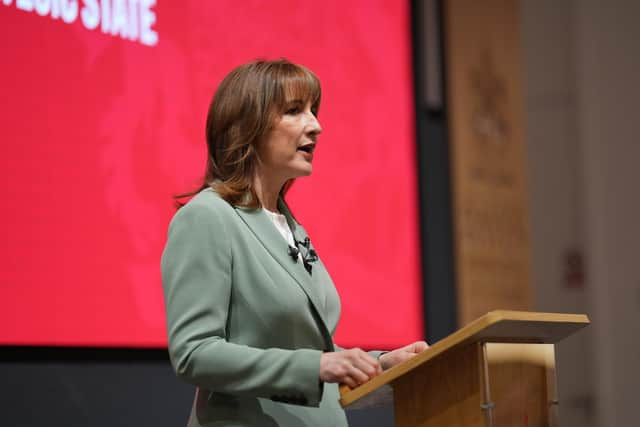

But the point remains: our planning system is too easily derailed by considerations like that, arbitrarily set down by quangos with niche responsibilities and nothing to do but mark out their own territory – in much the same way as wild woodland creatures.
The Environment Secretary Steve Reed has been beating the same drum: he too wants fewer restrictions, not just on developers but on ordinary homeowners who have to spend thousands on bat surveys before the planning department will even consider their application for a modest loft conversion or garage extension. They can be fined up to £5,000 per bat if they don’t comply. They’re easy targets, you see.
But bats, unlike this government, have very good public relations people – and this week they bit back. Their chief spokesperson – Batwoman incarnate – was Hilary McGrady, the National Trust’s director-general, who demanded we all write to our MPs to help reverse what she called the “freefall” of nature in the UK.
Ministers did not appear to be taking the issue seriously enough, she said, and she had commissioned a survey to prove it. It concluded that in the table of treasured national assets, the countryside was second only to the NHS.
Hang on, though: that’s quite a generalisation. We all like green spaces, national parks and quiet forests but since when did we as a nation fall in love with bats? Isn’t it only six years since we suspected them of spreading coronavirus?
Naturalists will tell you they play a vital role in the environmental ecosystem, pollinating plants and eating insects which damage crops. And I’m sure they’re right. I’m less sure that we’re going about protecting them in the best way.
We have approached the bat problem, if a problem it is, in the same way we tackle every issue in this country: by drawing up a list of boxes and appointing a committee to make sure someone ticks them.
Here’s what I mean: this week a watchdog called the Office for Environmental Protection (let’s call it Ofpest for short) warned that the government was failing on almost all environmental measures and would not meet any of its targets to protect wildlife.
Ofpest did not exist until four years ago but now it has an annual budget of £12m “to provide independent oversight of the government’s environmental progress”. How’s that going, then?
Those four years have seen water companies industrialising the dumping of sewage into our rivers and their supposed regulator, the Environment Agency, turning a blind eye. One might have thought this new watchdog would have done more about that – but prosecuting corporations rather than individuals would take actual courage, and box-ticking is the opposite of that. So bats are a convenient smokescreen.
Like all quangos, Ofpest is interested only in what regulators call quick wins: firing off reports that protect their turf without overreaching their jurisdiction. They’re like dogs barking inside a compound: fond of their own voice but ultimately toothless. And in the wake of the righteous fury that briefly erupts after each new warning, someone will come up with another list of tick boxes. That’s the way regulation works in Britain.
So in an administrative landscape like this, who are the bigger pests: the bats or the bureaucrats?
It’s all very well for the National Trust to dumb down the issue into a binary battle between the environment and the economy; the challenge is to allow both to coexist and to thrive. That means thinking outside the box, not just ticking it. But who’s going to teach an old watchdog new tricks?