
Rail passengers can’t keep being taken for a ride on fares - Ismail Mulla
No one likes to be told that they have to pay more for goods or services, no matter how good the delivery is, especially at a time when money is so tight. However, there is something particularly galling about being asked to pay more for a service that has been in a state of seemingly terminal decline.

That is why you could imagine the reaction of long-suffering rail passengers to seeing regulated train fares in England potentially increasing by 5.8 per cent next year. Just let that figure sink in, 5.8 per cent.
The potential rise is based on the Office for National Statistics (ONS) announcing that Retail Price Index (RPI) inflation rose to 4.8 per cent in July.
The Government has not confirmed how it will determine the cap on regulated fare rises in 2026, but this year’s 4.6 per cent hike was one percentage point above RPI in July 2024. If that formula is used to set next year’s fare increase, the cost of train travel will jump by 5.8 per cent.
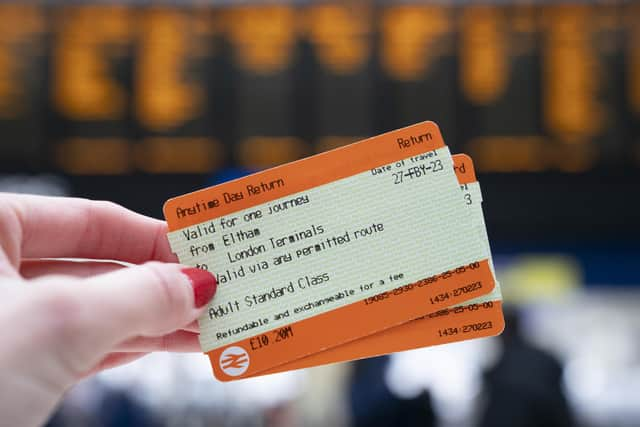

Even putting aside my Yorkshireness, this is an increase that simply does not sit right with me. It’s symptomatic of the doom loop the country finds itself in. Worsening services at an ever-increasing cost.
Top of the list we’ve got Yorkshire Water dumping sewage into our rivers and seas, banning people from using hosepipes and rewarding executives and shareholders handsomely for not making the investments necessary to ensure a secure supply of clean water.
But not far behind is the rail network. For myself and many other office workers who had to traipse into Leeds city centre every day of the week, the lockdown was godsend.
Not because the office environment was unwelcoming. Far from it, my colleagues are a lovely bunch. But the misery inflicted on us by a rail network simply not fit for purpose scarred us.
There were certain weeks where I simply never made it to the office on time despite setting off two hours earlier than my start time. For context, I don’t live out in the sticks, I live ten miles down the road in Dewsbury. Yet even that was a stretch too far for the rail companies.
It’s not like the situation has vastly improved. Train punctuality in Britain is at its lowest level in more than five years.
Regular readers will recall me writing about a day out in Leeds a few weeks ago and how it was punctuated by rail chaos.
While there are promises of change on the horizon, passengers need to feel those changes before rinsing them further is justified because we have all heard it before. A future where all the trains run on time and are shiny realisations of the computer generated images that accompany these promises.
Little wonder that passenger numbers plummeted after Covid and have been slow to recover. People are only getting onto trains if it is strictly necessary. They are simply unreliable and clearly expensive.
If you want to force office workers back then public transport needs to be sorted in regions like ours. It’s not like London where transport connectivity is found wanting.
The Government really needs to win back the trust of rail passengers. As a show of good faith it can start by lowering the cap on fair rises to at least dull the blow to our wallets. A move that is backed by the Liberal Democrats.
Paul Kohler, Lib Dems transport spokesman, said using the same formula again would be “nothing short of ludicrous”. Too right.
“Commuters are simply being taken for a ride,” he added. “We simply cannot allow the current rate of inflation to set rail fares while services get worse.
“To increase rail fares at all in the midst of a cost-of-living crisis would be nothing other than a slap in the face to ordinary people.”
I made the mistake of getting my calculator out and estimating how much rail journeys (that will inevitably end up being delivered by rail replacement buses) will cost me over the next few months. A slap in the face? More like a boxer’s punch to the jaw.
Ben Plowden, chief executive of lobby group Campaign for Better Transport, says: “With the railways now moving under public control, the fundamental question for the Government is how to use its role in setting fares policy to deliver a more affordable rail network and encourage more people to travel on it.
“Next year’s annual rise represents the first real opportunity for the Government to show passengers – both current and future – just how it plans to do this.”
The Government needs to show that it is on the side of rail passengers not with promises of a shiny future but help in the here and now.