
Ramadan: Why 1.9 billion Muslims across the world will spend the next month fasting and giving to charity - Qari Asim
This weekend over 1.9 billion Muslims globally will embark on a month-long journey of fasting, prayer, reflection and charity. Ramadan is not only a time for spiritual growth, detoxing bodies but also a demonstration of unity and empathy. The shared experience of fasting and worship during Ramadan reinforces a sense of unity and common purpose within the British Muslim community.
The concept of fasting is practiced to varying degrees and with differing objectives in many religions across the world. Christians currently observing Lent, for example, will have given up eating something they otherwise enjoy. For Muslims, God tells us that the primary objective of fasting is for us to "enhance God-consciousness”.
Abstaining from food and drink from dawn to sunset in Ramadan is one of the five pillars of Islam and it serves as a reminder of the suffering of those less fortunate. There are millions across the world who do not have access to clean water and/or one meal a day. Through fasting, Muslims develop a deeper sense of empathy and gratitude. This heightened awareness encourages acts of charity and generosity towards homeless, refugees and those financially struggling either in our hometowns or abroad. Young Muslim volunteers from Makkah Mosque in Leeds, along with other local Muslim charities, will distribute over 10,000 meals to the vulnerable and those families financially struggling in Leeds.
In addition to helping people locally, the pain and suffering of the people of Gaza, Sudan, Yemen will be very much at the forefront of the community’s mind. Witnessing the metastasizing of the Palestine-Israel conflict with over 46,000 dead and 110,000 wounded has been excruciatingly painful and deeply traumatic for British Muslims and others. With two million people fully dependent on food, homes and income, the essential needs remain dire in Gaza.

British Muslims will donate hundreds of thousands of food parcels, hygiene kits and tents to the victims of relentless bombardment by Israel during the recent deadly phase in the long ongoing conflict. As well as giving voluntary charity, many Muslims will give their Zakah, a compulsory form of charity which requires 2.5 per cent of annual savings over a certain threshold to be given to the poor and needy. Statistics show that British Muslims donate more than £100m in Ramadan, making Muslims the most generous group in the UK.
The charity and generosity shown in this month strengthens the human bond and the message that there is enough in the world for everyone’s need if people are willing to redistribute their wealth to those in need. As the world becomes increasingly interconnected, the values of empathy, charity, and unity promoted during Ramadan are more relevant than ever.
The evening meal, Iftar, is a time when families and communities come together, reinforcing bonds and fostering a sense of belonging. Ramadan transcends cultural and geographical boundaries, uniting Muslims in a shared experience of faith and devotion. Ramadan also helps build bridges between communities - increasingly, we are seeing more and more Iftars are being organised in corporate firms, public spaces, mosques and other places of worship, offering people of all faiths and beliefs a firsthand experience of Ramadan.
The experience of hosting such iftar events has shown us that such events can be instrumental in dispelling misconceptions and negative stereotypes and promoting mutual respect. Dialogue often reveals that, despite apparent differences, people of all faiths and beliefs share the same concerns - safety, stability and prosperity for themselves and their neighbours.
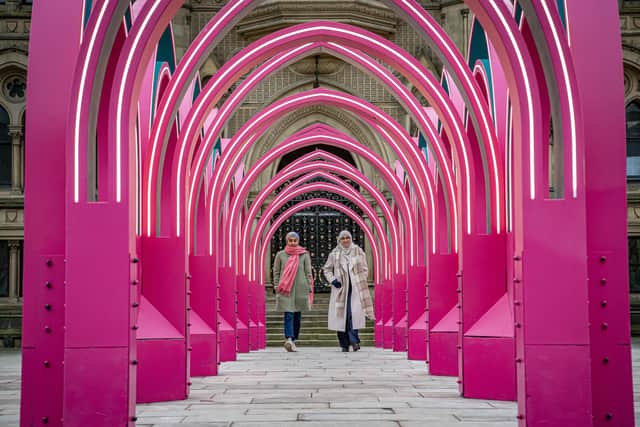
The joyful spirit of Ramadan is being embraced more and more in this country. From King Charles and Queen Camilla visiting a restaurant in Soho to provide food donation boxes in honour of Ramadan, installing a dazzling display of over 30,000 LED bulbs in West London, inspired by Islamic geometric patterns and the celestial symbols of Ramadan to the installation of Ramadan Pavilion in Bradford featuring repeating arch forms symbolising connection and unity, showcase Britain celebrating the rich cultural diversity.
Ramadan is also a time for increased devotion. Muslims engage in additional prayers, including the night prayer Tarawih, in which a large portion of the Qur'an is recited every night. Completing the recital of the entire Quran during Tarawih prayers is a deeply spiritual and uplifting experience, which enhances the overall observance of Ramadan. In recent years, many women and the elderly have been deeply concerned about attending the Tarawih prayers in mosques at night time unaccompanied due to the alarming rise in Islamophobia. This year, we are having to re-assure the community more than ever. The Southport murders, some toxic campaigning around UK general election and death and devastation in the Middle East have contributed to the sharp rise in anti-Muslim hate cases.
Fasting is believed to purify the soul, enhance self-discipline, and encourage mindfulness. The sense of accomplishment and spiritual renewal at the end of Ramadan is celebrated with Eid al-Fitr, a festive holiday marked by communal prayers, feasting, and giving gifts.
'Ramadan Karim' to all those observing Ramdan.
Imam Qari Asim is senior Imam at Makkah Mosque Leeds and Co-Chair of British Muslim Network.