
Resident doctors must not be allowed to strike but the government should meet the BMA halfway - Daxa Patel
Reputation management concerns not only the resident doctors launching another series of strikes but also the British Medical Association, NHS leadership, and government.
Failure to resolve these disputes will be judged harshly by patients, who inevitably suffer the consequences of unresolved conflicts over pay, working conditions, and workforce planning.
Starting this week, tens of thousands of resident doctors in England are on a six-day strike over pay and job security following the collapse of negotiations. The British Medical Association and the government remain deeply divided, with both parties signalling that only renewed negotiation and compromise can bring an end to the industrial action. The government’s withdrawal of extra training places demanded by the BMA has further inflamed tensions. There are even plans to ballot senior doctors later this year, raising the prospect of a simultaneous strike by all hospital doctors if no agreement is reached.
Certain professions must not be permitted to strike, regardless of how serious their grievances may be. In my view, this applies unequivocally to those in health and medical care. Resident doctors, formerly known as junior doctors, may have legitimate reasons to be aggrieved, but by choosing this method of protest at the outset of their careers, they send a troubling message that patients are not always their foremost priority.


Patients relying on the NHS have a right to timely treatment. Yet, over the years, we have become desensitised to lengthy waiting lists for essential operations, shortages of beds, insufficient professional staff, and a lack of resources. Successive governments have avoided addressing these systemic issues. The NHS has not been modernised or made sufficiently efficient to manage demographic changes, including a rise in co-morbidities, complex health problems linked to poor lifestyle choices, many of which society is reluctant to take ownership of, and an ageing population. This is the root of the crisis we face today.
While resident doctors prepare to strike, the union representing them is also taking industrial action. It is difficult to find sympathy for their cause when the impact on patient care is so inevitable. NHS England urges patients not to delay seeking medical help during the strike and to attend planned appointments unless otherwise advised, emphasising that urgent and emergency care will continue where possible. Trusts have contingency plans to maintain essential services, but the timing, immediately following the Easter holiday and with short notice presents significant challenges.
Currently, patients in accident and emergency departments routinely wait more than twelve hours for emergency care. Vulnerable patients are often left on trolleys in corridors due to bed shortages or poor coordination, and elective procedures are frequently cancelled at short notice because of bed or staff shortages. This is a shameful state of affairs. The pandemic, while unprecedented, exposed the fault lines within our national health service. We are fortunate to have the NHS and the dedicated staff who care for us with diligence and compassion, but when the system is already strained, the last thing it needs is the withdrawal of resident doctors, who are the lifeblood of accident and emergency care.
It is undeniable that their pay is too low and their long hours raise serious concerns about their wellbeing. However, striking en masse immediately after a holiday period does little to inspire public confidence, especially when delayed care and postponed treatments have become commonplace. The NHS and government argue that previous strikes have shown that most planned care can still be delivered, almost 95 per cent in the last round, but this statistic should not obscure the human cost for those patients whose treatment is cancelled or delayed.
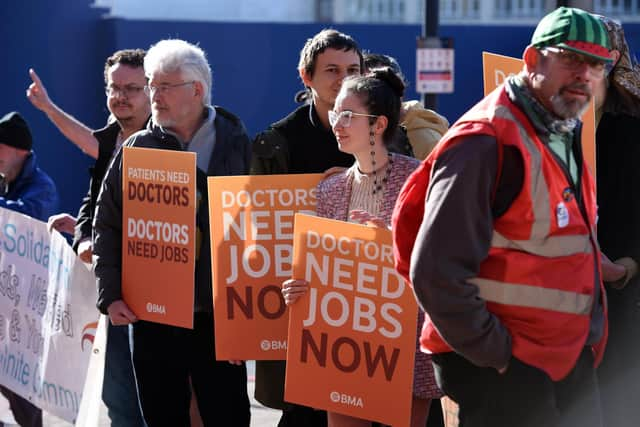
The government must meet the BMA halfway. Health Secretary Wes Streeting highlighted that the proposed deal included significant pay rises for resident doctors and expressed disappointment at the strike. The Prime Minister set a deadline to prevent walkouts, warning of consequences for training support. However, the BMA insists on a settlement addressing historic pay erosion and career prospects and remains open to credible offers.
We have reached a crisis point. Public goodwill and patience have limits. If the government believes it will suffer politically for failing to resolve this dispute whether in the forthcoming local elections or the next general election it may be correct. However, the alternative offers no consolation. No party can afford to preside over a broken health service. Labour gave us the NHS, and I urge this Labour government to be bold and compassionate, not only towards the NHS but also towards its staff, including resident doctors, and most importantly, towards the people of this country, many of whom cannot afford private care or to travel abroad for critical procedures such as hip or knee replacements or heart surgery.
As a clinical negligence solicitor, I see the consequences of delayed diagnosis or misdiagnosis, sometimes with devastating or fatal outcomes. It is in no one’s interest to exacerbate the situation. Given what is at stake, the reputation of all stakeholders and, above all, the health of patients, this strike should be seized as an opportunity to confront the challenges head-on and resolve them. It is all very well to urge patients not to postpone seeking treatment, but does this strike inspire public confidence? I believe it does not.