
Ripon is unique with its wide-reaching history - Carl Les
I spent a pleasant evening in Ripon last week. North Yorkshire’s only city, and one of our communities with perhaps the oldest and most wide-reaching of chapters of history. Ranging from the very early medieval times, and the founding of the cathedral on an existing place of worship, through all centuries into the last one and its significant connections, some unique, with branches of the British Army that continue to this day.
Its impact was not only that if not on the scale of Catterick, it was still a military base of size, but here bomb disposal became an innovative taught skill that even the United States had not adopted until seeing it here, and the Bailey Bridge that revolutionised modern mechanised warfare facilitating the crossing of river and ravine, was conceived and developed here. A group of interested people are determined to capture these memories.
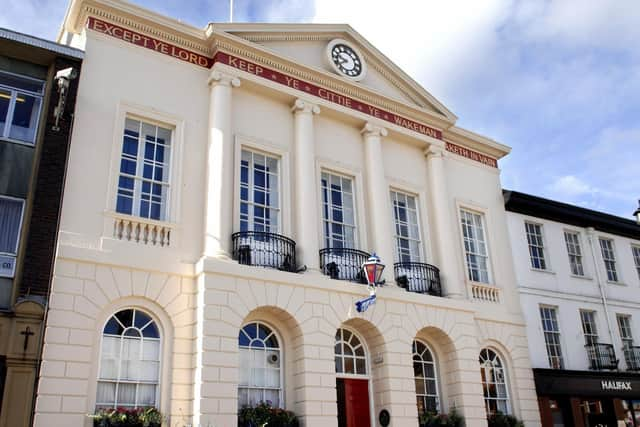
I was there to observe the annual Mayor-making, the choosing of one of the City Council to act as the chair of the council for the coming civic year. This is nothing unique, every parish council in the country is doing the same, by law, around this time. What is unique is the solemnity and absolute style by which Ripon City Council does it. It is always held at the Town Hall, the building that I am pleased North Yorkshire Council is transferring to the City Council as part of our double devolution programme.
This ceremony is staged, and it is like a piece of theatre, in the council chamber, the largest of the rooms in the building, the former Assembly Rooms gifted to the city by the local landowner as part of one of the earlier chapters. This is where the City Council meet for their public meetings, and indeed the room was full of local people, the good if not necessarily the great, many representing parts of the civic fabric of the city. This showed the relevance of the most local of local government to the life of the city.

I was told of exciting plans to adapt an adjoining room to create a commercial kitchen area, always a keen interest of mine although 10 years out I don’t know all the modern kit available now, and to use the main room for the secular part of life`s great steps, christenings, weddings and funerals, and other functions, and I wish them well with their ambitions.
The meeting opened with prayers said by the Very Reverend John Dobson, Dean of Ripon Cathedral. He was confirmed later in the proceedings as the incoming Mayor’s Chaplain, cementing the other important link in a cathedral city, the only one in North Yorkshire, between church and state.
Long may the city enjoy that status, not only for its hugely important ecumenical standing, but also for the visitor economy that depends on it. Except ye Lorde keep ye cittie is part of the motto above the Town Hall, and a loose interpretation is that God should look after us, and in a cathedral town the economic connection with the big church certainly does.
The incoming Mayor is our North Yorkshire Council colleague Councillor Andrew Williams. I won’t embarrass him by repeating many of the worthy things that his proposer said about him to prove his worth as incoming Mayor, save a few. He has been mayor before, so understands the role and its relevance. He is Ripon born, bred and educated so understands the town dynamics. He is a single parent so understands better many of the challenges others do not, and he was the driving force on the city side behind the negotiations for the double devolution and impresses with the vision of where that can go.
There were quaint interludes in the proceedings. The Mayor-elect “hides” in the building until found and under escort comes to the chamber, rather like the new Speaker in the Commons being dragged to the Speaker’s Chair.
He has to make multiple declarations of office and swear more than one oath, reflecting the history of the office, although it is relatively young as it only dates back to the 1600s! Actually to the 1604 Charter, when King James I created the role of Mayor from that of the previous office of Wakeman, the earliest guardian of keeping the peace, arranging the ancient horn blowing to set the watch which guarded premises from burglary overnight, and paid compensation to those who suffered loss.
The following day I had a more extensive tour of the building, to see first-hand what I had seen on plan. There are numerous under-utilised rooms that can be adapted for other uses, including a former caretaker’s flat on the top floor, last used as such decades ago, and a former nuclear bunker in the back garden, which must feature somewhere on the most unusual tourist attraction list.
Whatever, Mayor Williams and the City Council have some positive ideas about how to turn around an unloved building we all inherited under local government reorganisation, and I wish them well with their ambition.
Coun Carl Les is the leader of North Yorkshire Council.