
Rishi Sunak is being proven right on Labour’s tax rises - Andrew Vine
Last year’s general election seems like a distant memory, but a moment from the campaign keeps popping into my mind every time a government minister is questioned about the nation’s finances.

It came during one of the acrimonious debates between Sir Keir Starmer and Rishi Sunak, when the then Prime Minister told the audience that voting Labour would cost them an additional £2,000 a year in tax.
The charge obviously stung Sir Keir, because he stiffened, adopted a self-righteous tone of voice and effectively accused Mr Sunak of being a liar.
The Labour election machine doubled down in the days afterwards, portraying the Conservatives as sinking so low in their desperation to avoid defeat that they were peddling deliberate untruths to scare voters.
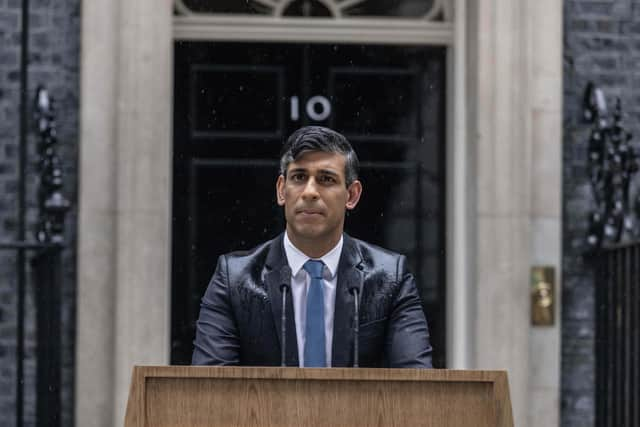

Well, far from being a scaremonger it increasingly looks as if Mr Sunak will be proved right, in broad terms at least, because we’re all going to be shouldering an increased tax burden.
Having lost the election so badly, I don’t suppose Mr Sunak derived any satisfaction from cutting through Labour’s pre-election waffle to get at the truth, but the moment when he did so during that debate ought to be in many more minds than mine.
That’s because an awful lot of people who helped put Labour into power didn’t vote for what is being imposed on the country.
They didn’t vote for family farms to be bankrupted by punitive levels of inheritance tax, or the countryside to be concreted over. They didn’t vote for increased household energy bills to subsidise a green power network that can’t deliver electricity to where it is needed.
Those who run companies and employ people didn’t vote for a national insurance hike that prevents them investing and hiring more staff, and which has led to the loss of nearly 100,000 jobs in the hospitality industry.
And in the budget scheduled for November 26, the electorate is likely to get a whole lot more that they didn’t vote for.
However it is presented, it will involve desperate tax grabs to plug a financial hole which is somewhere between £20bn and nearly £50bn, depending on which analysis you believe, how the economy performs in the coming couple of months and whether the financial markets believe the government’s plans are credible.
For the rest of us, the timing of what will be another painful budget could hardly be worse and reinforces the impression of a government out of step with the people who put it into office.
It’s a month before Christmas, the most expensive time of the year for an overwhelming majority of households.
Additionally, it will happen just as gas and electricity bills rise ahead of the coldest months, and when food prices are possibly going up by about six per cent, as predicted last month by leading retailers including Tesco and M&S.
That’s the worst possible time to be telling people that they will have to pay more taxes simply for the country to stand still, let alone grow more prosperous or have improved public services.
It is no wonder that the government’s approval ratings – and those of Sir Keir personally – have sunk to the same levels as the doomed Conservative administration at the point when Mr Sunak put his finger on Labour’s sums not adding up.
No doubt the Chancellor, Rachel Reeves, will once again blame the previous government’s legacy for Britain’s problems when she delivers the budget, but that excuse won’t wash any more.
By the time she stands up to address the Commons, Labour will have been in power for approaching 18 months, and there is a broad consensus in the business community that her own actions in raising national insurance have stifled the economic growth the government was depending on.
After last year’s budget, with its £40bn of additional taxes, Ms Reeves was at pains to tell everybody who would listen that she would never again have to deliver another like it.
That assurance rings very hollow, and the likelihood is that her second budget will be at least as difficult for the country as her first.
The government’s problems all stem from not being straight with voters last summer, when it presented Britain with a manifesto devoid of any meaningful detail and avoided saying how its vague plans would be paid for.
Ousting the Conservatives took priority over offering a real plan for change and improvement.