
Scope for political parties to come to an agreement on social care, if they put point scoring to one side - Jayne Dowle
Andy Burnham’s own father, Roy, who is suffering from Alzheimer's, doesn’t even know his own son has become Prime Minister. Has there ever been a more poignant reminder that the distressing issue of social care touches almost every family in the land?

Burnham has vowed immediately to put social care reform at the very top of his agenda, initially proposing a ‘free at the point of access’ model along the lines of the NHS.
How this might be organised - and crucially - funded, is not yet clear. It’s been said such plans could cost as much as £18bn a year, and so far there is absolutely no indication where such funding could come from.
But what is obvious is that, as former care minister Stephen Kinnock pointed out in a recent television interview, social care should no longer be treated as a “political football” and all parties should pull together to find a way forward.

Kinnock, son of former Labour leader Neil, watched his mother, Glenys, herself a former minister and MEP, wither away from the devastating effects of dementia for the last five years of her life. Baroness Kinnock died at the age of 79 in 2023. His father provided much of the care himself, with the help of paid carers for five hours a day. Kinnock acknowledged that his family were in a fortunate position to be able to pay. Many families are left devastated as beloved homes have to be sold and savings depleted to fund care for their relatives.
In Burnham’s new Cabinet, Kinnock, MP for Aberafan Maesteg, has been promoted to Welsh Secretary, but no doubt will continue to make his voice heard on the matter which affected his own family so deeply.
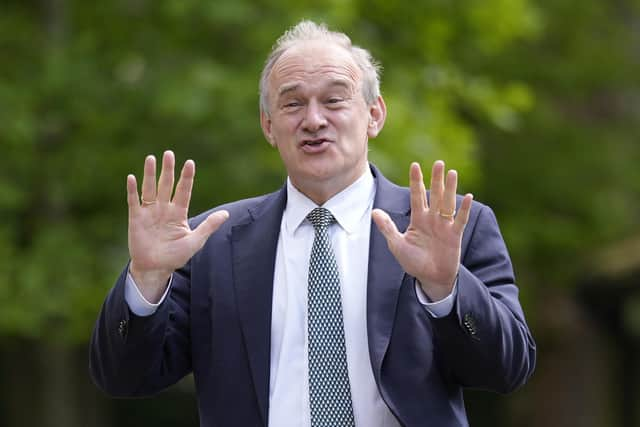
His voice will join that of Liberal Democrat leader Ed Davey, who lost his father at the age of four, helped nurse his mother at home until she died of cancer when he was 15, and now cares for his severely disabled son, John, alongside his wife.
Davey suggests urgent cross-party talks on social care should be held, and indeed, there is certainly scope for all the major Westminster parties to come to a workable agreement - if they are willing to do so and don’t put political point-scoring at the top of the agenda.
Burnham has been here before. In 2010, as Health Secretary, his plans to overhaul social care for the elderly with the creation of a national care service for England were turned against Labour by the Conservatives, who claimed a “death tax” would need to be levied to pay for it.
Then, the Conservatives won the General Election, and the idea was kicked firmly into the long grass. However, the 2011 Dilnot Commission report recommended a cap on how much individuals should be expected to spend on care during their lifetime.
Years went by, promises of reform were made by successive governments that came to nothing, and then in 2022, short-lived Conservative PM Liz Truss sounded the funding death knell for her predecessor Boris Johnson’s idea - an £86,000 lifetime cap on personal care costs and a more generous means test, originally to be funded by a Health and Social Care Levy via National Insurance.
Back and forth, back and forth. Of course, Burnham’s NHS model would be ideal - in Scotland, for example, personal and nursing care is free for those eligible - but if any taxes have to go up to pay for it, the right-wing parties will go into battle mode.
Meanwhile, countless families are bearing the brunt of providing care themselves, and/or attempting to navigate the extremely complex and often contradictory social care system in order to ensure their loved ones are looked after properly.
At the heart of it all are people. Across all caring responsibilities, including those looking after the elderly and people with disabilities, 61 per cent of family carers are caring for 50 or more hours every week, a third (33 per cent) of carers are aged 65 or over themselves, and 82 per cent of these caregivers are women, according to the 2025 State of Caring survey conducted by support organisation Carers UK.
The effect on their own lives can be devastating - they may have had to leave full-time employment, their own health suffers and they end up burnt out and exhausted.
Whilst cross-party agreement cannot be guaranteed, Burnham can certainly lead from the front. It’s already reported that he is telling crossbench peer Baroness Louise Casey, who was appointed to lead yet another major review into social care by Sir Keir Starmer, to bring her findings and recommendations forward from the original delivery date of 2028.