
Sir Keir Starmer may have just undermined the unity of his Government by blocking Andy Burnham - Jayne Dowle
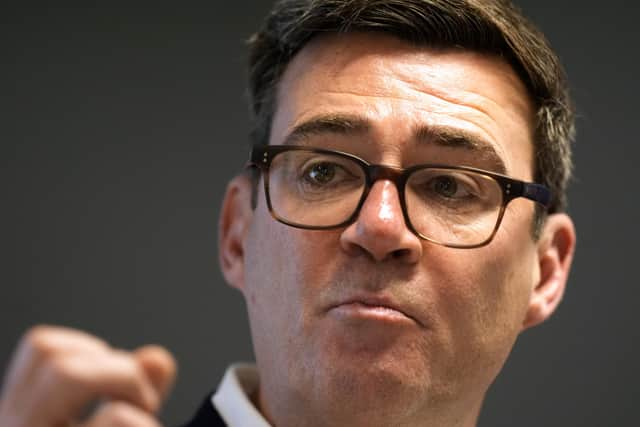
The Andy Burnham decision, when it came, was rapid and brutal. On Sunday morning Prime Minister Sir Keir Starmer blocked the Manchester Metro Mayor from standing as a Labour MP, bringing to an end to a threat from the ‘King in the North’.

Using his position on Labour’s National Executive Committee (NEC), Starmer personally voted against Burnham even being allowed onto the parliamentary candidate shortlist for the Greater Manchester seat of Gorton and Denton.
A hastily-assembled meeting of a core group of NEC officers was chaired by home secretary, Shabana Mahmood; as chair, she remained impartial.
Others included deputy Labour Lucy Powell and Solicitor-General Ellie Reeves, sister of Chancellor Rachel Reeves, and trade union representatives. Powell was the only member to vote in favour of Burnham.

Gorton and Denton was held by former Labour MP, Andrew Gwynne, now an Independent, suspended from the party last year over inappropriate comments in a WhatsApp group.
The Labour high command’s shunning of Burnham could well turn out to be a spectacular own-goal.
There is already talk of the NEC insisting on an all-female or all-multi-ethnic shortlist. If either of these two happen, there is a high chance disenchanted Labour voters will interpret such a move as aggressive interference from on high and show their anger at the ballot box.
Inevitably, Reform UK will be searching for a strong candidate to field; parts of the constituency are highly-deprived and voters will be ripe for a persuasive alternative.
What matters right now, however, is what will happen immediately, as this will set the tone for the weeks to come. As Starmer travels to China for a four-day visit to boost trade, he’s left chaos in his wake, not helped by the patronising official Labour statement:
“Andy Burnham is doing a great job as Mayor of Greater Manchester. We believe it is in the best interests of the party to avoid an unnecessary Mayoral election, which would use substantial amounts of taxpayers’ money and resources that are better spent tackling the cost of living crisis.”
Blocking Burnham, by citing a new rule added to the official 2026 The Labour Party Rule Book, will only make internal discontent worse.
Nicknamed the ‘Burnham Rule’ by some, the edict states: “Directly Elected Mayors and Police and Crime Commissioners must seek the express permission of the NEC/SEC/WEC (as applicable) before seeking nomination as Labour candidates for the Westminster Parliament. The NEC/SEC/WEC’s decision shall be final”.
As well as Powell, Ed Miliband, the energy secretary, and Angela Rayner, the former deputy prime minister, forced to resign the Cabinet over her tax affairs, had all publicly come out in support of Burnham being given permission to run. London mayor Sir Sadiq Khan has also urged Labour not to block Burnham’s candidacy.
It’s reported that scores of other MPs had privately backed Burnham, who has twice failed to win Labour leadership ballots in the past, losing out to Jeremy Corybn in 2015, before leaving Westminster and becoming Manchester’s mayor two years later.
Some, with memories of London mayor turned Prime Minister Boris Johnson to the fore, questioned if being in charge of a city qualifies a person to be in charge of a country.
However, North West native Burnham, who served in Gordon Brown’s Cabinet for three years, has done impressive things in Manchester, promoting the city as a huge economic driver, putting the popular Bee Network buses into public ownership and generally winning friends and influencing all the right people with his easy laddish air and verifiable working class credentials; his dad was a telephone engineer and his mum a GP’s receptionist.
He’s also been accused of being a lightweight politically, vacillating from wing to wing of the notoriously partisan Labour party to follow the prevailing wind, and too much of a people-pleaser.
Such criticisms however, were slightly putting the cart before the horse. If he had been allowed to stand as Labour’s candidate, there was no guarantee he would actually win the by-election.
And then, any thought that he would be immediately catapulted through the murky corridors of Westminster to be in a position to challenge Starmer was hopeful at best. Even when Labour is riven with infighting and allegiance-taking, there would have been no quick joust, unless a catastrophe surrounding Starmer had occurred.
As he heads for Beijing, he may well have time to reflect on the words first attributed to ancient Chinese military strategist Sun Tzu “Keep your friends close and your enemies closer”. A more confident party leader and PM would perhaps have lifted the rule, allowed Burnham to stand, dug in and waited to see what happened next.
Burnham had stressed to Starmer that his attempt to return to parliament would “support the work of the government, not undermine it”. Even if there wasn’t an ounce of truth in this statement, Starmer’s hardline decision may turn out to undermine not just the unity of his government, but his own future at Number 10.