
Sir Keir Starmer needs to provide some direction on fuel rationing - Jayne Dowle
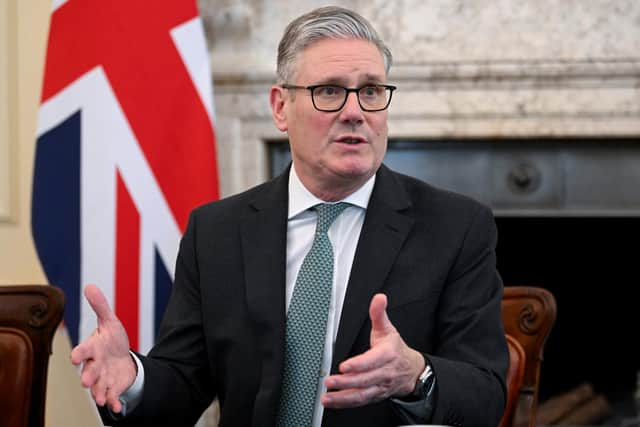
Prime Minister Sir Keir Starmer needs to seize the reins as rumours and counter-rumours swirl about how the UK can stay on the road in the face of war. It’s not easy to address the nation in times of peril – I won’t say ‘crisis’ – but it really is the job of a Prime Minister to lead from the front.

As the price of diesel, currently £1.81 a litre on average, climbs towards the £2 mark, with petrol following behind at £1.52, we’re not sure what road we’re on at all.
The RAC says nearly a third of drivers (31 per cent) are increasingly worried about higher fuel costs since the Middle East exploded into conflict. I’m not sure which drivers the motoring association spoke to, but I’d argue that the concerned percentage is far higher than this.
Rather than panicking at the pumps – despite irresponsible social media posts trying to stir up trouble – most of us are quietly fretting about soaring costs and recalibrating plans for long journeys.

Perhaps it’s because of the school holidays, but our local roads are certainly quieter this week. Filling up a typical diesel family car this Easter will cost at least £19 more than it did on Good Friday in 2025, and a tank of petrol nearly £8 more, it’s reported.
Nature abhors a vacuum, so inevitably, we’re dealing with constant conjecture and filling in the gaps with rumination. Will there be fuel rationing? Will fuel be prioritised for the emergency services and haulage companies? Will we see numberplate recognition being used to allow drivers one day on/one day off? Shall we really be returning to work from home?
We really do need some answers from Sir Keir Starmer. We can take it. Who can forget the chilling address Boris Johnson gave when he announced the Covid pandemic lockdown in March 2020 and instructed us all to stay at home? It was frightening, previously unimaginable, but a nation listened and knew what to do.
That Johnson’s Government, in particular Downing Street staffers, were later found to have flouted the strict rules laid down for the rest of us is perhaps at the heart of Starmer’s reticence to adopt a strong stance.
Fear of psychodrama PTSD and also, reluctance to deliver yet more gloomy economic news from a Government that has been mired in the doldrums since it came to power in 2024 perhaps.
Surely, however, we deserve to be treated like adults and not remain infantilised in the state of anxious limbo we find ourselves in right now.
Better to know now and get over it than to wonder, and this applies not just to fuel but household bills, food supply and overseas travel.
It’s reported that on Monday, the PM called in leaders from industry and financial services to Number 10 to discuss a way forward as the conflict in Iran continues.
Nothing much has been garnered from this except Starmer’s insistence that there was “no need” for drivers to do “anything other than what is normal”.
This we’re told as we learn that many other countries are already adopting fuel-saving measures. In Australia, for example, public transport in two states, Victoria and Tasmania, is being made free to incentivise people not to drive for the next few months.
Egypt, which like the UK, relies heavily on imported oil, has introduced temporary measures to bring fuel consumption down and keep public finances in check. These include shops, restaurants and cafes being obliged to close at 9pm for the next month, a hold put on major energy-intensive state projects and government vehicle fuel allowances have been cut by nearly a third, according to the BBC.
And also, senior ministers are not entirely sticking to the script. Speaking on Sunday, Bridget Phillipson, the education secretary, confirmed that the government was drawing up contingency plans in the event of shortages.
“You would expect any government would plan for eventualities where events happen in the world … [but] we shouldn’t engage in scaring people,” she told the BBC. “Of course, governments will plan for contingencies - that is always the right thing to do - but people should be reassured, ahead of the Easter holidays, just to carry on as things are.”
So are we to expect the unveiling of this “plan for contingencies” soon or not? Or are we again being treated like children putting chocolate eggs before everything else?
Many, many people will have no concept of Easter holidays, already unable to afford to do much or go anywhere. It’s a cliché, I admit, but sometimes, our senior politicians really do speak as though they live on another planet.