
Social care reform needs Beveridge’s scale of ambition - Michael Harrison
Social care is often hidden from sight. Its profile has been raised in recent years but that has often been in headlines tagged with the word ‘crisis’. And yet, it’s one of the largest employers in any community - more people work in social care than in the NHS.
It works around the clock. It is present in thousands of homes across this region. It is a growing share of local economies, as well as requiring significant funding.
And, whilst there are certainly challenges about hospital discharges, only about one in five people coming out of hospital actually require social care. Overall, NHS-related activity is important but not the only part of the social care caseload.
Many commentators will tell you that the path to improving social care is littered with a stream of Green and White Papers, taskforces and recommendations. Successive governments have found the complicated labyrinth of social care a tricky area to navigate.

And that’s why much of the sector has been sceptical about another commission to review the future of care in England.
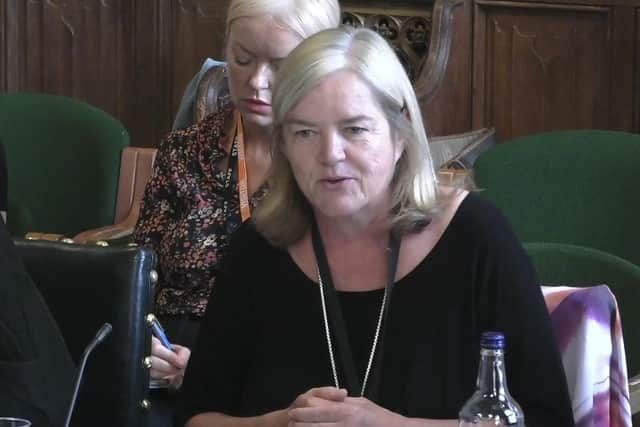
However, this new commission is one with a difference, most notably in the fact that it’s being led by Baroness Louise Casey, who is renowned for not pulling her punches on issues such as homelessness and rough-sleeping, anti-social behaviour, misogyny in the Metropolitan Police and child sexual exploitation.
What’s more, my hope is that she will shift the focus of the debate about what needs to be done and how.
To date, a lot of the discussion and energy has been about how people pay for care. Yes, this is a significant issue for many people and the current system can be unpredictable, unfair and expensive.
There’s no magic fix to these issues. ‘Getting social care done’ - to paraphrase one previous Prime Minister - is not a simple equation.
North Yorkshire Council has recently been inspected by the Care Quality Commission (CQC) and, as a result, received a strong ‘good’ rating, and at the time of writing is the best-rated council for social care in Yorkshire and the Humber and one of the best in England.
In no way does that mean we have got everything right, as my inbox often testifies. However, what did shine through was the hard work and passion of frontline teams, whether employed by us or by care providers or charities. And we have a commitment to invest long-term in the care sector.
Learning from our inspection has made me think about what next for social care and what a comprehensive reform programme should look like. In essence, it should comprise seven main points:
Promote the expectations most of us have in our own lives – making sure residents have access to jobs, homes, the best health outcomes and friends, and doing so in a way that helps people to be as independent as possible, whilst managing escalating costs and providing hands-on care when it is needed.
Get the bread-and-butter issues right – for example by reducing waiting times and improving how society as a whole supports people who provide unpaid care for their loved ones.
Put homes and housing at the centre of social care reform – the national drive to build new homes needs to include more adapted and supported housing. We need an ambitious expansion of Extra Care housing and changes to some of the funding rules to enable more creative use of these homes. Too many people are stuck in the wrong care or have their lives restricted because, nationally, there is insufficient housing with wraparound care.
Focus on younger adults as well as older people – not only are we seeing greater prevalence of younger people with complex mental health issues, learning and physical disabilities but too many of them are moving into 24-hour care at too early an age.
Recognise and value care workers – the Government’s Fair Pay Deal is right in principle but could be bedevilled by unintended consequences. It needs to be fully funded, otherwise councils and care providers will struggle to meet the shortfalls. Likewise, we need to raise the status of care workers and improve career pathways, putting them on a par with their NHS counterparts and putting a stop to their work being all too often described as ‘unskilled’.
Value local government as the best host for social care – it takes a whole community to support a disabled or frail adult to live independently and the best councils bring together local communities, voluntary organisations, housing, leisure and other services that make a difference to people’s lives. The NHS is a great British institution, but it’s not the right home for social care and further organisational change would be a distraction rather than a solution.
Initiate an honest debate with the public about how we pay for care - how do we make a new payment system fair, easy to understand and smart enough to avoid unintended consequences? Is this about universal taxation or some form of compulsory insurance or are there other options? How does it move from the current system which assumes high levels of home ownership to the current reality in which more people rent for much longer?
Nearly three years ago, on a podcast with the BBC’s Nick Robinson, Louise Casey talked about her ambitions to be the Beveridge of the modern age. The Beveridge report laid the foundations for the NHS and other post-war public services. Reforming social care is a big challenge, but it’s a challenge which needs Beveridge’s scale of ambition, long-term impact and cross-party support.
Coun Michael Harrison is North Yorkshire Council’s executive member for health and adult services.