
Social media ban for children is sensible, not censorship: David Behrens
The harm done by cigarettes is something we can get our heads around; it’s been drilled into us for years. So if we suspected our children of chain-smoking in their bedrooms we’d have something to say about it, pretty darned quick.

We’d start by sitting them down for a little talk. Take it from us, we’d say, we know more about the risks than you do. And we’d try to make them see the big picture: they’re being manipulated with an addictive drug by unscrupulous tobacco companies who profit from the lung cancer they will surely develop.
But when the addiction is fuelled by social networking rather than nicotine, the roles are reversed. It’s the kids who know the rules, not you. You can see the harm but you don’t know how it’s being inflicted.
When that happens, when grown-ups lack the knowledge and resources to look after their families, it’s the job of the State to take responsibility. It’s not wokeism or nannyism. It’s not health and safety out of control.
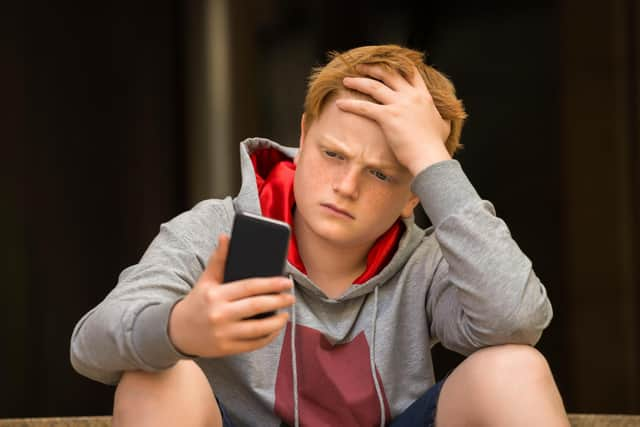

So this week, as the Government took the last submissions in its consultation on children and social media, the question was no longer whether there will be a ban, but when and how.
The assertion that scrolling is the ‘new smoking’ is well formed, even though it was uttered in clichés by Wes Streeting. “Social media should be treated like tobacco,” he said. “It’s addictive, bad for our health, and big tech is borrowing the big tobacco playbook to avoid regulation.”
He wasn’t the only one saying it. For the Academy of Medical Royal Colleges, social media and the unfiltered use of smartphones ranked alongside smoking and wearing seat belts in cars as a “unifying force for the medical profession”.
Even outside the NHS, it was hard to find a dissenting voice. Parents, who ought to be the most important influencers in this debate, are 83 per cent in favour of a social media ban for under-16s, according to one poll.
Ian Russell, however, is not just a statistic. His 14 year-old daughter Molly took her own life in 2017 after viewing harmful content online. There, but for fortune, could have been your child or mine.
“Molly was a very ordinary young person who just happened to click on a few wrong things on the internet and then the algorithms, which were brand new to the world at the time, kicked in and fed her ever more stuff.” That was how Ian rationalised his daughter’s death in his submission to the official consultation.
In the nine years since he lost Molly, social media has expanded exponentially but the responsibility of those who publish it has not.
The threat of legislation is like kryptonite to these publishers, chief among whom is Elon Musk, owner of what used to be Twitter and, not coincidentally, the world’s wealthiest person, with $800bn to his name.
He sees bans and restrictions on social media as assaults on free speech; covert attempts by governments to control internet access. And while he’s a crank, he’s not an imbecile. He didn’t get where he is without brains. But the most intelligent people are sometimes also the most stupid, and that’s when they become truly dangerous.
Earlier this year Musk called the Spanish PM Pedro Sánchez “a tyrant” for having sought to restrict hateful content. Social media had become “a failed state where laws are ignored and crimes are tolerated”, Sánchez said.
The truth of this had already been proven when Twitter started using AI to create sexualised images of people without their knowledge. Britain protested and Musk accused Keir Starmer of seeking “excuses for censorship”. He was evading the issue. If Britain were censorious, Musk would not have been able to weigh in on the Makerfield by-election in support of a far-Right candidate who makes Nigel Farage look like Michael Foot.
Nor is our under-18 smoking ban a form of censorship: it is there to protect young people from being exploited by cigarette companies who could make their products less carcinogenic and less addictive but choose not to. Musk and the others in the tech brotherhood have done the same, without any heed to the private tragedies they have caused. They can’t escape the consequences.
That doesn’t necessarily mean outright prohibition but it does mean at the very least removing inappropriate content and curbing antisocial tools like infinite scrolling, location sharing and other features which benefit publishers but not users.
Internet providers could easily control these – far more easily, in fact, than anyone can stop under-18s smoking cigarettes – because technology ultimately does what someone tells it to do. The time has come for that someone to be us.