
Society benefits from improving access to arts for children - Matt Bromley
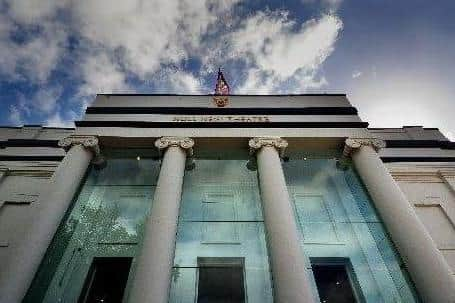
The last time I went to the theatre, which was last month at the Hull New Theatre, I saw Inside No.9 Stage/Fright with Steve Pemberton and Reese Shearsmith. Their special guest that night was Tommy Cannon. It felt like a circle closing because the first time I went to the theatre, to see a panto – Babes in the Wood at the Bradford Alhambra in 1986 – the stars were Cannon and Ball.
Like many working-class kids who grew up in the industrial north, panto was my only exposure to arts and culture. It wasn't until the early 1990s whilst studying A Level English Literature that I finally got to see some ‘serious’ theatre: King Lear in Stratford-Upon-Avon starring the legendary Robert Stevens as the eponymous monarch, alongside David Bradley, David Calder, and Simon Russell Beale. It's not hyperbole to say it changed my life. Until that matinee performance, I'd no idea what theatre – and the arts more generally – could achieve.
That performance had it all: raw emotion, heart-stopping action and thought-provoking theatricality. If it were not for that production, I'd probably not have pursued English Literature at university and gone on to teach it. And I'd probably not have forged a career as a writer.
All this was on my mind as I read the Curriculum and Assessment Review's final report. The review, led by Professor Becky Francis on behalf of the government, recommended that the EBacc performance measure be removed. The EBacc – introduced by Michael Gove in 2010 – requires pupils to study a minimum of seven GCSEs including English, maths, sciences, history or geography, and a language. As such, it effectively downgrades arts subjects. Since 2010, enrolment in expressive arts GCSEs has fallen by 42 per cent and the number of arts teachers has declined by 27 per cent.

The government has accepted the recommendation and gone a step further. They have proposed changes to Attainment 8 which calculates a school's average performance based on pupils’ best 8 GCSE scores, and Progress 8 which compares how much pupils have improved from the end of primary school to GCSE. They want the 'breadth' slot to include creative subjects as well as a humanity and a language, to boost take-up of arts subjects.
For too long, access to the arts has been the preserve of the privileged. Let’s hope we’re seeing the beginning of the end of this inequality because access to an arts education strengthens cognitive skills such as creativity, critical thinking and problem-solving – which correlates with higher achievement in literacy and numeracy – and enhances executive function, memory and language processing. Engagement in arts activities also supports emotional regulation, empathy and resilience.
Society and the economy benefit, too: The arts foster cultural literacy and social cohesion, helping children understand diverse perspectives and develop civic engagement; and the creative industries are among the fastest-growing economic sectors globally and contributed £126bn to the UK economy in 2022.
Matt Bromley is CEO of bee and chair of the Building Equity in Education campaign. He is the author of numerous books on education, the latest being Making the Classroom Work for Every Child, and a novel called Mother Fear. Find out more at http://bee-online.uk