
The Aberfan disaster suggests there is likely to be little policy change following the Covid Inquiry - Daxa Patel
This week the nation marked 60 years since the Aberfan disaster, when a colliery spoil tip collapsed and crushed 144 people, including 116 children, in the Welsh village of Aberfan.
History teaches us a great deal and, while we are not defined by our past, we must learn and adapt from it. Here, and ever since, there have been patterns of poor leadership in which those in power either pay lip service to those affected or, worse still, show a contemptuous disregard.
The then chairman of the National Coal Board (NCB) and the Welsh Minister both went on to have illustrious careers, with no accountability and no admissions of responsibility for a foreseeable and avoidable event that took lives and scarred those left behind.
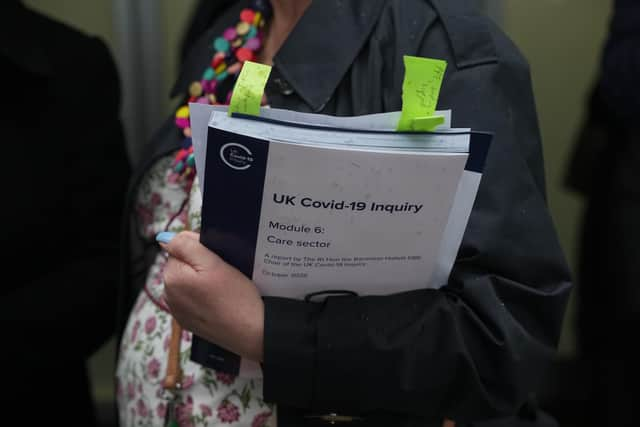
This week also saw the release of another report from the Covid-19 Inquiry. Chair Baroness Hallett confirmed what bereaved families already know in their bones: there was an appalling disregard for those affected and poor leadership behaviour from those in charge.

With lofty titles comes the privilege and responsibility to protect, improve and empower those in need, yet too many leaders appear to behave as though they are above that duty of guardianship.
Baroness Hallett found that the then Health Minister's claim that a protective ring had been placed around the care sector was merely rhetoric.
We cannot keep hiding behind the belief that the pandemic was an unexpected and unforeseeable event. Those in charge are supposed to plan for eventualities of all kinds. Leadership is not about chauffeur-driven limousines, grand tours or gifted clothes. The report is yet another damning indictment of the state and those in charge.
That does not diminish the efforts of those who acted in good conscience and did the best they could under trying circumstances, although we seldom hear about those acts of heroism.
Despite Matt Hancock's proclamation of a protective ring around care homes, the government appeared hell-bent on saving the NHS, an institution that we all need, but not on saving lives, especially the lives of the vulnerable.
The Covid-19 Inquiry found that the care sector was treated as an afterthought. The virus was allowed to spread like wildfire and claim the lives of the vulnerable. In my view, vulnerable residents in care homes were treated as little more than an inconvenience.
Not only were people discharged from hospital back into care homes without staff being given adequate protective equipment, but the government effectively abandoned both carers and residents as though that were perfectly acceptable. I do not know how Boris Johnson sleeps at night.
There was also an unacceptable widespread use of DNR notices, which I fear remains prevalent despite safeguards. When finances are tight, a person over 70 with multiple comorbidities can appear fair game for a DNR. I am happy to be challenged on that.
The Inquiry has recommended urgent policy changes before the next pandemic, but if we return to Aberfan on October 21, 1966, the evidence suggests that not much will change.
If it took until 1997 for a new government to repay the £150,000 taken from the Aberfan disaster fund to remove the coal tips that the NCB should have removed at its own expense, it demonstrates that lessons are rarely learned by those in charge. Instead, we hear platitudes.
There is also a recurring pattern: with each disaster, it is ordinary people who have to battle for years to be heard and to secure some form of redress, let alone an apology. From Aberfan to Hillsborough, from the Infected Blood scandal to the Post Office Horizon scandal and Grenfell Tower, victims have been forced to put their grief on hold and become campaigners in pursuit of justice.
Losing loved ones is devastating enough, but losing years of one's life simply to be heard is an indictment of leadership itself. It shows that we are good at shouting but not very good at listening.
When the school was engulfed by black coal, innocent lives were lost and the lives of those left behind changed forever.
There was no admission, no culpability and no corporate manslaughter prosecution for failures that could have avoided or limited foreseeable losses of life. In most of these cases, those in charge paid little or no personal price, while the bereaved paid the highest price imaginable.
When a good friend told me that the pain in her heart had been reignited by the latest Covid-19 Inquiry report, it was a reminder that we are only scratching the surface of lives permanently altered by these tragedies.
The real scandal is not that mistakes were made, but that the same lessons keep being learned by the bereaved and forgotten by those in power.
Until accountability carries the same weight as authority, history will remain less a teacher than a warning.
Daxa Manhar Patel is a leadership coach, author and solicitor.