
The demand for choice on assisted dying is not going away - Daxa Patel
How do we stop a runaway train? We cannot. But we can build the safeguards that prevent the crash. The recent defeat of the assisted dying Bill is one such example. The Commons rejected the Bill by sixteen votes despite having supported similar legislation before.
The result itself does not trouble me; I respect both sides of the argument. What does trouble me is the 91 MPs who did not vote.
There are always legitimate reasons for absence. But on a question of life, death and personal autonomy, neutrality is not neutrality, it is abdication. If you oppose assisted dying, vote against it. If you support it, vote for it. Democracy requires a position. Why should Parliament be exempt?
The demand for choice is growing. We must improve end‑of‑life care so that nobody chooses death because we failed them. But that does not answer the person who has excellent care yet remains in unbearable suffering and wants a dignified death at a time and place of their choosing.
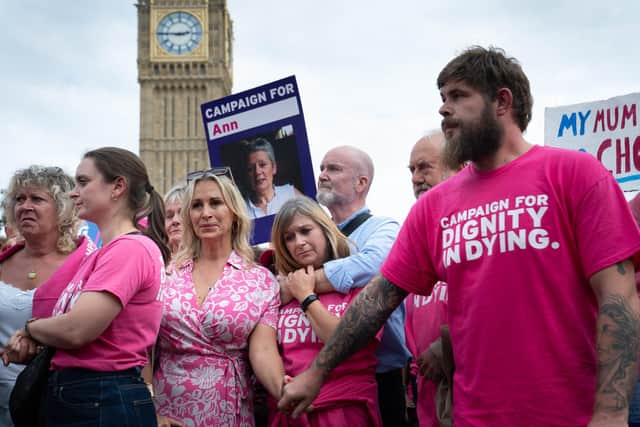

The Bill contained safeguards and amendments after hundreds of hours of scrutiny. Granted, those safeguards may not satisfy everyone, but the answer to concerns is to strengthen legislation rather than refuse to engage with it. Lauren Edwards, the MP who reintroduced the Bill, made the point clearly: further scrutiny could have taken place if Parliament had allowed the process to continue. Instead, the door was closed.
This is not about declaring one side right and the other wrong. It is about democratic responsibility when the public is asking for reform. A refusal to even consider the question is not leadership; it is dereliction of duty. In my lifetime, I believe we will see a legal right to choose how we die. This outcome simply pushes the can further down the road. We fail when we cannot see the suffering.
Which brings me to another runaway train. Artificial intelligence is advancing at extraordinary speed, and it is one of the fastest revolutions in human history. Denying its progress is naïve; surrendering to corporations who want us to believe we cannot live without it is equally misguided.
The benefits will be transformative if we engage. AI is already helping the NHS identify serious health problems earlier and freeing clinicians from administrative burdens. The new National Commission into the Regulation of AI in Healthcare has emphasised that AI should augment, not replace, healthcare professionals. Human oversight, accountability, and trust must remain central. But there is another side to this train.
We have already seen how social media reshaped human behaviour. The extended family gave way to the nuclear family. I wonder whether AI will reshape human interaction again. What happens when the person you speak to most is not a person at all? Or the only person you speak to is an AI?
Research published this year found that increased use of social chatbots was associated with increased loneliness over time, though the researchers urged caution. Even so, the point stands: we cannot replace one form of isolation with a machine that is always available and likely to have built in bias.
AI will be useful, but there is a profound difference between AI supporting human connection and AI replacing it. Convenience must not become a substitute for human contact.
The same principle applies to healthcare. If I am sitting in front of a doctor, I want the benefit of technology if it helps them make a better diagnosis. I want information, evidence, and efficiency. What I do not want is a culture where the human brain becomes so passive that we accept the answer because the computer says no.
A machine does not have the human instinct to spot the nuances. So, if we leave all of this to the creators of AI, we make a dangerous assumption: that they are somehow superhuman. They are human beings with their own biases, limitations, and blind spots with an agenda to make money for those they work for.
We should welcome the technology, but we must never allow responsibility to disappear into the machine. All human tools are capable of error, but the answer is to build proper safeguards and ensure that humans remain accountable for the decisions that matter. The human being must remain in the driving seat without a passive mindset.
The common thread between these two runaway trains is simple: we cannot stop the train or the tide, but we can decide how safely it travels. The demand for choice in assisted dying is not going away, nor is AI. We can resist both indefinitely, or we can do the harder work of creating safeguards, understanding the risks, and keeping human responsibility where it belongs.
Sometimes resistance is simply easier. It is easier to say no than to find a safer way forward.
Tomorrow marks four years since I began my Friday columns in this esteemed newspaper. I am deeply grateful to my wonderful editor and the Yorkshire Post for the creative freedom to express my views, and to its discerning readers who engage with them. I hope to continue, in my own small way, giving voice to those who feel unheard in today’s ultra politically correct society. Writing is a sacred responsibility and a spiritual enterprise that I embrace with the utmost seriousness.
Daxa Manhar Patel is a leadership coach, author and solicitor.