
The direction of travel is clear, the US is no longer going to cover shortcomings in Europe’s defence

Defence spending has too often taken a back seat to other priorities. Other policy areas have been deemed to be more appealing to voters. However, the Government has a moral obligation to protect Britain and its interests. The sad reality is that we are now in a position where Britain falls short of fulfilling that obligation. Instead the country has become overly reliant on US patronage to bail it out.
That support is no longer unqualified. What the US Defence Secretary says can’t always be taken at face value under the Trump administration. But his words that Nato countries lack a credible plan on defence spending are not lacking in veracity.
The resignation of John Healey has put the spotlight on the Labour Government and its lack of commitment towards defence spending. However, as his replacement Dan Jarvis met Nato counterparts, it’s clear that this is a Europe wide issue.
While no country, not least Britain, should be relying on any other nation to defend their realm, European allies must all collectively leverage their respective military strengths to stave off security threats from hostile states.
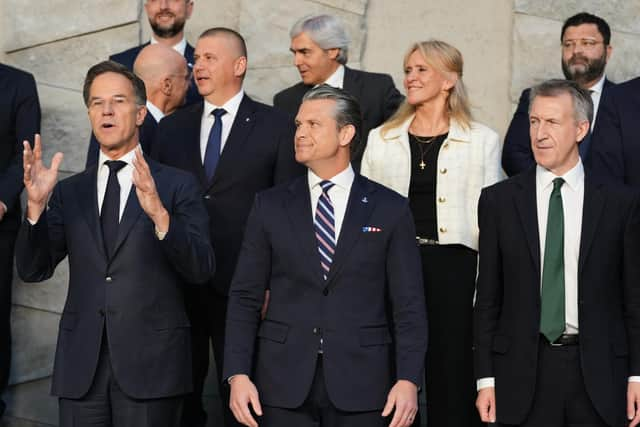

All European countries need to increase defence spending. US defence secretary Pete Hegseth announced a six-month review of America’s military footprint in Europe, which “will be designed to ensure that Nato is moving fast and irreversibly toward Europe leading” on the continent’s security.
The direction of travel is clear. All Nato members will need to meet the 3.5 per cent GDP core defence spending commitment, and 1.5 per cent GDP commitment to wider resilience spending as a minimum. People will be wondering what concessions, if any, new Defence Secretary Dan Jarvis has been able to secure. His predecessor said that Britain was only on course to spend 2.68 per cent of GDP on core defence by 2030.