
The Fair Pay Agreement is a historic step forward but reforms in the care sector need to happen much faster - Mike Padgham
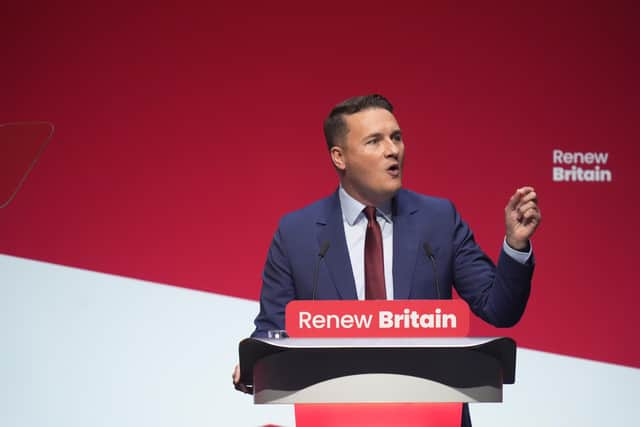
The announcement at the Labour Party conference of a Fair Pay Agreement (FPA) for the social care sector is, on the face of it, one of the most significant developments we have seen in years.
For decades, those of us who work in and represent social care have argued that our staff deserve to be properly valued, properly rewarded and properly recognised for the essential work they do. For once, it seems that message has been heard.
I was proud to join fellow providers and colleagues in Liverpool on Monday this week, taking part in the Care Providers Unite March – held outside the Labour Party conference. We marched not in anger, but in determination, to show our passion for change and to make sure that the voices of care staff, providers, and families were heard loud and clear as this policy was announced.
And let me say this clearly: I take my hat off to the government for introducing a Fair Pay Agreement. It is an historic step forward. But things need to happen much faster. By delaying until 2028, ministers risk undermining their own good intentions, because the workforce crisis is unfolding right now.

The crisis in recruitment and retention is happening today, not in three years’ time. Staff shortages are affecting the ability of providers to deliver safe and sustainable care now. Families across Yorkshire and beyond are already feeling the consequences as loved ones wait for care packages that cannot be delivered because the workforce simply isn’t there.
At the same time, the government has been cutting the numbers of overseas workers who can enter the UK to support our sector. That is short-sighted. Social care is already experiencing a shortage of staff, and to reduce overseas recruitment while delaying fair pay until 2028 simply does not make sense.
At its heart, the Fair Pay Agreement recognises something we in the sector have always known: that care work is skilled, complex and vital.
Introducing a minimum pay rate and higher benchmark rates for social care staff is a huge step forward in recognising this value. But if we are serious about paying staff fairly, we cannot ignore the funding and commissioning structures that underpin the system.
Here in Yorkshire, the pressures are stark. In North Yorkshire alone, providers have reported vacancy rates of more than 10 per cent in some services, with homecare in particular struggling to attract and keep staff. This means older and vulnerable people are waiting weeks, sometimes months, for the support they need. Councils, already stretched financially, are unable to find enough providers to deliver care at the rates they can afford to pay.
Care homes in rural communities from the Dales to the coast face an even greater challenge. Recruitment is hard enough in towns and cities, but in villages where buses are few and far between, finding staff is often close to impossible. When the local care home closes its doors, it isn’t just jobs that are lost – it is part of the fabric of the community. Families are then forced to send loved ones miles away to find a place.
Yorkshire councils do their best with the resources they have, but too often they are compelled to commission care at the lowest possible cost. That race to the bottom undermines providers, weakens services and makes it even harder to pay staff fairly.
The uncomfortable truth is that local authorities, under pressure from years of austerity and chronic underfunding, have had little choice but to commission care at the lowest possible cost. Providers are then expected to deliver high-quality care at rates that barely cover the basics, let alone allow for investment in staff pay, training and development.
A Fair Pay Agreement on its own will not solve this. If councils continue to commission care at unrealistically low rates, providers will be caught in a financial stranglehold. We cannot ask care homes, homecare agencies and supported living providers to absorb rising costs without the funding to match. Local authorities must be given the resources – and the responsibility – to commission care at a fair rate that reflects the true cost of delivery and supports the new pay structures.
This brings us to the heart of the matter: funding. If the Fair Pay Agreement is to succeed, it must be properly funded by central government. Simply placing the obligation on providers without increasing the money in the system will set the sector up to fail. Already, many Yorkshire care providers are walking a financial tightrope, squeezed by rising energy bills, inflation, and workforce shortages. Adding new pay commitments without additional funding could tip some over the edge.
The £500m announced, while it sounds significant, will not go far enough to deliver pay equality with the NHS. And yet that is exactly what social care staff deserve – because their job is every bit as challenging, demanding, and skilled. Above all, we must make sure that every extra pound goes straight into carers’ pockets on the front line, not siphoned off elsewhere in the system.
Mike Padgham is chair of the Independent Care Group.