
The fuel crisis might just see us start to re-think our relationship with buses in Yorkshire - Jayne Dowle
As we await news of the government getting to grips with a potential National Emergency Plan for Fuel, we could do worse than make our own contingency plans.

With the possibility of fuel rationing, reduced hours at petrol stations and speed limit restrictions apparently under consideration, the alternative of taking a bus looms into view.
If no viable solution to the perilous situation of stranded oil tankers in the Straits of Hormuz is found, and it does come to pass that it’s difficult to do what millions of us take for granted every day – hopping in the car to drive ourselves – we’re going to have no choice but to contemplate public transport, or walking or cycling where possible.
We are used to the freedom and convenience of driving door to door, even as the punishing price of diesel approaches £2 per litre, with petrol not far behind.
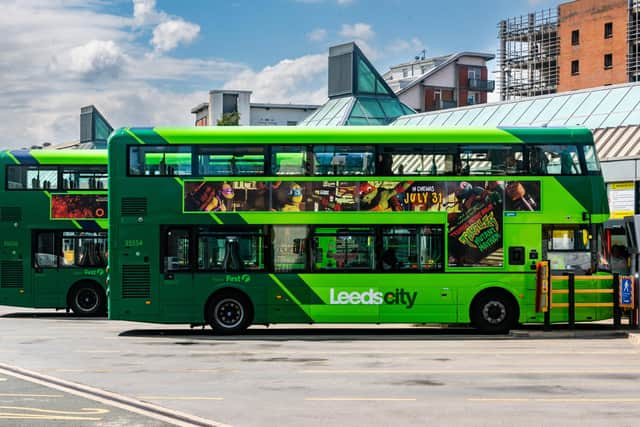

Many of us will be very frustrated and anxious if this liberty becomes restricted because of a war thousands of miles away that our country stands aside from. And few of us have the immediate means to switch to electric vehicles.
However, out of adversity could come a positive shift in attitude.
If we have no choice but public transport, at least for shorter journeys, we might start to re-think buses.
For generations now, buses in Yorkshire have been considered – dare we say it – a second-class form of transport.
Used by the elderly, the young, those who can’t afford to keep a car on the road, goes the thinking. Cuts to services, especially in rural and semi-rural areas, have seen buses sidelined further.
Some parts of our region have been cut off altogether as bus companies axe services citing a lack of demand. This has come about because of privatisation, meaning private bus companies take commercial decisions to no longer operate routes if they are not believed to be profitable.
The inevitable knock-on effect is that people have simply stepped away from taking the bus, leading to a self-defeating spiral – bus companies won’t run empty services.
A significant decline in the number of people using buses in West Yorkshire shocked the region's transport bosses last summer, it’s reported.
Passenger numbers in the summer of 2025 were 8 per cent lower than during the summer of 2024, a West Yorkshire Combined Authority (WYCA) meeting was told. This meant there were 2.3m fewer bus journeys during the three-month summer period.
“A range of factors” had contributed to the drop-off in bus use, with service cuts appearing to be “a significant element”.
Simon Warburton, executive director of transport at WYCA, said the drop “came as quite a shock”, but Councillor Peter Carlill countered: “It is no surprise with Wakefield, as the area has seen incredibly poor service that has only just returned to being a bit more reliable.”
Compare this shaky situation to big cities such as London, Manchester and Liverpool, all of which have widespread bus services which operate under or are moving towards a version of public ownership.
I admit, I’m a bus nerd. When I lived in London I went everywhere by bus, and still do if I visit. Whenever I’m in Manchester or Liverpool, I always marvel at the sheer number of buses beetling from the city centre out towards suburbs and outlying towns.
Why not here? But finally, the tide in Yorkshire is turning. The South and West Yorkshire Mayoral Authorities have been awarded £1m (£500,000 each) from central government to accelerate transition to public ownership of bus services under what’s known as a “franchised” model, aiming for a focus on service delivery rather than profit.
It’s a drop in the ocean, but it’s a start. Already, distinctive green ‘Weaver Network’ buses are promised to arrive in Wakefield next year. Emblazoned with the promise, “We’ll Get You There”, the plan is to emulate the 1,600 bright yellow Bee Network buses in Greater Manchester, part of the integrated transport network also encompassing tram, cycling and walking routes.
The key word here is ‘integrated’. “Buses connect us to the things that matter most, yet for too long they have been in decline,” says Roads and Buses Minister Simon Lightwood.
True, but central government must not assume that handing over £1m to help facilitate better services is the end of the matter. The whole of Yorkshire’s public transport network needs improvement, more services, faster services and better connectivity.