
The fundamental flaw in the law when it comes to fly-tipping needs to be addressed
Fly-tipping has become the scourge of rural communities in recent years. It is clearly an issue that is getting worse with official figures showing that local authorities in England dealt with more than 1.26 million fly-tipping incidents in 2024-25, a 9 per cent increase on the previous year.

In fact, the issue could be much worse because incidents on private land, large-scale illegal dumping handled by the Environment Agency and many unreported cases are excluded from the national data.
The new report by the Future Countryside and the National Rural Crime Network (NRCN) highlights how dealing with waste crime is fragmented, inconsistent and failing victims.
The Government needs to ensure that there is better intelligence-sharing between agencies so that criminals responsible for fly-tipping do not get away with it. There is also a need for much stronger regulation of waste carriers and brokers.
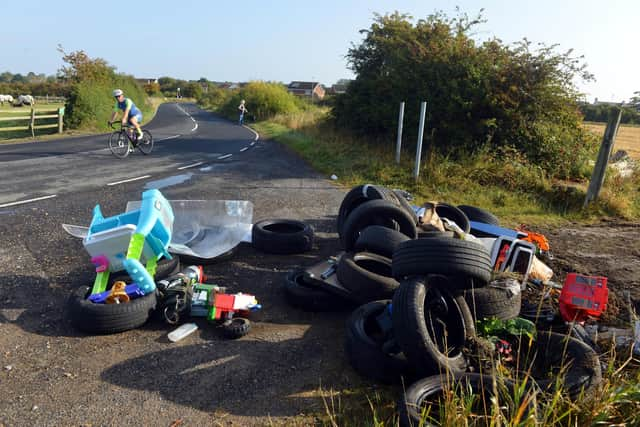

At the heart of the issue is the fundamental flaw in the law, which leaves the landowner bearing the cost and responsibility of cleaning up after fly-tippers.
When warnings over food security are abundant, farmers should not be incurring the cost associated with the clean up of fly-tipping.
There is no other crime where it is the victim that is made to pay. Tackling this injustice should be the starting point for stamping out the scourge of fly-tipping.
By making it more difficult for people to dispose of their waste at a local council site, local authorities are creating opportunities for these criminals. Councils must be urged to keep waste centres as accessible as possible.