
The future of Nato looks bleak after its refusal to aid the US - Patrick Mercer
From Kiev to Qatar the world’s roiled in war and, from Britain’s point of view, the most critical question is whether NATO will survive. An American withdrawal from the bloc has been on the cards at least since Mr Trump’s re-election. The President has mumbled and muttered about his unhappiness with the alliance, because he believes that America’s paying an unfair share of the costs of Britain’s and Europe’s own defence.
The crisis in Ukraine has brought both the financial burdens and effectiveness of NATO into focus many times over the last four years, especially the vexed Article 5. Until it was tested, it was simplistically assumed that an attack on one would trigger all the others to rally round and prepare actively to defend the victim state. In practice, though, Article 5 only meant that members would consider what to do rather than automatically standing to arms.
On both sides of the political divide, many Congressmen seized upon this, some deploying Russia’s favourite description of NATO as a ‘paper tiger’. Then, as if to confirm this, France, Spain and Italy all recently closed their air spaces to US military flights and imposed restrictions on American bases. Neutral Switzerland and Austria did the same, but the actions of alliance partners has enraged President Trump and his cohort.
On top of that, Britain’s conduct has been inexplicable. Against the background of the never ending, on-off-on abandonment of the Chagos Island and the implications for the strategically crucial US hub on Diego Garcia, the PM at first forbade the Pentagon to use British bases. Then Keir caved and allowed it before cavilling again stating that no warlike flights from Britain would be permitted that were aimed at Iranian infrastructure or non-military targets.
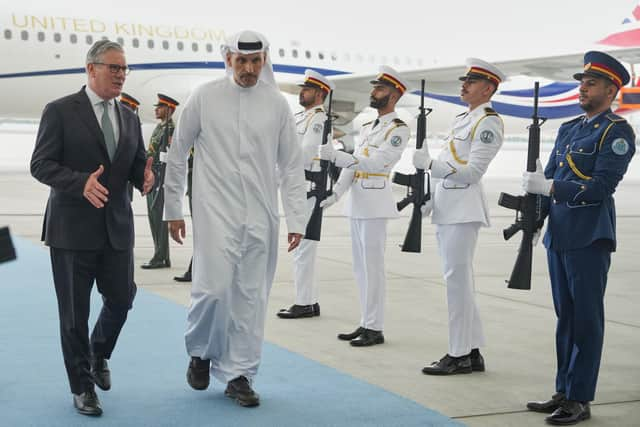

Now, at the time of writing, a fortnight’s ceasefire in the Middle East was worked out and then broken within hours. That’s allowed a NATO schism to be swept under the carpet for the moment, yet Mr Trump’s rhetoric suggests that it won’t be long before the whole issue’s back on the table.
The President said, “The UK of all… would've been there first because they've been - they're the oldest. And I say yeah, I'd love to have a little help.
“They said no sir, we'd rather wait till you win. I said I don't need help after we win. They have two old, broken aircraft carriers, barely working."
Then Mr Trump also cautioned that Iran would attack Europe once it had dealt with Israel and other countries in the Middle East adding, “I have to tell you I'm very disappointed in NATO, very. I think that NATO - I think it's a mark on NATO that will never disappear, never disappear in my mind."
And now what are we to make of this next puzzle? Mr Trump recently railed at France’s conduct before mockingly suggesting that Brigitte, the president’s wife, wore the trousers chez Macron. France’s president snapped back that The Donald’s remarks were ‘inelegant’ and almost instantly Tehran allowed a French container ship to go through the Straits of Hormuz unmolested.
Perhaps this was just an amused, little gesture of solidarity from the Ayatollahs; perhaps it was a clever, calculated move to sow more doubt in Washington’s mind about their allies? Persian salt has been rubbed into an already open wound.
But is this a real crisis for NATO, or is it just another spat which can be parched up? Well, as far as the UK’s concerned, our allies - and Donald Trump in particular - would find Sir Keir so much more valuable if he were consistent. But he’s not: he wobbles at every crisis and is buffeted by his cabinet just as much as he is by our most powerful ally.
Now Britain and all the Europeans who have acted against - perhaps betrayed - the very cohesion of NATO are going to have to decide how they will handle the continuum of Middle Eastern crises. Mass migration has fundamentally altered the political fabric of Britain and many European countries. Obviously, democracies must heed the voice of their electorates and if acting in unison against Iran is going to make large parts of those same electorates restive - if not openly violent - how can those countries remain within NATO?
With all this in mind, it’s clear that Britain and the EU are going to have to defend themselves in an increasingly belligerent world without much help from Uncle Sam. But our countries are already deeply in debt and must now borrow and raise taxes in order to rearm whilst also supporting a growing pool of pensioners and benefits claimants.
The irony is that the people who will be footing this extraordinary bill will also be the ones shouldering the burden of a wartime economy or being forced into uniform. This was the very crisis which NATO was designed to deter or to overcome: now - just when it’s most needed - the whole edifice is tottering.
Sitting on the lip of this cauldron, of course, is Ukraine. Expecting neglect, President Zelensky authorised an eye catching and very successful series of deep strikes against Russian oil facilities. Similarly, his troops have caused Moscow’s spring offensives in the Sumy and Zaporizhzhia regions to slow to a crawl.
But - and here’s the kicker - Mr Trump’s administration is pushing for record levels of defence spending: $1.5 trillion this year and all of it will be focused directly on their own forces. America has been funding two wars, but now that will stop and there’s not a cent earmarked for Ukraine.
To me it looks like the President has already decided on NATO’s future when he told us, “… go get your own oil!”
Patrick Mercer is a former MP for Newark and Army Colonel.