
The Government is playing the blame game on rising supermarket prices - Andrew Vine
Like most of us, I used to have a pretty good idea of how much my weekly food shopping would cost. But just recently, I keep getting a nasty surprise at the checkout.

Prices seem to be jumping far higher than the rate of inflation says they should, and they’re for basics that are difficult to economise on, like bread, meat, fish, fruit and vegetables.
The rises seem to be relentless. Every trip you make to the supermarket finds prices have edged up just that bit more, and last week’s measures by the government to address the cost-of-living crisis suggest that ministers know there is no prospect of food bills stabilising – let alone coming down – any time soon.
The announcement amounted to tinkering around the edges, even though families will welcome free buses for children and cheaper entry to attractions over the summer, and drivers will breathe a sigh of relief that fuel isn’t going to cost even more than it already does.
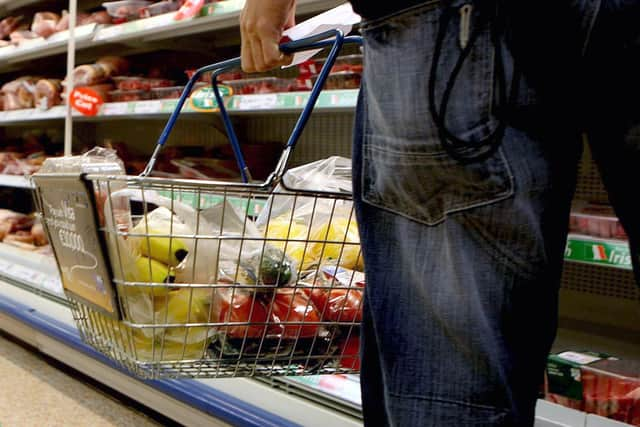

But making it cheaper to visit a theme park or a zoo isn’t going to ease the worries of families about the cost of putting food on the table when they get home.
And those families are going to be unimpressed by the blame game the government is playing over the cost of living.
The ridiculous and quickly abandoned attempt to push supermarkets into capping the prices of essential goods points to ministers trying to shift responsibility for a problem that is substantially of their own making.
There was a clear implication from the government that the supermarkets on which most people rely for food are not doing enough to keep prices down.
The furious push-back by the supermarkets against price capping made some interesting points. Sainsburys and Tesco revealed eye-catching figures showing that they made profits of only £2.70 and £4.20 respectively on every £100 spent.
Our hearts shouldn’t bleed for them. Overall, most of the supermarket chains are vastly profitable and able to pay handsome dividends to shareholders thanks to the sheer volume of their sales.
It may even be that the next round of financial results shows an increase in their profits as a result of food price inflation, just as oil companies have profited from the turmoil in the Middle East, which will leave a nasty taste with customers struggling with rising prices.
This cost-of-living crisis has been tightening its grip for a long time. The Food and Drink Federation says prices have risen by 40 per cent over the past five years – a rate of increase which far outstrips any growth in household incomes, and especially painful when the costs of energy, water and council tax have also shot up.
In the face of that, the government has done precisely the wrong thing and made matters worse for hard-pressed consumers.
Additional costs imposed on retailers have driven food prices up. Increases in the minimum wage and employer national insurance are costing companies an additional £5bn a year, according to the British Retail Consortium.
That’s not all. Retailers are also stumping up £1.4bn annually for a new packaging recycling scheme and have been hit by higher business rates.
The Chancellor was repeatedly warned by the business community that these extra costs would have to be passed on to customers, and that is exactly what has happened.
If any of the ministers at the Treasury believed the supermarkets could absorb billions in extra costs, that demonstrates an extraordinary level of naivety about how businesses operate.
Blaming war in the Gulf for hikes in food prices is yet another government attempt to deflect blame.
Yes, disruption to supplies of fuel and fertiliser reaching Britain will have knock-on effects for shoppers, but it isn’t why their food is already costing more. That’s down to bad government policy.
A lack of joined-up thinking – or maybe plain ignorance – within the government about food costs has also been demonstrated by its disregard for agriculture.
Last week’s warnings about how Britain must adapt to climate change if farming is to remain productive in the years ahead only underlined how little support there has been for home-grown food.
It doesn’t take an economic genius to realise that if we produce more in Britain, instead of relying on expensive imports vulnerable to international shocks, the costs for shoppers to fill their trolleys are likely to come down. Yet there is little sign of the government grasping this as it cheerily sanctions the loss of prime farmland to solar panels and encourages housebuilding in the countryside.