
The Government may have dropped the Levelling Up slogan but it still needs to deliver for regions like Yorkshire - Andy Brown
In amongst the forest of announcements of changes to government policy it would be easy to miss one small but significant shift. There is no longer a Department for Levelling Up. The slogan has been officially dropped.
On the face of it this is a peculiar thing for the incoming government to do. It badly needs to bring real improvements to the lives of people in our former industrial heartlands.
The anger and disillusionment of once proud communities is hard to overstate. In Britain the Labour party got its lowest share of the vote ever from deprived communities and across Yorkshire the party was put on notice by former red wall voters that they are not confident it will serve their best interests. Large numbers of people voted Reform, Green or Independent and even more stayed at home and nursed their resentments.
If the hurt of those communities isn’t addressed and real change can’t be felt on the ground, then anger and frustration will continue to mount.

The hope must be that the new team leading the country understands that delivery is more important than slogans and they have dropped the slogan because they recognise the urgency of real action.
It is no small task. Transforming a city like Bradford for the better could easily take every bit as long to achieve as the long slow slide into neglect that much of it has experienced for decades.
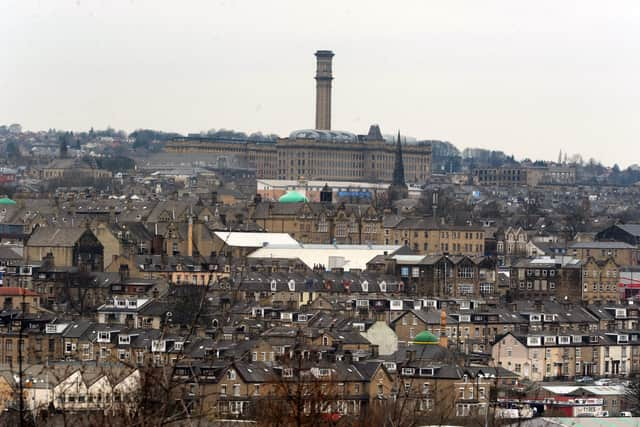
Yet in amongst the signs of decline there are opportunities that can be built on. Parts of Bradford, such as Saltaire, are already very attractive places to live and work. Many of the neglected buildings in the city have amazing potential that could so easily be unlocked.
To give one example, in Keighley there is a wonderful old building called Dalton Mill which is one of the most strikingly attractive old mills in the country. It occupies a huge space right next to the railway station on a direct commuter line to Leeds.
That building has been left mainly unoccupied for decades with the only significant changes being that it seems to catch fire with remarkable frequency. Redeveloped it could so easily become highly attractive new apartments appealing to those who work in Leeds and can’t afford city house prices.
Bringing over a thousand new young home owners into the town would provide an injection of energy to shops, pubs and restaurants that would bring visible signs of hope. Accompany that with a drive to bring fresh employers into the town and it becomes possible to see how the town can be set on a positive journey to improvement.
That potential can only be unlocked if there is money available from central government that can shift the economics of development. It costs significantly more to take a fine old building and transform it than it does to go to green fields a few miles away and slap up a new housing estate. The difference in cost needs to come from a government with vision.
What is needed is a targeted development team to move into localities where there is real prospect of transformation and a co-ordinated programme of revival that includes support for residents to improve existing housing stock. Better insulation, improved windows and solar panels cost serious money but also bring serious rewards in terms of lower energy bills and great opportunities for first time buyers to move in and gentrify an area.
It is not so very long since large parts of London were run down and neglected. I once lived in Wandsworth close to the disused candle factory, the closed power plant, and the squatters tent on abandoned land. I went back ten years later and the rough local boozer had become a gastro pub, the power station had been replaced by posh riverside flats and the whole area had transformed.
Much of that change was achieved by market economics. Yet behind those market driven improvements was major government investment in projects like Cross Rail which saw £ billions pumped into London.
Investment spending needs to be viewed differently to revenue spending. Successful towns and cities eventually contribute much more to government finances than it cost to revive them.
Change needs driving forward by purposeful intervention from the government. Developers need incentives to bring forward the difficult projects in places with the greatest need - not a free hand to focus on constructing more in places that are already struggling to maintain their character under an onslaught of over-priced new estates.
Over the last few years too much of the money for regional development has been used on wasteful competitions for funding of short term projects, dodgy schemes for low quality freeports, and rewards for political friends.
What is needed now is a thought out programme of long term investment by the national government working with local government and local business on targeted programmes of renewal. Dropping the slogan of levelling up needs to be accompanied by the achievement of reality.
Andy Brown is the Green Party councillor for Aire Valley in North Yorkshire.