
The Government must seize the opportunity to end the rural fly-tipping injustice suffered by farmers - Johnnie Furse
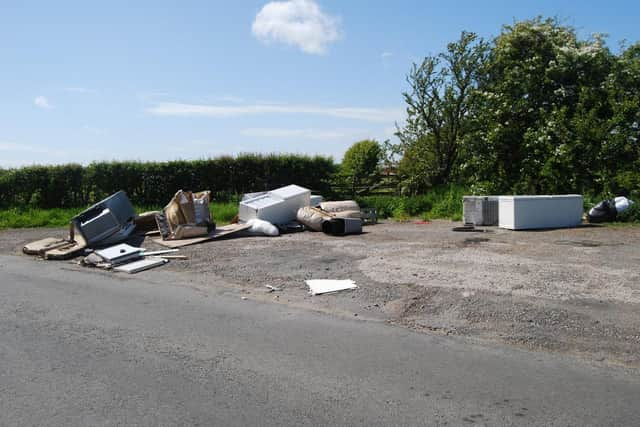
Spring is on the horizon, and Yorkshire’s countryside will soon be filled with the cheerful nodding heads of daffodils and the merry skipping of lambs. In many places, however, this scene will be marred by something that has long plagued farmers and rural people: heaps of fly-tipped waste, some of them weighing in at thousands of tonnes.
These mounds of garbage are much more than just an eye-sore – they cause a huge amount of damage, both financially and ecologically. In 2024-2025, fly-tipping soaked up £19.3m of taxpayer money in local authority clear-up costs. 85 per cent of farmers have reported being affected by fly-tipping, with livestock often injured or even killed as a result. When waste contains asbestos or drums of toxic materials, the ecological damage can be severe.
But to add insult to injury, this waste dumping is accompanied by a gross injustice: for fly-tipping is one of the only crimes where the victims have to pay the cost of the damage done to them.
Farmers who are victims of fly-tipping are currently legally responsible for clearing the waste that is dumped on their land - and if they fail to remove the waste, they can even be prosecuted by local authorities for having controlled waste on their land. This is despite the fact that most local authorities refuse to prosecute the original offence of fly-tipping.

That, however, could be all set to change. On February 25, members of the House of Lords inflicted a series of defeats on the government, tabling amendments to reverse this injustice - a move that would be welcomed by farmers and rural people across Yorkshire and the rest of the UK.
But despite the successes, the buck ultimately stops with the House of Commons, who must now choose whether to accept the amendments, modify them, or reject them entirely.
The news comes just after the publication of the latest official statistics from Defra, which show that fly-tipping incidents have soared by 9 per cent, with an enormous 1.26 million incidents recorded in England in 2024-2025.
In Yorkshire, fly-tipping cases jumped by a huge 17 per cent, to 100,370. That means a whopping 11 incidents happen, every single hour, somewhere in Yorkshire.
The true figures will be even higher, as the statistics, produced by Defra, only relate to land managed by local authorities, and so do not include most private land.
Concerns have already been raised about the government's resolve to fix the epidemic. The House of Lords Environment and Climate Change Committee wrote to the Environment Secretary, Emma Reynolds MP, towards the end of last year, branding her response as "complacent" and giving "succour" to organised gangs of waste criminals.
To make matters worse, the latest statistics show that, in Yorkshire and the Humber, only 49,731 enforcement actions were undertaken by councils in relation to the 100,370 reported incidents.
Of those enforcement actions, nearly 35,000 were merely investigations, and more than 6,500 were just letters of warning. Just 1,321 fixed penalty notice actions were taken – meaning that a paltry 1 per cent of offenders faced punishment.
This raises serious questions about the effectiveness of investigations and enforcement actions taken by local councils.
The average cost to farmers to clear up an incident is £1,000, but larger incidents can be even more expensive – a cost that most farmers, already struggling from successive government policies such as the Family Farm Tax and changes to the SFI scheme, cannot afford to pay.
However, amendments tabled in the debate in the House of Lords could fix the broken system.
The amendments (specifically amendments 13 & 21) would make convicted offenders of fly-tipping automatically liable for the cost of removal and any damage caused, and force authorities to ensure that victims of fly-tipping are not left footing the bill.
Most crucially of all, they would place the duty on local authorities to collect the fly-tipped waste and seek to recover costs from offenders – a massive change that would do a great deal to incentivise councils to properly deal with problems by investigating and prosecuting effectively, all while relieving private victims of any clean-up costs.
The government resisted these amendments in the debate, but was defeated. After peers voted one through despite government opposition, the other was not put to a vote and the House accepted it.
If these amendments become law, the current system in which victims of waste crime are unfairly penalised would be solved. However, the government can still override them in the House of Commons.
The government has a real opportunity to fix an injustice and repair the current, frankly ridiculous system, by either accepting these amendments, or at least substituting amendments of its own to achieve the same effect.
Johnnie Furse is external affairs officer at the Countryside Alliance.