
The Government needs to take the issue of fly-tipping seriously - Jayne Dowle
Despite a string of government promises and crackdown measures the crime of fly-tipping is getting worse, continuing to scar our countryside. Local authorities in England dealt with more than 1.26 million fly-tipping incidents in 2024-25 - that’s a 9 per cent increase on the previous year, according to official figures.

The true scale of this major environmental disaster is far higher. This figure does not include incidents on private land, large-scale illegal dumping handled by the Environment Agency and the many unreported cases that will be excluded from the national data.
The latter category may well include the dumped cannabis plants I found the other day on the grass verge at the top of the field where I walk my dog, and the disgusting accompanying collection of empty beer cans, vodka bottles and discarded vapes. Our valiant litter-picking volunteers deserve medals.
Bad enough, but I’ve seen much worse in our local area. Wombwell Woods, designated protected ancient woodland, are scarred weekly with huge piles of builders’ waste and full house-loads of furniture including rotting, stained mattresses.
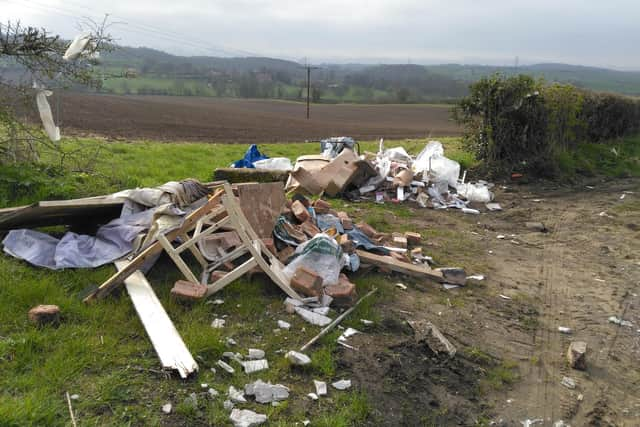

Going by this kind of evidence, I don’t think the fly tippers are taking a blind bit of notice of the ‘Waste Crime Action Plan’, introduced by Defra (Department for Environment, Food and Rural Affairs) in March 2026.
However, much of the focus of this initiative is to crack down on illegal waste carriers - such as companies which purport to have an official licence to take away and dump waste legally but duck the system and dump it anywhere they like.
As part of the plan, the Environment Agency is creating a new Operational Waste Intelligence and Analysis Unit to bring together satellite, drone and other visual imagery, financial and criminal data and other intelligence in one place for the first time. This unit promises to “spot unusual activity sooner, flag risks before they escalate and accelerate enforcement action”.
Also, the Joint Unit for Waste Crime (JUWC) is uniting regional environment watchdogs, police forces and the National Crime Agency to disrupt serious and organised waste crime.
Tougher penalties will include compulsory participation in "clean-up squads" for offenders, and more stringent sentences including up to five years in prison and driving licence points.
Whilst this uncompromising approach is welcome, it leaves many holes, including the major injustice of private landowners - often farmers - being forced to bear the cost and responsibility of cleaning up after fly-tippers have polluted their land.
No other crime comes with such an onus on the victim to pay. Tackling this fundamental flaw in the law should be a major priority. Farmers are under enough financial pressure as it is without having to fund such remediation. Their crops, their livestock, the long-term viability of the land are all under threat when fly-tippers leave their disgusting debris behind.
Also, although dealing with illegal waste carriers is of vital importance, it is only half the story. Much fly-tipping waste - no-one knows exactly how much - is left by lazy, selfish and opportunistic individuals who think nothing of driving to the nearest green space and dispersing their debris without a second thought.
In my area, we’re fortunate to have a well-organised and welcoming ‘civic amenity site’ which is open from early morning until 7pm during the summer months (4pm in winter). There really is no excuse for private individuals to take their rubbish anywhere but here - but it doesn’t stop people dumping stuff on the adjoining TransPennine trail.
That’s why a new report by the National Rural Crime Network (NRCN) and Future Countryside, a group bringing together groups which care about the countryside such as the National Farmers’ Union, and the Countryside Alliance and Crimestoppers, is so important.
It is calling on the government to introduce a single national system where people can report all fly-tipping and waste crimes, which they say the government has so far expressly declined to do.
They also want to see a comprehensive national dataset that covers all fly-tipping and waste crime incidents, including those on private land, allowing the true scale of the problem and the response to be tracked accurately year-on-year.
In addition, a new waste crime (prevention) act should be tabled to bring together a range of reforms under a single legislative framework, the campaigners say.