
The Government’s clinical negligence report looks in the wrong places for cost-cutting - Jonathan Baker
The new House of Commons committee report is right to examine the rising cost of clinical negligence, but it pays too little attention to why people are forced to make legal claims in the first place.
Behind every case is a patient or family who feels let down by the system. By the time people seek legal advice, they may already believe their concerns have not been taken seriously.
As a clinical negligence lawyer, I regularly work with people who have been injured as a result of medical care. Many have already tried to resolve their concerns through the NHS complaints process. What they want is a clear explanation, a fair response, and reassurance that the same harm will not happen to someone else. When the complaints process fails to address these concerns, people often turn to legal action.
The new report is absolutely correct in saying that preventing harm is the most effective way to avoid claims. If there is no negligence, there is no claim.
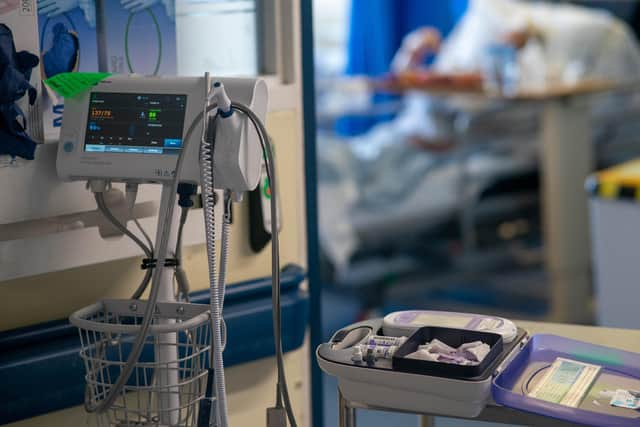

But prevention relies on accurate, detailed information about the causes of harm. As the report points out, the NHS does not collect sufficient data on the causes of clinical negligence, and what data does exist is not properly analysed. As a result, lessons are not being learned. My team sees this repeatedly: the same types of claims against the same providers, year after year.
I fully support the report’s focus on prevention, improved complaints handling, and better learning from mistakes. These measures would reduce patient harm, legal claims, and overall costs.
Take maternity care, for example. These cases account for only 2 per cent of claims, yet make up 70 per cent of all damages paid. Focusing on reducing these claims would save tremendous amounts.
Unfortunately, sufficient progress is not being made, partly due to delays from the Department of Health while awaiting the report from David Lock KC.
However, some of the committee’s other proposals for tackling costs are, in my view, not the right answers.
The report argues that legal costs are “disproportionate” in lower-value cases (particularly those below £25,000) and proposes capping claimants’ recoverable costs. This overlooks several key issues.
First, a claimant must prove negligence, and this often requires significant costs to be incurred. Independent expert evidence, insurance, court fees, and counsel all add to legal costs, in addition to the legal fees themselves. These cannot be removed without also undermining the claimant’s ability to prove negligence.
Comparing claimant costs with NHS Resolution’s costs misses the point: It is the claimant’s responsibility to prove negligence; not the defendant’s to disprove, which inevitably creates significantly increased costs.
Second, there is often no meaningful correlation between complexity and claim value. Low compensation does not mean a case is simple or inexpensive, nor that it should be done ‘more cheaply’. The same principles apply to proving the claim, so the costs remain the same. Some of the most complex claims, including those where liability is denied, can involve relatively low compensation values.
As the report itself notes, if a defendant believes costs are too high, they can challenge them and ask the court to determine what is reasonable and proportionate. The figures cited in the committee report are costs that the defendant has agreed to pay, or that the court has reviewed and approved as being reasonable. There is already a mechanism in place if costs are considered excessive.
Third, delays also drive-up costs. We regularly see early attempts to resolve a claim ignored, letters of response arriving late, liability denied, and costs increasing because the defendant does not engage – only to settle later.
While the increase in the percentage of cases resolved without court proceedings is commendable, it does not indicate whether a letter of response was provided on time (or at all) nor what initial stance was taken. Meritorious cases – those with a real, valid basis – are still defended initially and this again increases costs.
The report also raises questions about the use of private care in future care claims. Two factors here cannot be ignored. First, many injured patients feel unsafe returning to the same NHS system that negligently harmed them. Second, the NHS may not be able to provide the level of care required, due to lack of resources.
Forcing patients to rely again on the same services, or to pay privately from their own pockets, undermines the purpose of compensation: to put people back, as far as possible, in the position they would have been in had the negligence not occurred.
If the government genuinely wants to reduce the cost of clinical negligence, it must address the underlying causes of harm and improve engagement to resolve complaints and claims quickly. It should not seek to reduce liability for by capping what a claimant can recover. Address the cause, not the consequence. Patients should not bear the responsibility for others' failures.
Jonathan Baker is a partner in the medical negligence team at Wilkin Chapman Rollits.