
The Government’s plan for a library in every school is admirable, I just hope it translates into action - Matt Bromley
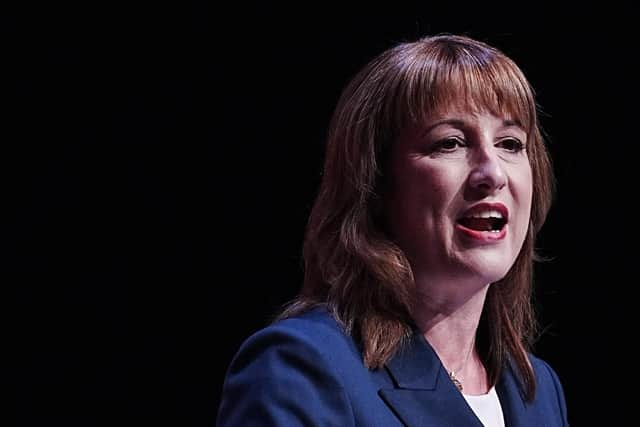
At the Labour party conference in Liverpool this month, Chancellor Rachel Reeves promised a library in every primary school in England to ensure “ordinary kids can flourish unhindered by their backgrounds”.
Admirable words. I just hope they translate into action. Because, as Axel Scheffler, illustrator of The Gruffalo books, says, “A school library is more than just a room full of books – it’s a place where imaginations grow, confidence builds, and a lifelong love of reading takes root.”
The plan is this: 1,700 schools currently without a library will get one before the end of this parliament at a cost of just over £10m taken from dormant assets. That’s roughly £5,900 per school. However, there’s no word yet on extra cash for staffing and such detail matters because every library needs a librarian.
Unions and literacy organisations are broadly optimistic about the news, with the NEU’s Daniel Kebede saying it’s the “first step in addressing the chronic funding shortfalls that mean schools lack the resources to provide engaging and successful learning”. The School Library Association (SLA), meanwhile, hailed it as “a landmark moment”, and the National Literacy Trust said the move will “truly cement reading for pleasure as a national priority”.

But commentators are also rightly cautious. The NAHT’s Paul Whiteman flagged concerns about space and staffing, while the SLA warned that libraries need more than books; they need “skills and funds…to maintain, manage and promote” their provision.
I remember visiting a Muslim girls’ school in Bradford where the library was called the dar al-‘ilm – or “house of knowledge” – reminding me that Islamic public libraries, which first appeared in the ninth century, intended to promote the dissemination of secular knowledge, were the first to organise their shelves by name or nature. I was impressed that the school I visited had made their library a central feature of the school building; it acted as the school’s beating heart, pumping knowledge through its artery of corridors and into classrooms.
I am lucky enough to be able to buy books whenever I want. Many people, though, do not share this privilege; rather, they rely on libraries. A few years ago, my local library was under threat of closure and, in a small-scale attempt to help save it, I re-registered to boost their borrower numbers. I lost several hours browsing the shelves. And what amazed me was the sheer variety of visitors: all human life was there. Some people relied on the library for warmth and light, others for company. Many were researching for school and university projects and taking advantage of the quiet study space. Others, like me, were there simply in search of a good read to fill the corners of evenings and weekends. My visit reminded me that a library is the foundation on which a civil society is built.
In schools, we can talk about test scores and league tables all day long, but a library teaches something no exam ever will: that ideas matter, that stories matter, that every child’s mind matters. I hope the government’s announcement makes this a reality in every school in England.
Matt Bromley is CEO of bee and Chair of the Building Equity in Education campaign. He’s the author of numerous non-fiction books on education and leadership, the latest being Why School Doesn’t Work for Every Child, and one novel, Mother Fear.