
The Green Party’s identity seems uncertain under Zack Polanski’s leadership - Daxa Patel
Has the Green Party lost more than its green credentials under its leader Zack Polanski? That is the question I have been pondering following the party's deeply controversial decision to adopt a policy declaring that Zionism is racism.
The decision has caused profound upset, including within the Green Party itself. Prominent figures have spoken out, among them former leader Caroline Lucas, someone whose contribution to environmental politics commands respect well beyond her own party.
But for me, the bigger question is one of leadership.
I write and reflect a great deal on leadership, and what has struck me most about this episode is that Polanski was absent from such an important debate and vote while campaigning for the parliamentary seat of Holborn and St Pancras.
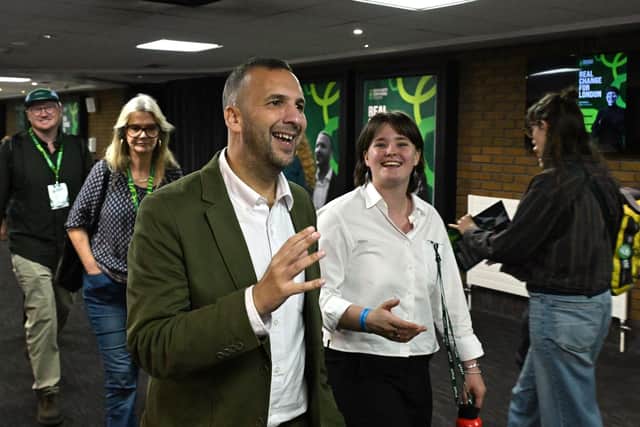

There are moments when a leader simply has to be in the room.
It reminded me of Rishi Sunak's decision to leave the D-Day commemorations in Normandy early during the general election campaign. Whatever the political calculation, the symbolism was dreadful. At defining moments, leadership is not something that can be delegated. Absence itself communicates something and that is what troubles me about what has happened to the Greens.
A party which most of us have traditionally associated with environmentalism now finds itself embroiled in a bitter argument about identity, Israel and Zionism, while members of its own Jewish community question whether they still feel at home within it. Whatever one's views on Israel and Palestine, and I have never been afraid to say that the suffering and displacement of Palestinian people must concern us deeply, political leadership requires the ability to hold difficult truths without making fellow citizens feel that they no longer belong. That distinction matters.
The controversy also raises serious questions about the Green Party's own structures. A small proportion of its overall membership was able to determine a policy with enormous consequences for the reputation of the entire party. Polanski himself has since acknowledged the need to look at how the party operates as its membership.
Leadership is about more than growing membership, winning elections or generating momentum. It is about understanding the consequences of what happens under your watch.
The Holborn and St Pancras by-election provides an interesting contrast.
Labour's Sagal Abdi-Wali won the seat after arriving in Britain as a child refugee from Somalia. There is something wonderful about that story. Whatever our politics, surely, we should take pride in a country in which someone can arrive here as a child refugee seeking sanctuary and eventually be elected to Parliament.
Her victory says something important about belonging. And belonging, to my mind, is precisely what our politics needs to recover.
We live in a country made up of people of different faiths, ethnicities, histories and political traditions, people of other faiths and people of no faith: this is our country. We do not strengthen Britain by continually sorting ourselves into competing camps, we strengthen it by remembering what we share. That does not require silence about injustice. Far from it. We should be capable of condemning the terrible suffering of Palestinians, challenging the actions of governments and arguing passionately about the future of the Middle East without allowing those arguments to make British Jews or British Muslims feel less secure in the country they call home. That is where leadership matters.
Britain's Jewish community has already experienced considerable anxiety in recent years. Political parties should be acutely conscious of that. Whatever the intention behind the Green motion, its impact cannot simply be dismissed when members of the very community affected are saying that they feel hurt or alienated.
Polanski has said that he would not have voted for the motion in its unamended form had he been there. But he was not there. That is the point. Leaders do not merely explain what they would have done after a crisis. Their job is to recognise the significance of the moment before it becomes one.
When I listen to Caroline Lucas, whether or not I agree with everything she says, I understand what the Green Party exists to do. Environmentalism, climate change, conservation, and stewardship of the planet gave the party a distinctive voice in British politics.
Under Polanski, that identity feels less certain. The surge in membership and greater media attention may look like political success, but visibility is not the same as leadership. Talking a good talk can sell a movement. Leading one requires considerably more depth.
Daxa Manhar Patel is a leadership coach, author and solicitor.